




A raft of trade bodies have branded last week’s decision by the Welsh Government to include glass in its Deposit Return Scheme (DRS) as “a recipe for disaster”, with many products likely to disappear from the shelves as a result.
In a joint statement, the trade bodies, including the WSTA, SIBA and FWD, noted that the move would further delay the introduction of DRS due to the complexities of glass collection and, contrary to claims from the Welsh Government, would require unique labels from day one of the scheme.
This could lead to popular products not being sold by retailers in Wales, as identifying stock for the Welsh market will become prohibitively expensive.
Despite claims from the Welsh government that there will be no labelling obligations for the first four years of the scheme, the trade bodies stated that stock will have to be identified either as “not for sale in Wales” or “for sale in Wales only” to avoid paying environmental charges applicable in the rest of the UK.
The Welsh Government’s claim that including glass will be more environmentally friendly is also claimed to be flawed because economies of scale will be lost, and glass collections may fall. Moreover, non-drink containers such as glass jars will continue to be collected at the kerbside, creating greater inefficiency and costs.
Key concerns laid out by the trade bodies include:
- Mass market withdrawal: Up to 97% of product lines (SKUs) could be withdrawn from the Welsh market because the burden of compliance makes trading there uneconomical.
- Prohibitive labelling costs: Producers would be forced to apply unique ‘Wales only’ labels at the point of bottling to prevent fraud and manage distinct tax obligations, a process described as prohibitively expensive.
- Economic shock to SMEs: While glass recycling rates in Wales already exceed 90%, the new scheme would impose a significant economic shock on small businesses, importers, and the hospitality sector without delivering meaningful environmental gains.
- Environmental counter-productivity: The scheme could jeopardise Wales’ world-leading kerbside collection rates and perversely incentivise a shift from sustainable glass to less recyclable packaging formats.
Miles Beale, Chief Executive of the Wine and Spirit Trade Association (WSTA), said: “While our industry is fully committed to producers paying for the waste they place on the market, including a UK-wide DRS for metal and plastic drinks containers by 2027, the Welsh Government’s insistence on including glass is a recipe for disaster.
"It will lead to a wide range of wine and spirit products disappearing from Welsh shops and supermarkets , and create a barrier to trade that simply does not need to exist. It should be blindingly obvious that the only way to ensure unhindered market access and a successful DRS is to align the scope of materials across all of the UK.
“The additional pressure on wine and spirit businesses comes at a time when tax increases and costs – many of which are a direct result of government policies - are going through the roof.
"Not only will this mean higher prices and reduced choice for consumers, but the blinkered move will not deliver any meaningful environmental gains”.
Andy Slee, Chief Executive of the Society of Independent Brewers and Associates (SIBA), added: “SIBA are fully committed to supporting the principle of a Deposit Return Scheme, providing it is effective in improving recycling and reducing waste.
"However, in its current form, the proposed system in Wales simply will not achieve this, and having played a leading role in the delay of the Scottish DRS, which was not ready for launch, we are disappointed that lessons don’t seem to have been learnt by the Welsh Government.
“These plans will sadly inevitably lead to higher costs and a poorer choice for consumers, with small producers on either side of the border avoiding supplying the Welsh market for economic reasons. We implore the UK Government to see sense and reconsider the decision, and for Wales to join a UK-wide scheme with the same scope as the drinks industry has been calling for.”
James Bielby, Chief Executive of FWD Food and Drink Wholesale, commented: “This is the worst of all worlds. Alignment with the rest of the UK on PET and aluminium from October 2027 is welcomed, but the inclusion of glass in Wales from 2031 creates confusion and will reduce consumer choice. It will create trading borders within the UK, increase costs, and damage the profitability of businesses working across the borders.
“Wholesalers operating in both England and Wales will need to segregate stock, which will require a significant increase in warehouse space and investment in processes.
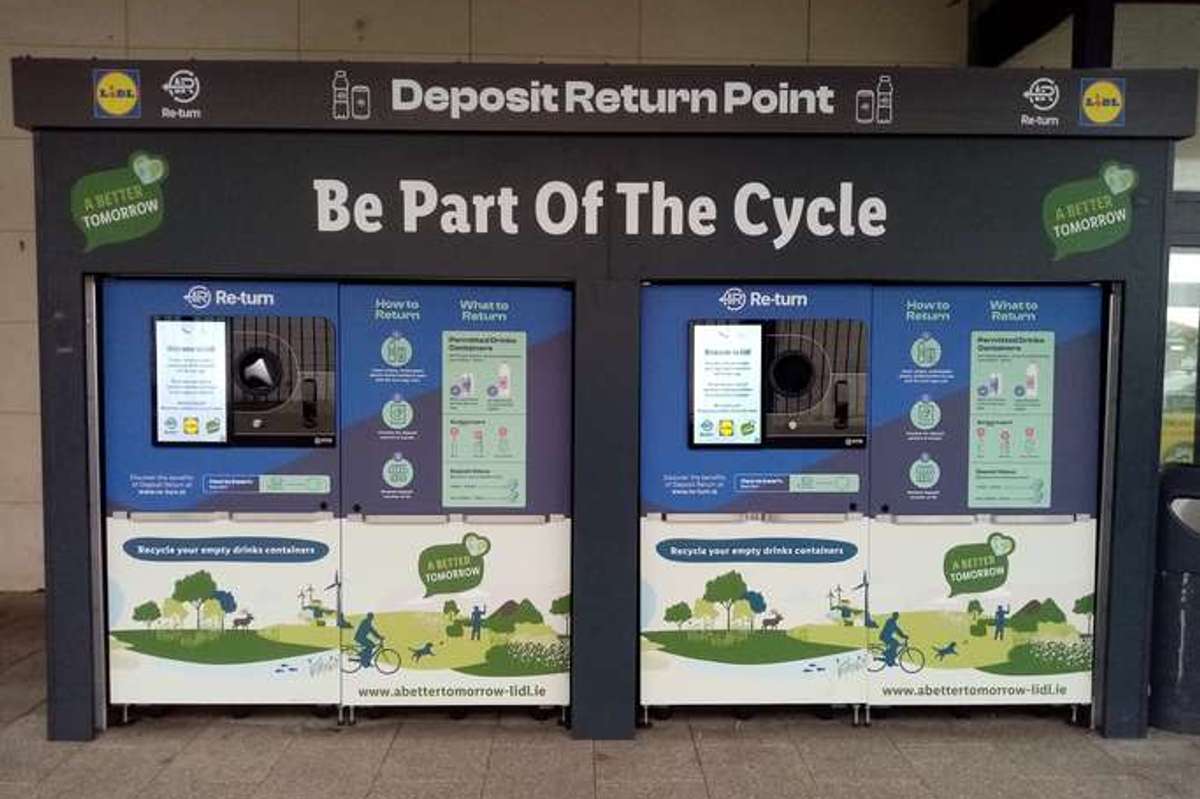
“Alongside this, retailers in Wales will have to invest in a more expensive Reverse Vending Machine for use from October 2027, which keeps glass containers intact, to be ready to accommodate glass from 2031. Those who cannot make this investment will be required to take back glass manually, with health and safety risks, as well as being put at a competitive disadvantage against those retailers who will be able to invest to appropriate RVMs – typically large supermarkets.”