



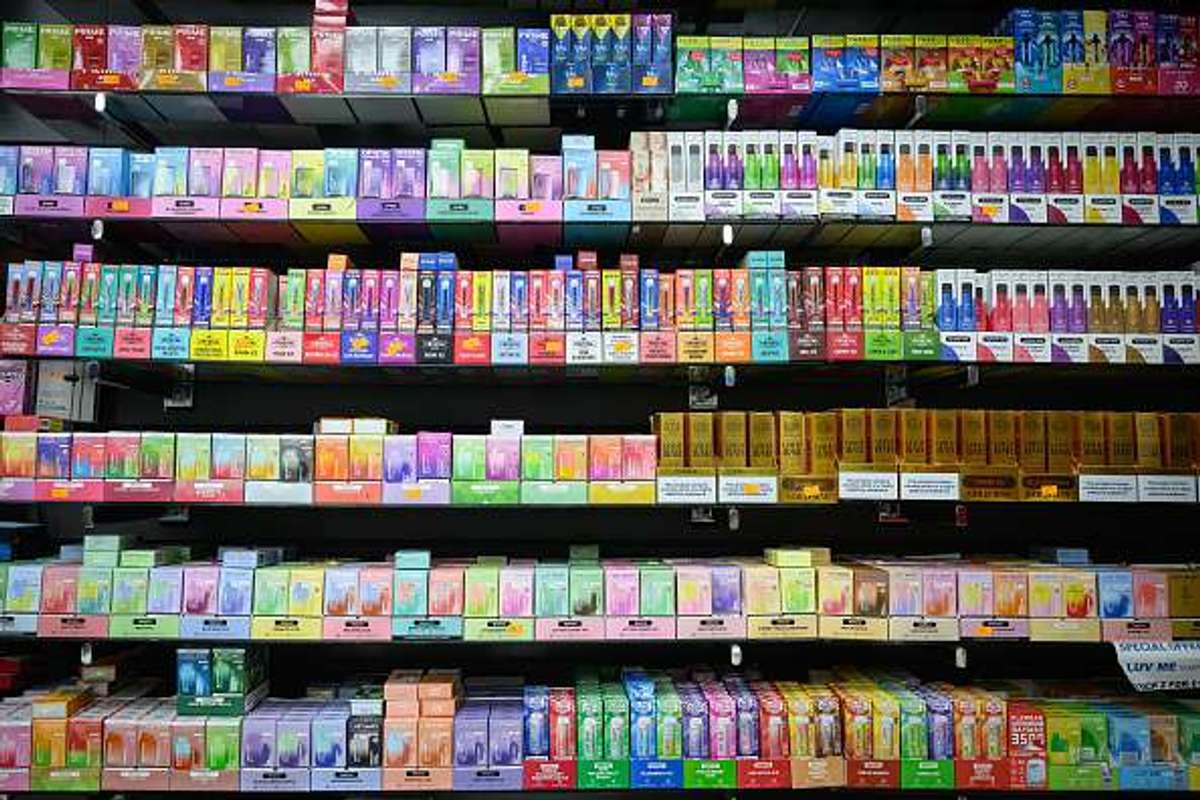

Plans to stop vapes being marketed to children have been unveiled today (10) as part of a UK-wide consultation to introduce plain packaging, restrictions on flavour description rules and keeping vapes out of sight in shops.
The UK government and the devolved governments have launched a consultation that includes proposals to reduce the appeal of vapes to young children, including white packaging with restrictions on text colour, imagery, branding and standardised product information.
There will also be restrictions on flavour names to simple recognisable descriptions and vape devices to be white, black or grey.
Secretary of State for Health and Social Care James Murray said: "The evidence is clear: there are too many young people experimenting with vapes, attracted by the array of flavours, bright colours and marketing displays.
"We want a healthier future for the next generation, so we must act now to reduce the appeal of addictive vapes to our children.
"Vapes are less harmful than cigarettes and can play an important role in helping adult smokers to quit, but they should never be designed or marketed in ways that tempt children. These proposals are about striking the right balance and I urge everyone to have their say."
Standardised packaging has helped reduce the appeal of smoking since its introduction for cigarettes and hand-rolling tobacco in 2017.
The consultation proposes to extend these requirements for all tobacco products, including cigars and cigarette papers.
Further proposals include introducing positive quit themed inserts directing smokers to resources to quit and health warnings for all tobacco products, as well as removing displays for tobacco products in duty-free settings and airports.
The consultation follows the passage of the Tobacco and Vapes Act, which received Royal Assent on 29 April 2026, and sets out proposals to create the UK’s first smoke-free generation, protecting children from nicotine addiction, while ensuring adult smokers can still access vaping products to help them quit.
There is also growing awareness and use among young people of other nicotine products, including nicotine pouches, which are covered by several of the proposed measures.
The consultation seeks views on proposals for vapes and nicotine products including:
- Introducing plain white packaging with restrictions on text colour, imagery, limited branding and standardised safety information
- Restricting flavour names to only simple recognisable descriptions (e.g. “Apple”), banning concept and sensory names as well as names relating to confectionery, sweets, desserts and alcohol
- Mandating manufacturers of vape devices to make them white, black or grey, with no images, limited branding, no cosmetic lights and screens only displaying safety information (e.g. battery level)
- Restrict shop displays in the same way as tobacco products.
Further measures in the proposals for tobacco products include:
- Extending existing plain packaging requirements and health warnings for cigarettes across all tobacco products, herbal smoking products, cigarette papers and heated tobacco devices.
- Introducing positive quit-support messages inside all tobacco products, including cigarettes, hand-rolling tobacco, herbal smoking products and heated tobacco devices
- Extending existing tobacco display restrictions to all tobacco related products, cigarette papers, herbal smoking products
- Removing an existing display exemption for bulk tobacconists, including duty-free shops and airports, meaning that tobacco products would be restricted from display in these settings
- Restricting heated tobacco devices to a drab brown colour the same as tobacco packaging, with no images, limited branding, no cosmetic lights and screens only displaying safety information (e.g. battery level)
This consultation is part of wider action to tackle youth vaping. It follows a ban on single-use vapes (1 June 2025), and comes ahead of the introduction of a Vaping Products Duty (1 October 2026), future bans on the sale of vapes from vending machines and their free distribution (29 October 2026), and an end to the advertising and sponsorship of vapes (1 June 2027).Scotland Public Health Minister Maree Todd said: "Scotland has been a world-leader on a range of tobacco control measures, and while there has been a steady reduction in smoking rates, we know it still damages lives and kills more than 7,000 people a year in Scotland.
"The use of vapes has increased in recent years, particularly among children and young people – with almost one in five children saying they have tried vaping.
"We know that colourful packaging and displays are used as an enticement to children and young people, which is why we are taking action and consulting on options to address this issue. We urge everyone to have their say on how these products are marketed and sold in the future to help protect children and young people and reduce preventable harm in Scotland.
Northern Ireland Health Minister Mike Nesbitt said: "The rise in vaping amongst children and young people concerns me. Restricting the visibility of these products will lessen their appeal, which in turn will reduce youth vaping and prevent future generations from nicotine addiction.
"I consider it vital that we get the views from the public on the future of displaying and packaging of these products. I would encourage everyone to take the time to respond to this consultation.
Wales Deputy Minister for Preventative and Public Health Nerys Evans said: "Vapes are being deliberately designed and marketed to appeal to children - with bright colours, cartoon branding and sweet-sounding flavour names that have no place in products containing addictive nicotine.
"It is simply unacceptable and I would encourage urge everyone to support our efforts to protect children’s health.
Professor Steve Turner, President of The Royal College of Paediatrics and Child Health (RCPCH) said: "Any measures that improve child health are welcome and much needed. As paediatricians, we are deeply concerned by the insidious marketing practices used by tobacco and vaping companies to target our future generations.
For those of us working with children every day, it is clear that only strong and meaningful regulation will protect them from the harms associated with nicotine addiction. We welcome this consultation as an important step towards creating a healthier future for children and young people."
Cllr Dr Wendy Taylor MBE, Chair of the Local Government Association’s Health and Wellbeing Committee, said: "Reducing the appeal of vapes to children with tighter controls on flavours, packaging and promotion, will be key to addressing the concerning rise in youth vaping.
"There is no legitimate reason for nicotine products to come in neon packaging, feature cartoon images, or use flavours and branding designed to catch a child’s eye. Products designed, packaged, and promoted in ways that appeal to children have likely contributed to one in five 11- to 17-year-olds having now tried vaping.
"Councils have long called for an end to vapes being dressed up like sweets and sold within arm’s reach of the pick and mix. This consultation is the moment to close the loopholes that have enabled these products that appeal to children to remain on sale."
Responding to the announcement, the vape industry body, the Independent British Vape Trade Association, IBVTA, said that under the proposals, vape packaging would be limited to plain white with limited branding and controls on its shape and materials. Descriptions of vape flavours would be restricted to a set of criteria, and no flavour names of sweets, alcohol or confectionery would be allowed. Vape devices would be limited to a narrow choice of colours, and screens would only be allowed to show the device status, such as battery life and heat settings. Vapes and other nicotine products could only be kept behind counters and hidden from display, closely following existing rules on tobacco.
Other legislative measures already underway include:
- On the spot fines and closure orders for retailers who break the rules and sell to children.
- Further restrictions on all advertising of vapes, going further than the rules which have been in place since 2016.
- A new excise of £0.22 per ml of vape liquid, from which is expected to raise in excess of £0.2 billion in 2026-27 rising to £0.6 billion by 2030-31. This aims to stamp out the illegal importation and distribution of vapes to the illicit trade, which is associated with illegal sales to children.
- A retailer licensing scheme which will be subject to consultation and aims to tackle rogue retailers and ‘’dodgy shops’’ associated with organised crime.
Gillian Golden, IBVTA CEO said: “The IBVTA looks forward to working positively and progressively with the Government to ensure that vaping becomes less accessible and desirable to children, and to adults that would not otherwise be smoking. However, this can only be considered successful in the context of continuing the decline in adult smoking rates that has accompanied the growth of the UK’s responsible vape sector.
“The Tobacco and Vapes Bill is just one legislative avenue the Government is pursuing to stamp out youth access and tackle the illicit trade. There is a real danger that ‘regulatory overkill’ will hamper the future of vaping as the UK’s leading quit aid for adults.
“If vapes were banned from display in the same way as tobacco products, this risks the Government’s goal of the UK becoming smoke free by 2030 and could potentially kill off the responsible dedicated vape shops already struggling to compete with the illicit trade.
“Even worse, these proposals may contribute to continued misperceptions about the harm of vaping relative to tobacco smoking. New ASH data has found that only six per cent of GB adults can accurately reflect that vaping is a lot less harmful than smoking. It is difficult to see how these proposals would counter those misperceptions.”