



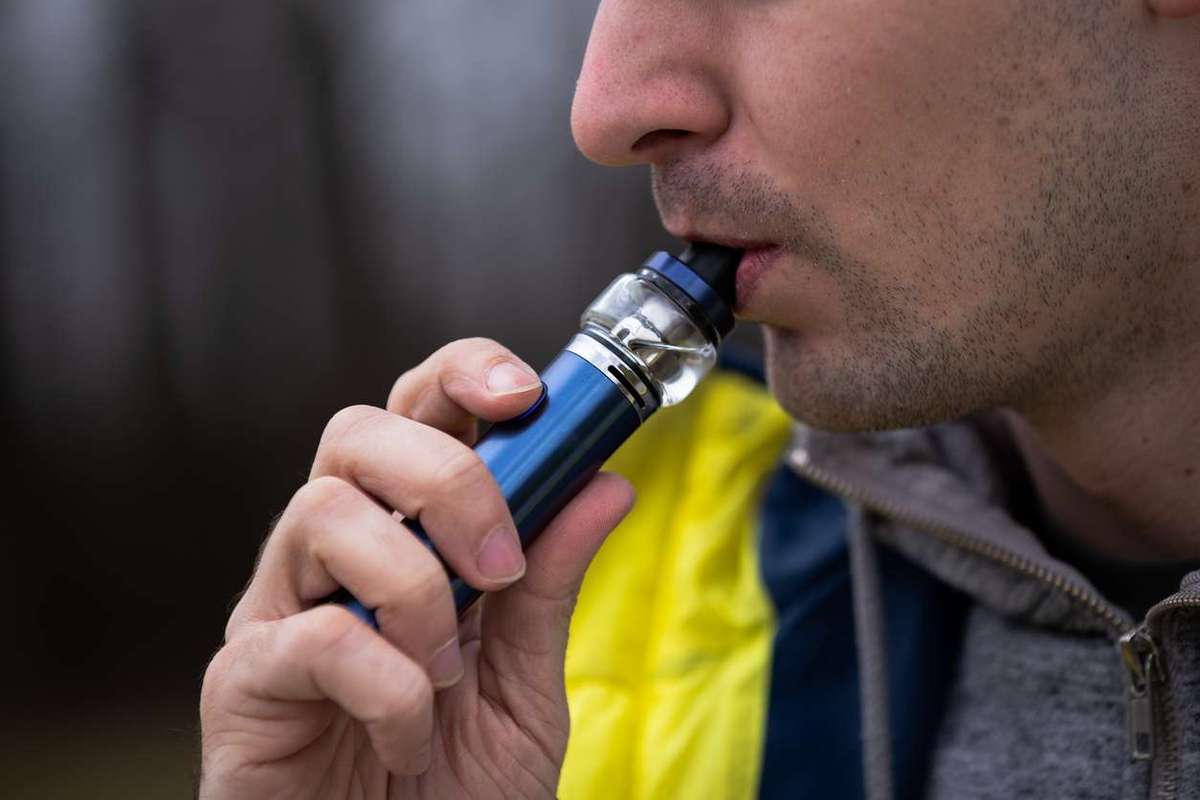

A major US study has found that restrictions on flavoured e-cigarettes significantly reduce vape sales but are linked to a rise in cigarette purchases, a finding that carries fresh relevance after the UK parliament last week approved the Tobacco and Vapes Bill.
The legislation will give the government new powers to restrict vape flavours and packaging, as well as extend smoke-free rules to include vaping in public places where smoking is already banned.
Published in the American Journal of Health Economics, the US analysis examined retail sales data from January 2018 to March 2023 across 44 states, alongside a database of flavour policies.
More than 385 localities and seven US states have implemented restrictions on flavoured e-cigarettes.
The researchers found that flavour restrictions led to “substantial decreases” in total ENDS (electronic nicotine delivery systems) sales, driven by sharp declines in flavoured products, with only limited switching to tobacco or unflavoured variants.
Relevance for UK policy shift
With the UK now moving towards tighter regulation of vaping, the study offers an early indication of how similar measures could reshape the nicotine category.
Crucially, the research identifies a consistent substitution effect: as flavoured vapes became less available, cigarette sales increased.
The authors estimate that for every one 0.7 mL vape pod no longer sold due to flavour restrictions, between 11 and 15 additional cigarettes were purchased, suggesting that “increased cigarette sales could partly or more than fully offset any public health benefit of reducing ENDS sales through [flavour restriction] policies.”
This dynamic could become central to the UK debate, where policymakers are attempting to balance youth prevention with the role of vaping as a harm reduction tool for adult smokers.
Risk of unintended consequences
The increase in cigarette sales was driven primarily by non-menthol products and included brands disproportionately used by younger consumers, the study notes.
Researchers suggest that if flavoured vape options are restricted without viable alternatives, some consumers may revert to combustible tobacco rather than switch to less appealing unflavoured products.
“Policies making ENDS more expensive, less accessible, or less appealing appear to incentivize substitution towards cigarettes,” the authors observe.
Some public health experts have argued that tobacco and nicotine products should be regulated in proportion to their relative risk, with less harmful alternatives such as vaping facing fewer restrictions than combustible cigarettes. In the context of flavours, the study notes that this could mean allowing a broader range of options in vapes than in cigarettes, to avoid inadvertently giving more harmful products a competitive edge.
Implications for retailers
For UK vape and convenience retailers, the combined effect of flavour restrictions, tighter packaging rules and expanded vape-free zones could significantly reshape demand patterns.
The US data suggests that while vaping volumes may decline under stricter rules, traditional tobacco sales could see an uplift, particularly among consumers unwilling to transition to restricted vape formats.
At the same time, the study highlights that a portion of vape sales may shift outside mainstream retail channels, including specialist outlets, which are not always captured in sales data.