



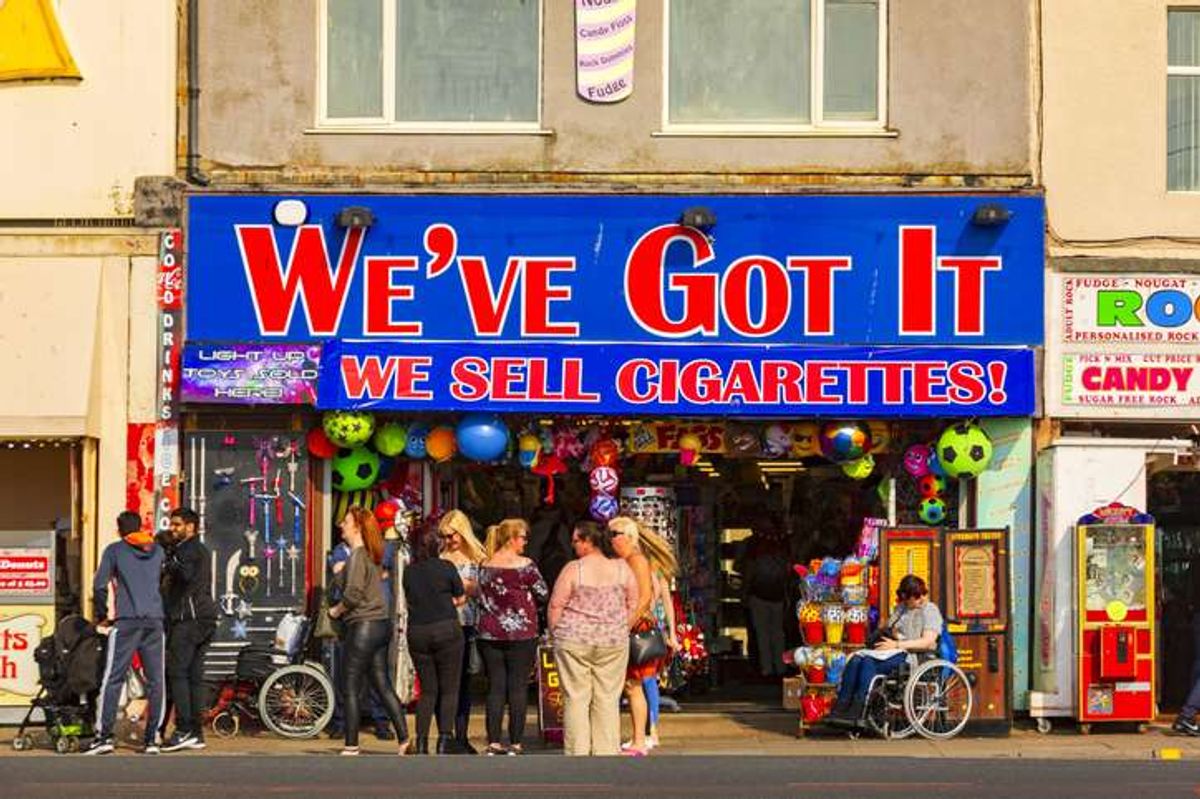

Millions of Britons oppose the new generational smoking ban which means that anyone born on or after January 1 in 2009 will never be legally allowed to buy cigarettes.
Nearly two thirds of people - smokers and non-smokers - are against the new policy set to become law next year (2027).
According to new polling by Whitestone Insight for The Freedom Association even among Labour voters only one in three support the idea. In fact, almost twice as many people support either keeping the law as it is now or increasing the minimum age for both smoking and vaping to 21.
The greatest support for a generational smoking ban comes from the well-off (35 per cent of people in the AB socio-economic groups) and those who’ve never smoked (38 per cent). By banning the legal sale of tobacco to everyone born after 2008, the Bill effectively makes smoking for increasingly large swathes of the population illegal despite demand being unlikely to vanish.
It means a decade from now a 27-year-old could legally buy cigarettes but a 26-year-old could not. In the poll, 29 per cent of people said the law should remain unchanged with smoking and vaping banned for under-18s. Nearly as many – 26 per cent - favoured increasing the minimum age for smoking and vaping to 21.
The Government’s preferred option of a ratcheting ban on buying tobacco as the years roll by won the support of just 30 per cent, meaning that a comfortable majority – 55 per cent – want it scrapped. Others were ‘don’t knows’ or favoured minor tweaks to the law.
David Campbell Bannerman, Chairman of The Freedom Association, said: “It looks like the generational smoking ban has gone up in smoke. Nearly two thirds of the public are opposed to what is an unworkable and unenforceable proposed law.
“Shopkeepers, who face fines otherwise, have better things to do than quizzing middle-aged men about whether they are old enough to smoke. Yet this is where this laughable policy is leading us. On top of that, the European Union is making clear that the ban is illegal in Northern Ireland because it is still subject to single market rules.
“Keir Starmer is good at one thing – U-turns. He should perform another one and drop the whole idea.”
The Institute of Economic Affairs has warned that demand will “get pushed underground,” driving black-market tobacco sales.
One submission to MPs considering the Bill earlier this year cautioned that the “entire UK tobacco market will be pushed underground and into the hands of criminals,” with profits flowing to organised-crime groups rather than legitimate retailers.
If there was a General Election today, just 34 per cent of Labour supporters would support the ban.
Meanwhile two thirds of Reform voters believe the ban to be "unworkable". Concern about rising crime in the aftermath of the Bill is a priority for many people.
Voters in the Red Wall (North East, North West, East and West Midlands) are most concerned about the potential impact of illegal cigarette trading by criminal gangs following the introduction of the proposed smoking ban.
Reform MP Lee Anderson, who opposes the Bill, said: “There isn’t a better example of warped political priorities than the upcoming Tobacco and Vapes Bill.
“While my working-class voters in Ashfield battle higher taxes, unemployment and a soaring cost of living crisis, the Labour government pushes through a nanny State policy originally – shamefully – mooted by the Conservatives.
“The bid to outlaw smoking through a generational ban which will see shop assistants asking for birth certificates before selling a packet of Benson & Hedges is unenforceable and costly to the taxpayer, while fuelling a fresh crop of dodgy dealing black-market spivs.”
There is no significant variation between men and women on the ban although women are more likely than men to want to raise the smoking age to 21 across the board (29 per cent to 22 per cent).
Lord Strathcarron, who sits as a crossbencher in the House of Lords, said: “Like many sensible-minded people in Westminster, I had hoped against hope that the Labour Government had realised that it was an unworkable mess that runs roughshod over personal liberty, places ridiculous burdens on small independent shops and risks an explosion in criminality.”
The Tobacco and Vapes Bill has completed its initial passage through the House of Commons and is now in the House of Lords.
After the Lords’ final reading, the Bill will return to the Commons for approval. But that process appears to be severely delayed by wrangling with Brussels over the Bill’s legality in Northern Ireland, which is subject to EU law on tobacco.