



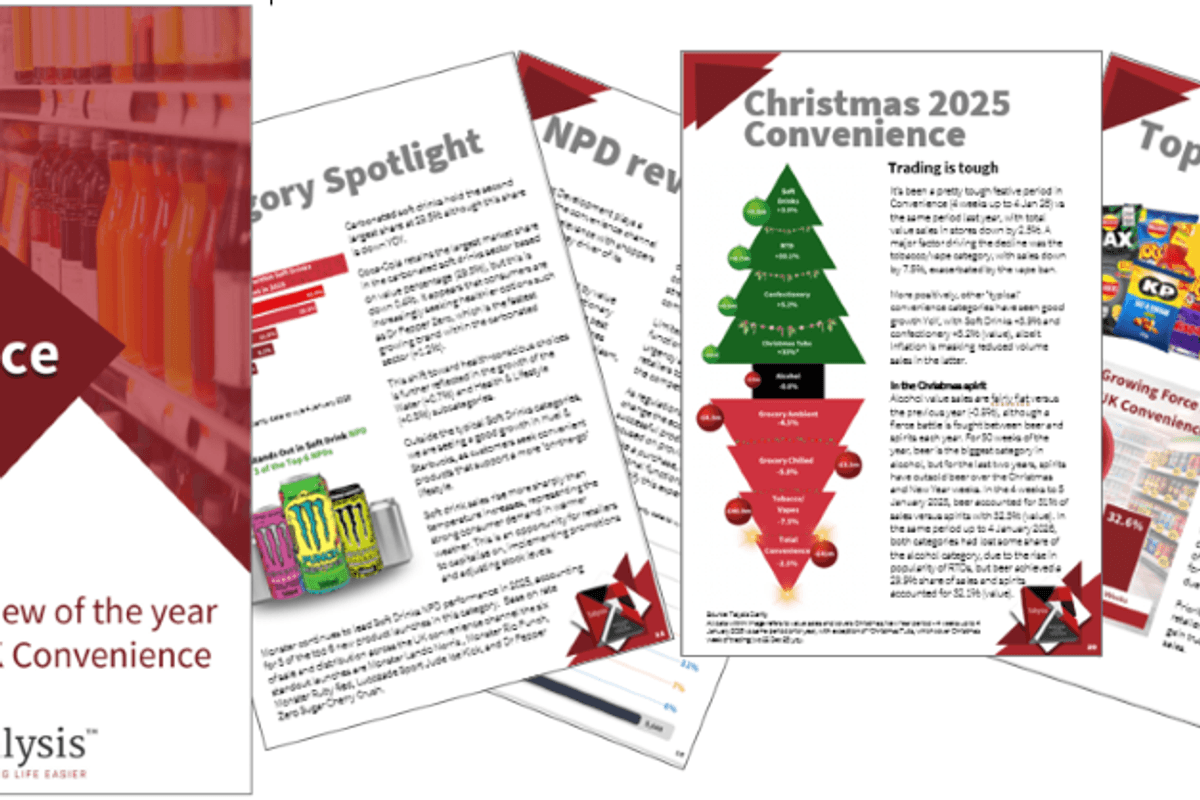

Launched today, “Convenience 2025: A review of the year in UK Convenience” is based on EPoS data from 1000s of independent and symbol group convenience stores throughout the UK. It provides full barcode and transactional insight into the UK convenience channel and indicates that, while the convenience channel is in decline, performance is becoming increasingly polarised, with growth focused on specific missions and categories rather than being evenly distributed across the store.
In 2025, the convenience channel was down 1.7 per cent overall YOY, with the rate of decline worsening to -2.5 per cent in the final four weeks of the year, to 4 January 2026. Inflation continues to reduce discretionary spend, while regulatory intervention – especially the disposable vape ban – has had a disproportionate impact on convenience, due to its heavy reliance on tobacco-related footfall. Performance varies by region, with Scotland standing out as a notable growth market.
Impulse has firmly established itself as the primary driver of convenience. Categories that meet on-the-go needs, as well as offering functionality, are gaining relevance, with Soft Drinks in particular standing out as a clear growth engine. The department accounts for 17.5 per cent of total convenience value sales, driven predominantly by the Energy/Sport drinks category.
Innovation, functionality and NPD have reshaped the department, reinforcing Soft Drinks’ role in driving footfall and impulse spend.
Alcohol shows a similar scenario. Established segments continue to decline, but RTD products are rapidly gaining share. Supported by chilled availability and impulse-led execution, RTDs are showing growth in every region and are on track to challenge, if not overtake, cider in 2026.
Tobacco and smoking alternatives highlight the channel’s vulnerability to regulatory change. It remains the largest department in convenience, but the disposable vape ban has altered purchasing behaviour and category economics.
In addition to channel performance that incorporates category winners and losers, the report also delves into some of the major categories and their growth drivers, the importance of NPD in the sector, and how topical issues are shaping the market. As recently reported, it also includes a round up of the Christmas/Festive period in convenience and beyond.
“Our Convenience 2025 report provides a wide-ranging and insightful look into a hugely important part of the UK grocery market, based on accurate, robust and up to date information,” said Ed Roberts, MD of Talysis Ltd.
“These are challenging times for convenience operators and the extra burdens created by the disposable vaping ban, increased business costs and ongoing inflationary pressures mean that only the best will survive in the long-run. However, it’s not all doom and gloom out there and there are opportunities for retailers to capitalise on. Focusing on customer missions, high-growth categories, agile implementation, and clarity in pricing will be critical to driving growth in a challenging market. Convenience retailers will need to demonstrate their long-standing resilience and ingenuity once more as we go through 2026, but there are some positives to take from our findings.”