



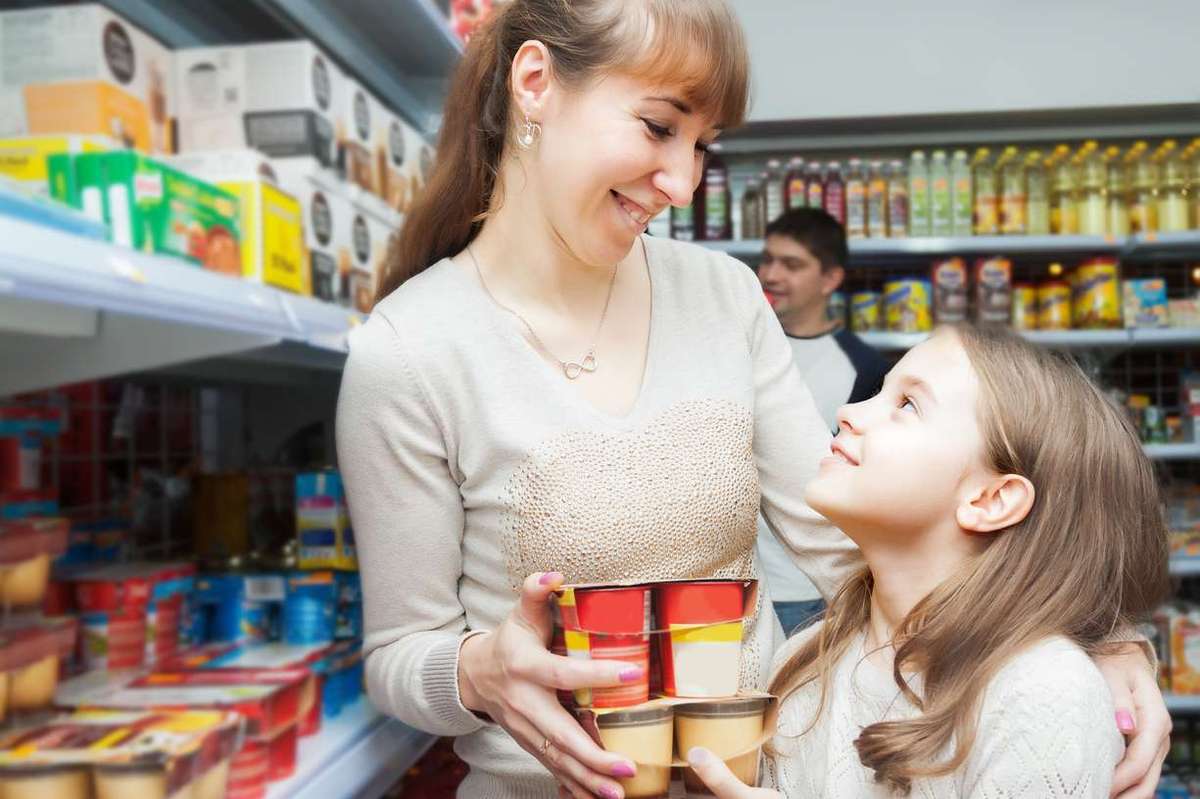

Children’s yoghurts marketed with colourful packaging and child-friendly characters can contain substantial levels of sugar, according to new research from Action on Salt & Sugar at Queen Mary University of London.
The survey of 104 children’s yoghurts found an average sugar content of 8.2g per 100g, with levels ranging from 4.7g to 14.1g per 100g.
Nestlé Smarties Split Pot Vanilla had the highest sugar content at 14.1g per 100g, equivalent to 15.1g – almost four teaspoons – per serving.
The Collective Great Dairy Natural + Vitamin D and Yoplait Petits Filous No Added Sugar Strawberry & Banana had the lowest levels in the survey, at 4.7g per 100g.
Nestlé products had the highest average sugar content among the companies surveyed, at 10.7g per 100g, followed by Lidl at 9.4g and Aldi at 9.0g. Sainsbury’s products had the lowest average at 6.2g, followed by Yeo Valley at 6.8g.
Action on Salt & Sugar estimated that, after accounting for naturally occurring milk sugars, one in five products would provide at least 25 per cent of the recommended free-sugar limit for a child aged four to six in a suggested serving.
Only two products in the survey were classified as low in total sugars.
The research also found some evidence of progress on reformulation. Average sugar levels across the children’s yoghurts surveyed fell from 9.2g per 100g in 2021 to 8.2g in 2026, an 11 per cent reduction.
The Collective, from Yeo Valley, reduced average sugar levels across its children’s yoghurt range by 32 per cent, from 9.1g to 6.3g per 100g. Asda recorded a 16 per cent reduction, while Lidl’s Milbona Squeezy Pouches Strawberry yoghurt reduced its sugar content by 43 per cent, from 14.1g to 8.0g per 100g.
However, Action on Salt & Sugar said progress across the sector remained inconsistent and criticised the reliance on voluntary action.
The organisation also highlighted the continued use of cartoons, bright colours and familiar characters on products aimed at children. While restrictions apply to some forms of advertising for foods high in fat, salt and sugar, it said there are currently no equivalent rules preventing less healthy products from using child-appealing packaging.
“Parents could reasonably expect products covered in cartoons and specifically marketed to children to be among the healthier options available, but our findings show that is often not the case,” Dr Kawther Hashem, head of research and impact at Action on Salt & Sugar, said.
“Some companies have shown reductions in sugar is possible, proving that reformulation can be achieved. However, progress remains inconsistent and far too slow because it relies largely on voluntary action.”
The organisation is calling for child-appealing packaging to be reserved for healthier products, alongside mandatory reformulation policies, transparent reporting and enforcement across the food industry.
“Parents should not have to choose between providing nutritious foods and avoiding excessive sugar in products specifically marketed for children. Government must introduce stronger measures to ensure all companies reduce sugar levels, and that child-appealing packaging are reserved for the best products out there,” Dr Hashem said.
The findings were published alongside polling for the Recipe for Change campaign, which found that 60 per cent of Britons believe eating well is difficult today, while 47 per cent said it is harder to eat a balanced diet than it was 20 years ago.