



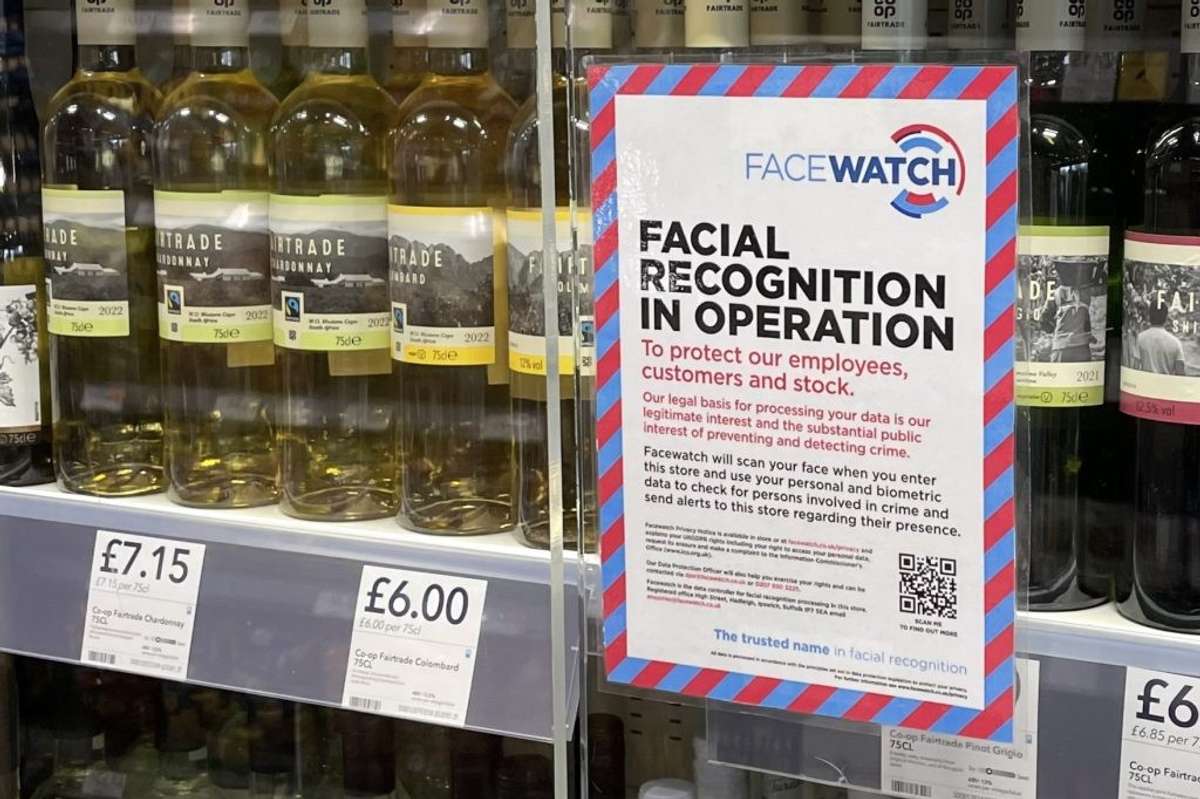

Facial recognition provider Facewatch cited the recent incident at a Sainsbury’s store in London, in which an innocent customer was wrongly asked to leave the premises, as the result of “human error”.
While Sainsbury's maintains that the app has not given the wrong signal and that it was the staff's mistake, a leading civil liberties group said it regularly hears from members of the public who have been affected by the use of facial recognition technology, highlighting some of the challenges facing retailers as they increasingly adopt facial recognition technology for security and loss prevention.
In the most recent case of mistaken identity, a London-based shopper Warren Rajah was shopping in the Elephant & Castle branch of Sainsbury's when he was suddenly approached by three staff members and was told to leave the store immediately.
Despite being a regular shopper at the branch, he was not given a proper reason and was directed to contact Facewatch who in turn asked him to send in a picture of himself and a photograph of his passport.
He was later told by Facewatch that there were "no incidents or alerts associated with [him]" on its database.
Rajah said he felt as if he had faced a "trial" in the supermarket aisle, with the three Sainsbury's staff members acting as his "judge, jury and executioner". He also claimed that Sainsbury's staff is "insufficiently trained" to handle Facewatch leads.
Both Facewatch and Sainsbury's reportedly have since apologised to Rajah.
Speaking with Asian Trader, a Facewatch spokesperson acknowledged the distress caused to Rajah and confirmed he was never on their database.
"We’re sorry to hear about Mr Rajah’s experience and understand why it would have been upsetting. This incident arose from a case of human error in-store, where a member of staff approached the wrong customer.
"Our Data Protection team followed the usual process to confirm his identity and verified that he was not on our database and had not been subject to any alerts generated by Facewatch.”
According to Facewatch, alerts are only generated for individuals who have been lawfully added to the system, and every alert is "intended to be reviewed before any action is taken".
Sainsbury's, on the other hand, maintains that Facewatch did detect an offender entering the premises but the wrong person was approached by the staff.
A Sainsbury's spokesperson told Asian Trader, "We have been in contact with Mr Rajah to sincerely apologise for his experience in our Elephant and Castle store. This was not an issue with the facial recognition technology in use but a case of the wrong person being approached in store."
The Sainsbury's spokesperson stressed that Facewatch system has a "99.98 per cent accuracy rate" and all matches are reviewed by trained managers, with additional training now being provided to ensure our safeguards are consistently followed.
"The results from our stores trialling this technology have been encouraging, with a 46 per cent reduction in logged incidents of theft, harm, aggression and anti-social behaviour and 92 per cent of offenders not returning to our stores," said the Sainsbury's spokesperson.
The incident also raised questions about Facewatch's requirement for customers to provide passport copies and photographs to verify they are not on the company's database.
Facewatch defended this practice as a legal requirement under UK GDPR regulations. The company explained that when members of the public contact them to ask whether their personal data is held, this is treated as a Subject Access Request (SAR).
"By law, before any information can be disclosed, we must first verify the identity of the person making the request to ensure they are who they claim to be. This safeguard exists to prevent personal data being shared with the wrong individual and applies to all organisations that process personal data, not just Facewatch.
"It is therefore not possible for any organisation to confirm or disclose sensitive information without completing appropriate identity checks as part of this lawful process. We always aim to handle these Subject Access Requests as quickly as possible, as we did in this particular case.
"We can reassure Mr Rajah and anyone making a subject access request to Facewatch that we do not keep or store that data and we do not use it for any other purpose whatsoever; it is deleted immediately."
The case adds to ongoing public debate about the use of facial recognition in retail spaces and the balance between security measures and customer privacy rights.
Civil liberties organisation Big Brother Watch claims that it "regularly hears from members of the public who are left traumatised after being wrongly caught in this net of privatised biometric surveillance".
Jasleen Chaggar, Legal and Policy Officer, Big Brother Watch, told Asian Trader, "The idea that we are all just one facial recognition mistake away from being falsely accused of a crime or ejected from a store without any explanation is deeply chilling.
"To add insult to injury, innocent people seeking remedy must jump through hoops and hand over even more personal data just to discover what they’re accused of. In the vast majority of cases, they are offered little more than an apology when companies are finally forced to admit the tech got it wrong.
"The government’s promise to regulate this invasive technology will be payment to lip service unless it reins in the unchecked expansion of facial recognition by retailers."
While the technology itself may function as designed, the case underscores the importance of proper staff training and clear protocols for acting on system alerts.
Earlier in June, a woman shopper had to face harassment and public humiliation recently at a Home Bargain store in Greater Manchester since she was wrongly marked as a shoplifter due to an error involving Facewatch.
Facewatch confirmed at the time that the individual was incorrectly added to the retailer's watch list due to the "human error" at the store.