



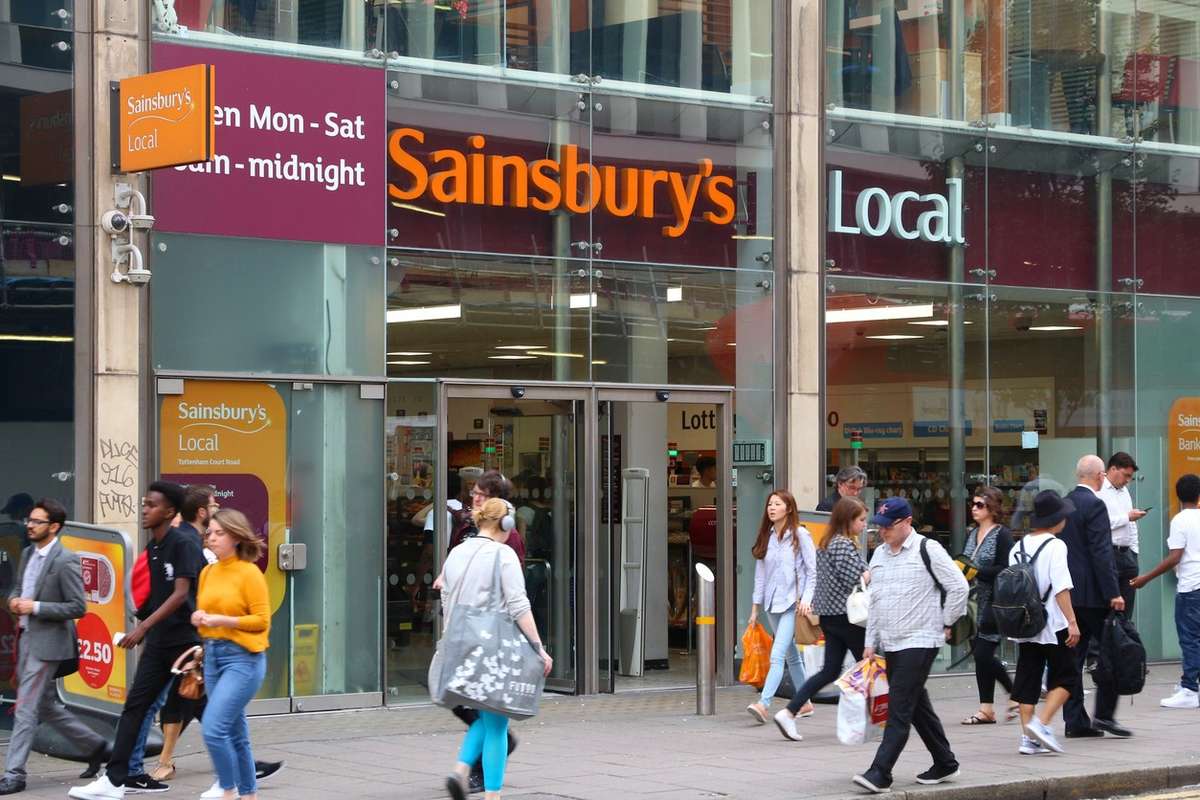

Sainsbury's would welcome a regular police presence in its stores to deter shoplifting and violence and abuse against staff, its boss said on Thursday.
Sainsbury's CEO Simon Roberts said he was pleased to see a recent commitment from the UK government to recruit 3,000 extra neighbourhood police officers and community support officers over the next 12 months and wanted to see them in his stores.
"Police on the beat are very welcome in our supermarkets and our stores as much as they can be. I think that would be a really good thing to see," Roberts told reporters after Sainsbury's reported full-year results.
"It would just make the point that this issue is really serious, it really matters, it's really at the top of the agenda. Our colleagues shouldn't have to face these concerns and we need the help and support of the police," he said.
While official figures show shoplifting offences in England and Wales dipped 1 per cent to just over 509,000 incidents in 2025, industry estimates suggest the true scale is far higher, with millions of thefts and daily incidents of violence and abuse reported across the sector.
Roberts also welcomed new legislation that will abolish the £200 threshold for so called "low level" theft and create a specific offence for assaulting retail workers.
Convenience delivers steady growth
Sainsbury’s reported solid underlying trading, with group sales excluding fuel rising 4.9 per cent to £25.9 billion and grocery sales up 5.2 per cent, supported by volume growth and market share gains.
Convenience continued to play a steady role in that performance. Sales in the channel grew 3 per cent, driven by strong contributions from new space and recently invested stores. The retailer opened 33 new convenience outlets in the financial year, with some outperforming expectations by more than 50 per cent.
Sainsbury’s plans to open at least 20 additional convenience stores in the coming year, reinforcing the channel’s role in its growth strategy and contributing around 0.5 per cent to overall sales growth in 2026/27.
Retail underlying operating profit edged down 1.1 per cent to £1.025bn, reflecting ongoing cost inflation and continued investment in value amid a competitive market. However, statutory profit after tax rose sharply by 55.3 per cent to £393m, aided by lower one-off costs and improved financial services performance.
The business also delivered retail free cash flow of £574m, up 8.1 per cent, and proposed a full-year dividend of 13.7p per share.
Tackling crime through technology
Alongside calls for greater policing, the retailer is investing heavily in in-store security and loss prevention, much of which directly impacts convenience stores.
Measures include the rollout of self-checkout video analytics across more than 440 supermarkets, enhanced shelf-edge protection in over 800 convenience stores, and trials of facial recognition technology in partnership with Facewatch.
Early results from the facial recognition trial showed a near 50 per cent reduction in incidents and a significant drop in repeat offending, prompting expansion to additional locations.