



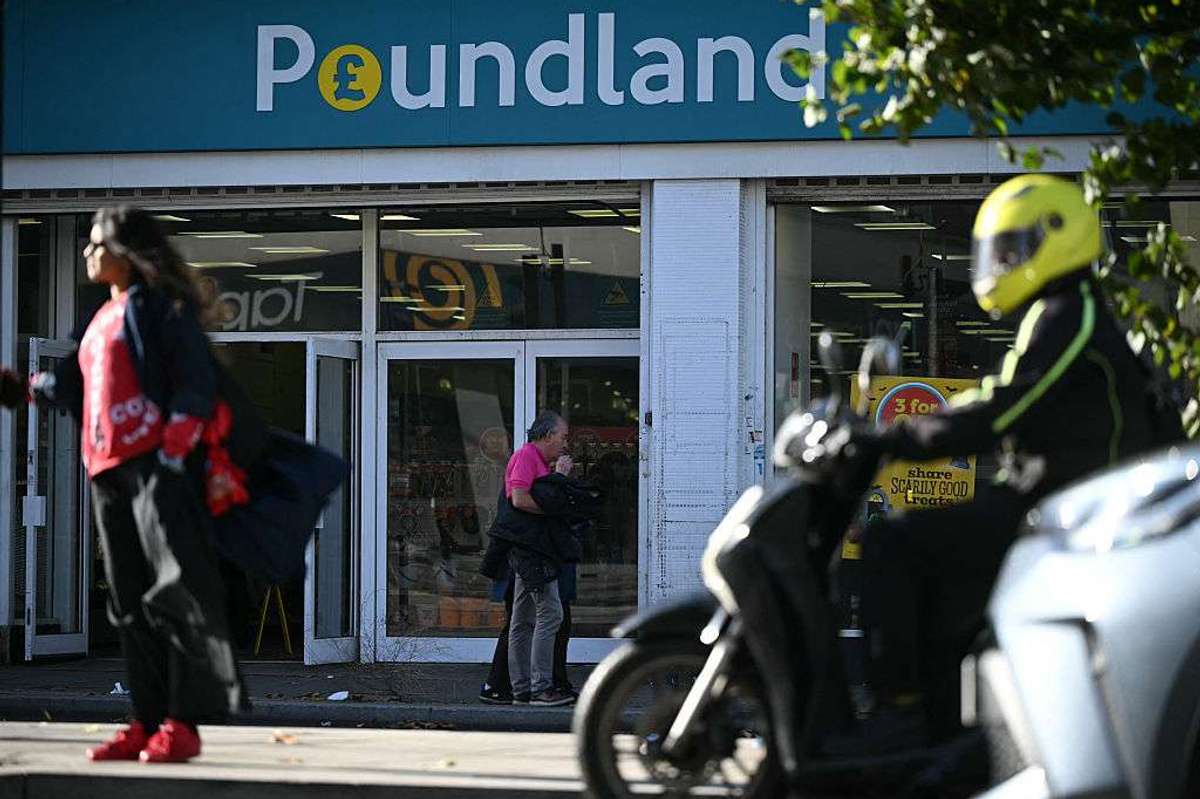

The collapse of Poundland could have consequences far beyond its 11,000 employees, with a potential knock-on effect on suppliers, distribution networks and businesses on the high street, an economics expert at Birmingham City University (BCU) has warned.
Dr Danilo Spinola, Senior Lecturer in Economics at BCU, said the loss of jobs could reduce spending in local shops, restaurants and other businesses, creating what economists call a “multiplier effect”, where an initial loss of income leads to further losses elsewhere in the economy.
“When people lose their jobs, they lose purchasing power and spend less in shops, restaurants and other local businesses,” he said. “This could include potential job losses for Poundland’s suppliers and distribution networks.”
His comments follow Poundland’s entry into administration after its owners, US-based Gordon Brothers, failed to secure a buyer to rescue the retailer. The move puts around 11,000 jobs at risk and leaves the future of its approximately 600 stores uncertain.
The stores and distribution centres will continue trading during the administration process. However, the business is expected to be broken up, with some stores potentially sold to rival retailers.
Dr Spinola stressed that jobs being at risk should not be confused with jobs actually being lost, pointing out that administration could still provide an opportunity to restructure the business or find new buyers. Individual stores could also be acquired by other retailers, potentially preserving some employment.
However, he warned that workers may struggle to find alternative jobs offering equivalent wages and working conditions, particularly in areas where employment opportunities are already limited.
For Dr Spinola, Poundland’s predicament also exposes a wider challenge facing the discount retail model.
“There is, however, an interesting paradox,” he said. “The same economic conditions that encourage consumers to shop at discount retailers also make it more expensive for these retailers to operate.”
He pointed to Poundland’s original £1 pricing model as an example of the pressure created by rising purchasing, transportation and labour costs. Maintaining low prices becomes increasingly difficult, but raising them risks weakening the proposition that attracts customers in the first place.
“Discount retailers are particularly exposed to this tension because they rely on narrow profit margins and large volumes of sales,” he added.
Dr Spinola said the immediate priority should be to secure sufficient working capital to finance day-to-day operations. If an independent assessment finds the underlying business commercially viable, restructuring debt, renegotiating repayment terms and attracting new investors could offer a route to a sustainable future.
He also cautioned against viewing Poundland simply as a collection of stores and physical assets. Over more than three decades, the retailer has built distribution networks, purchasing capabilities, supplier relationships, brand recognition and knowledge of consumer behaviour.
Dr Spinola said the Government could play a role in facilitating negotiations, ensuring transparency and supporting employment, without necessarily using taxpayers’ money to rescue private investors.
Despite the immediate uncertainty, Dr Spinola expects discount retailers to remain a feature of UK high streets as consumers continue to face cost-of-living pressures.The collapse has also prompted concern across the independent retail sector.
Meanwhile, the British Independent Retailers Association (Bira) said it was saddened by the news, particularly given the timing just weeks before Christmas.
Jeff Moody, COO of Bira, said: “We are saddened to hear that so many jobs are at risk, especially just before Christmas. These are people who have given years of service to the retail sector, and our thoughts are with them and their families.”
He pointed out that Poundland had taken over leases on up to 71 former Wilko stores following the latter’s collapse three years ago, but those sites and hundreds of other stores now face an uncertain future.
“We hope a resolution can be found that keeps as many stores open and as many people in work as possible. Poundland has a talented, experienced workforce, and retail cannot afford to lose those skills,” Moody said.
“Shops like these drive footfall into our town centres and high streets, so if they close, there will be a knock-on effect for the independent businesses around them.”