



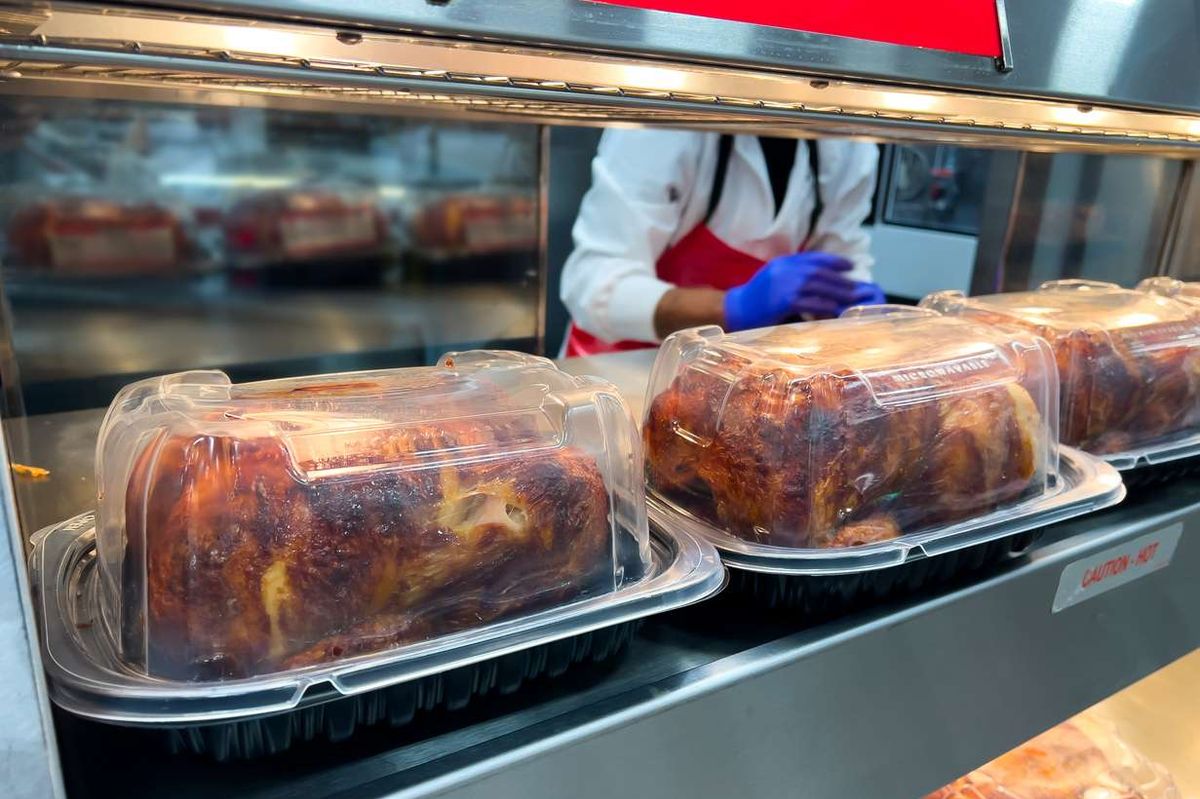

Morrisons is facing a potential £17m tax bill after losing a long-running High Court case with HMRC over the VAT treatment of its rotisserie chickens.
The court ruled on 11 December that Morrisons’ whole cooked chickens should be subject to the standard 20 per cent value added tax (VAT) rate, finding they fall within the definition of hot takeaway food rather than being “incidentally hot”.
The dispute dates back more than a decade and centres on changes introduced under former chancellor George Osborne’s controversial 2012 "pasty tax", which extended VAT to hot takeaway food sold by supermarkets and bakeries. While the rules were later refined, food kept in hot cabinets remains liable for VAT, while products sold cooling on racks can be zero-rated if only “incidentally hot”.
Morrisons argued that its rotisserie chickens were typically eaten cold or reheated later at home and should therefore be exempt. However, the court heard that the chickens were sold in foil-lined bags labelled “caution: hot product” and removed from sale after two hours, at which point they were still significantly above ambient temperature.
Evidence presented showed chickens in the bags remained at between 42°C and 45°C after two hours, compared with around 31.8°C if allowed to cool naturally. The judge concluded that the packaging retained heat and that the products were not on a cooling trajectory consistent with being “incidentally hot” at the point of sale.
The ruling also noted that Morrisons had not disclosed key details to HMRC, including the heat-retaining nature of the bags and the practice of discarding unsold chickens while still hot. While the court accepted that HMRC had not provided clear guidance on rotisserie chickens in the early years of the policy, it rejected Morrisons’ claim that it had a legitimate expectation the products would be zero-rated.