



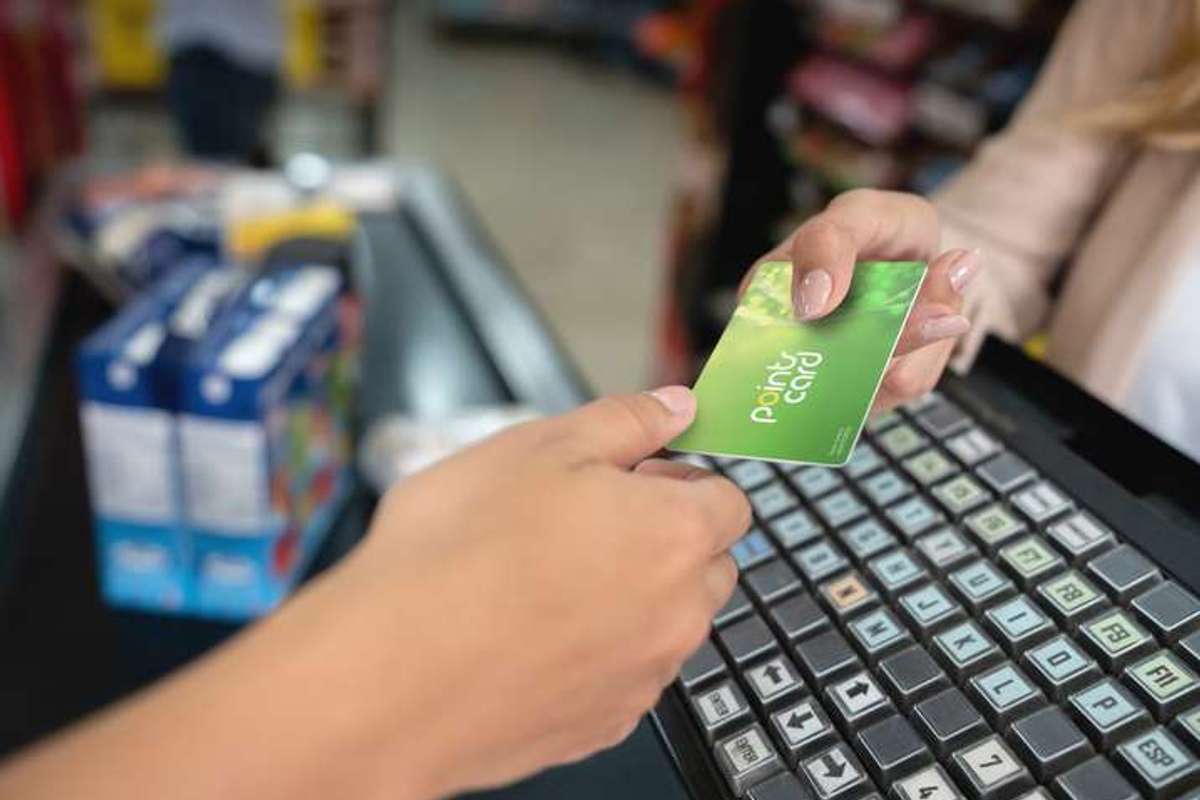

While Britain’s major supermarkets have turned loyalty schemes into powerful tools for pricing, data and customer retention, most independent convenience stores still operate without them. At a time when nearly every shopper carries multiple loyalty cards and competition is tightening from all sides, why do most convenience stores remain largely without one?
The numbers that frame the debate are well established. The Competition and Market Authority (CMA) found in a recent report that 97 per cent of shoppers are a member of at least one supermarket loyalty scheme.
As of early 2024, approximately 22 million households in the UK are active users of the Tesco Clubcard, based on data from Statista. The program is considered the UK's best-known loyalty scheme, with usage accelerated by the introduction of "Clubcard Prices" and extensive coupon issuance.
Sainsbury's Nectar program has approximately 18 million active members while the Asda Rewards loyalty app has over six million active users in the UK, a significant rise since its nationwide launch in 2022.
The push from supermarkets is reflected in customer uptake.
According to Mintel's 2025 UK Customer Loyalty in Retailing Market Report, nearly 60 per cent of UK consumers now hold “four or more” loyalty cards, highlighting a surge in engagement, majorly driven by the cost-of-living crisis.
And yet the majority of the UK's 50,000 independent convenience stores have no structured mechanism for recognising, rewarding or retaining their most regular shoppers.
That gap sits at the heart of a debate that is sharpening as the competitive environment around the sector tightens.
That gap tells a story. It is a tale of infrastructure, investment, and the structural peculiarities of running a loyalty scheme for a convenience store as well as for symbol groups; but it is also, increasingly, a story about whether convenience retail can afford to keep ignoring the loyalty question.
The complexity
The UK convenience market is forecast to be worth £48.8 billion in 2025, but the headline figure masks a more difficult underlying picture.
The convenience channel was down 1.7 per cent overall year-on-year in 2025, with the rate of decline worsening to -2.5 per cent in the final four weeks of the year to 4 January 2026, according to Talysis figures. Inflation continues to suppress discretionary spend, while the disposable vape ban has had a disproportionate impact on a sector heavily reliant on nicotine-related footfall.
Tom Fender, Development Director at TWC Group, has a clear opinion of why the sector finds itself in this position.
"The single biggest problem independent convenience stores are facing is declining footfall," he says. "Anything which a retailer believes will add footfall should be tried and tested, and that's the way that independent retailers should be thinking."
Loyalty schemes are especially influential among younger and financially struggling shoppers: precisely the demographic that independent convenience stores, often embedded in dense urban communities, are well-placed to serve.
So why has uptake from the symbol groups has been so hesitant?
Fender explained, "Supermarket chains are kind of national managed chains where they agree the range on a store-by-store basis and it gets executed across the whole estate.
"With all the benefits of a managed chain, it's easier to set up and deploy across a managed estate versus an independent estate. It is very difficult for a symbol operator to run a loyalty scheme.
“Additionally, these multi-programmes cost a lot of money and need really clever and very sophisticated IT systems and data systems as well."
The symbol group market was worth £15.5 billion as of the last IGD estimate, with a 42 per cent share of the UK convenience market through over 17,000 shops.
This structure, so powerful in many ways, becomes a hindrance when loyalty is on the agenda.
Retailer Dee Sedani, a respected voice in the independent sector with two stores in Derbyshire, frames the same challenge from the shop floor.
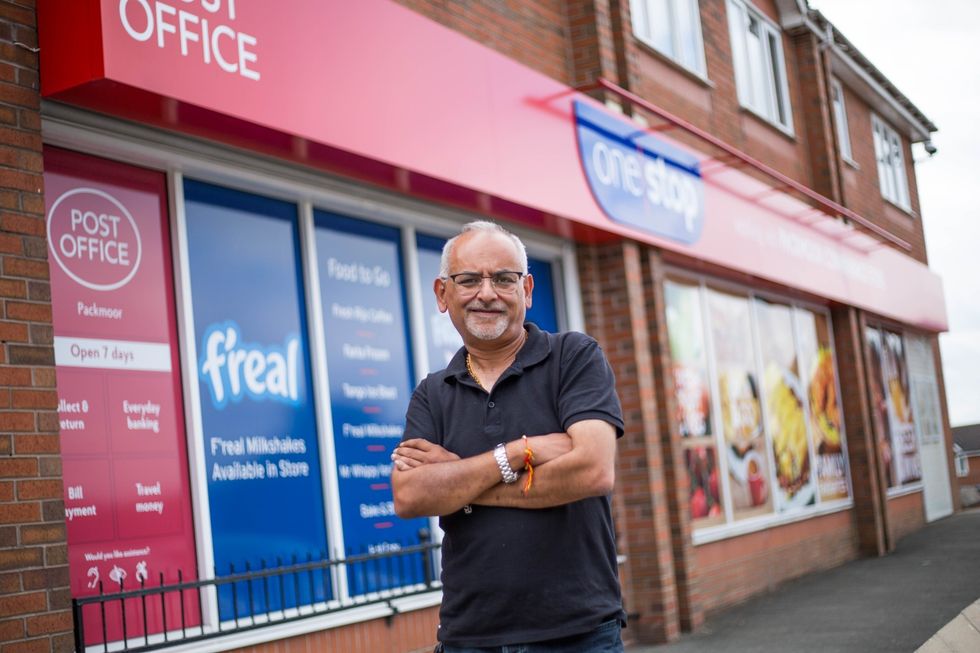 Dee SedaniDee Sedani
"Running a loyalty scheme in the convenience sector is complicated for a symbol group," he said.
"They will have to set up infrastructure, data collection, and so much more. And then there is the complication of bringing every retailer of the symbol group on board."
The "all or nothing" problem, as Sedani frames it, is critical.
"If a customer goes to any Tesco and his Clubcard remains valid, only then is there any point of such a system. It cannot work if some Premier retailer is accepting the loyalty card, and some are not.
"I don't think loyalty schemes are a solution for our sector, unless everyone signs up, which is far trickier.”
The Changes
It is a scepticism born of experience. But the data, and the behaviour of a new cohort of next generation retailers, is beginning to push back.
Jisp and MyDD Points are some of the names that pop up when the conversation is about loyalty and rewards scheme in the convenience sector.
Catching up fast is K-Card, an app that turns local shop receipts into a gamified loyalty program. It is live in stores across Costcutter, Premier, and fully unaffiliated independents.
The fact remains, though, that combined together, they still do not cover even 10 per cent of the stores.
Kareem Ameen, co-founder and CEO of K-Card, spent 12 years managing FMCG media budgets at major agency groups
Speaking with Asian Trader, Ameen, explained why it is a tough nut to crack for symbol groups.
“First, cost and complexity. Building a loyalty scheme from scratch requires serious technology investment. Tesco spent years and significant capital building Clubcard and dunnhumby. Sainsbury's invested heavily in Nectar360.
“An independent retailer does not have the resources to build that kind of infrastructure on their own.
“Second, fragmentation. There are over 50,000 convenience stores in the UK, 71 per cent run by independents across dozens of symbol groups and wholesalers. Each store may use a different ePOS system, a different wholesaler, different product ranges. There has been no aggregation layer to unify that data.
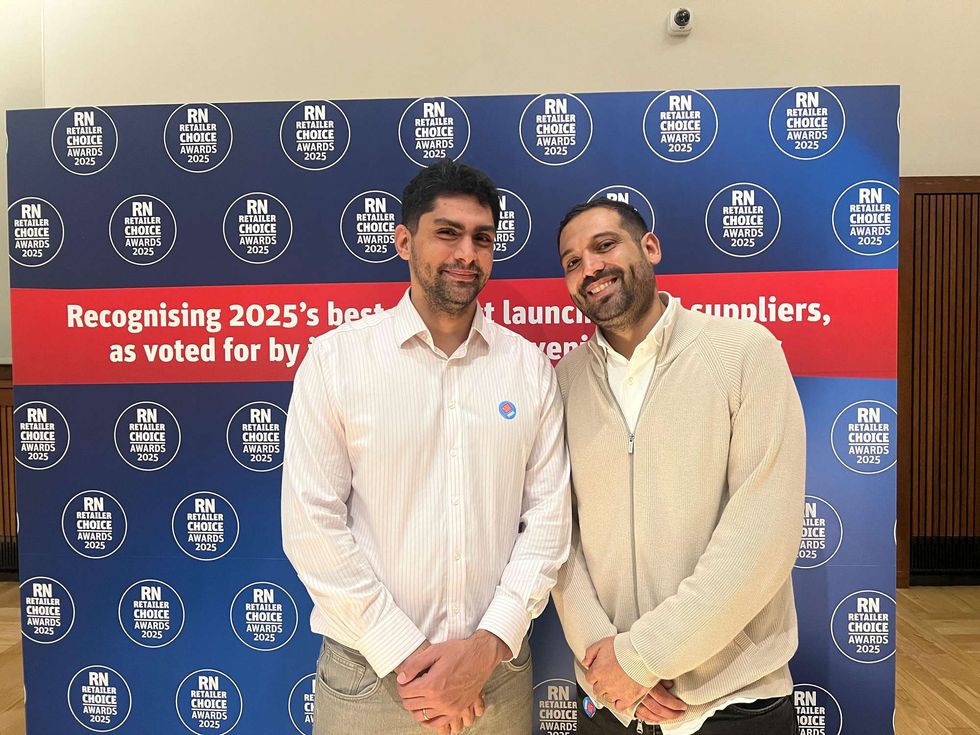 K-Card CEO and CTOImage from K-Card
“Every major supermarket loyalty scheme works because the retailer controls the entire estate. Independents have never had that.
“Third, the way promotions work in convenience is broken for everyone involved. I spent 12 years managing FMCG media budgets at Publicis, IPG, and Omnicom (along with the biggest FMCG clients in the world), sitting in boardrooms in London obsessing over data and tracking every digital click, while independent convenience, this massive channel with 50,000 stores and 41 million weekly shoppers, had zero measurement.
“The convenience channel is the last part of the retail landscape still running on the old model. Booker, Morrisons, and SPAR are all trialling loyalty in convenience. But most of the 50,000 independent stores still have nothing. That is the gap we are building into,” Ameen said.
Though the widespread adoption of loyalty schemes is still lacking in the convenience channel, some of the next generation retailers have started using and vouching for it as well.
In Scotland, retailer Girish Jeeva has spent the past two years building something that symbol groups have largely failed to deliver, a loyalty scheme that works, built from the ground up, for his two convenience stores in a competitive market.
"We partnered with MyDD Points," he explains. "They were integrating with our EPOS provider, so we thought they would be the right partner for us. We were basically the first store to try their loyalty system up in Scotland."
The growth has been striking.
"Since we started the scheme, almost 2,000 of our customers have signed up. That is a huge number for a convenience store," said Jeeva.
 Girish JeevaGirish Jeeva
The mechanics are familiar – discounts for app users, points per purchase, redeemable in-store.
“And because we've got two stores, both of them are linked together, we enable them to redeem in either of the stores, as for us, it makes more sense to give that broader offering to the customers.
"From the app, customers get updates of all our deals. Through the app, we can also offer discounts on certain product lines. So for example, a regular customer will pay a pound for a chocolate bar whereas if you are DD customer that you get it for 90p, so customers get exclusives,” Jeeva told Asian Trader.
For Jeeva, this is more of a business strategy.
"We are right in the middle of two big supermarkets, Tesco and Asda. So, in order for us to survive and thrive, we need to have these kinds of offerings."
The loyalty programme in his two stores, he says, is a direct reason why some customers have visited his store more than 400 to 500 times since signing up.
"Loyalty cards is also one of the reasons why we do so well with our numbers," he said. "Customers come to us because they know they can get products for cheaper, but at the same time they can also accumulate some points that they can redeem later."
It is not entirely effortless.
"Personally, what I believe is, it's not easy to get somebody to sign up onto a loyalty card, even though the whole sign-up process does take about two to three minutes. What a lot of shopkeepers are struggling with is training their staff to get customers to sign up on the app,” he said.
"We, as a policy, ask every customer who comes in if they have signed up on the app. We constantly tell them the offers which they can avail. If they are buying a product, my team will tell them how much it would cost if they had the app."
What’s in it for retailers?
Apart from footfall, such loyalty arrangements often come with a sea of data and insight into customer buying pattern.
Benedict Selvaratnam, another retailer who has deployed MyDD Points in his Freshfields Market, a premium grocery store located in Croydon, articulates what has changed in the technology landscape for independent retailers.
"The idea is pretty simple. Customers use one app to collect and redeem points across different local businesses. Each business still has its own separate wallet inside the app, so they control their own rewards and offers, but they're part of a wider network at the same time,” Selvaratnam told Asian Trader.
"Through the app, you can see how often people visit, how much they spend, their average basket size, and even exactly what products they buy. One can understand individual customer habits and preferences.
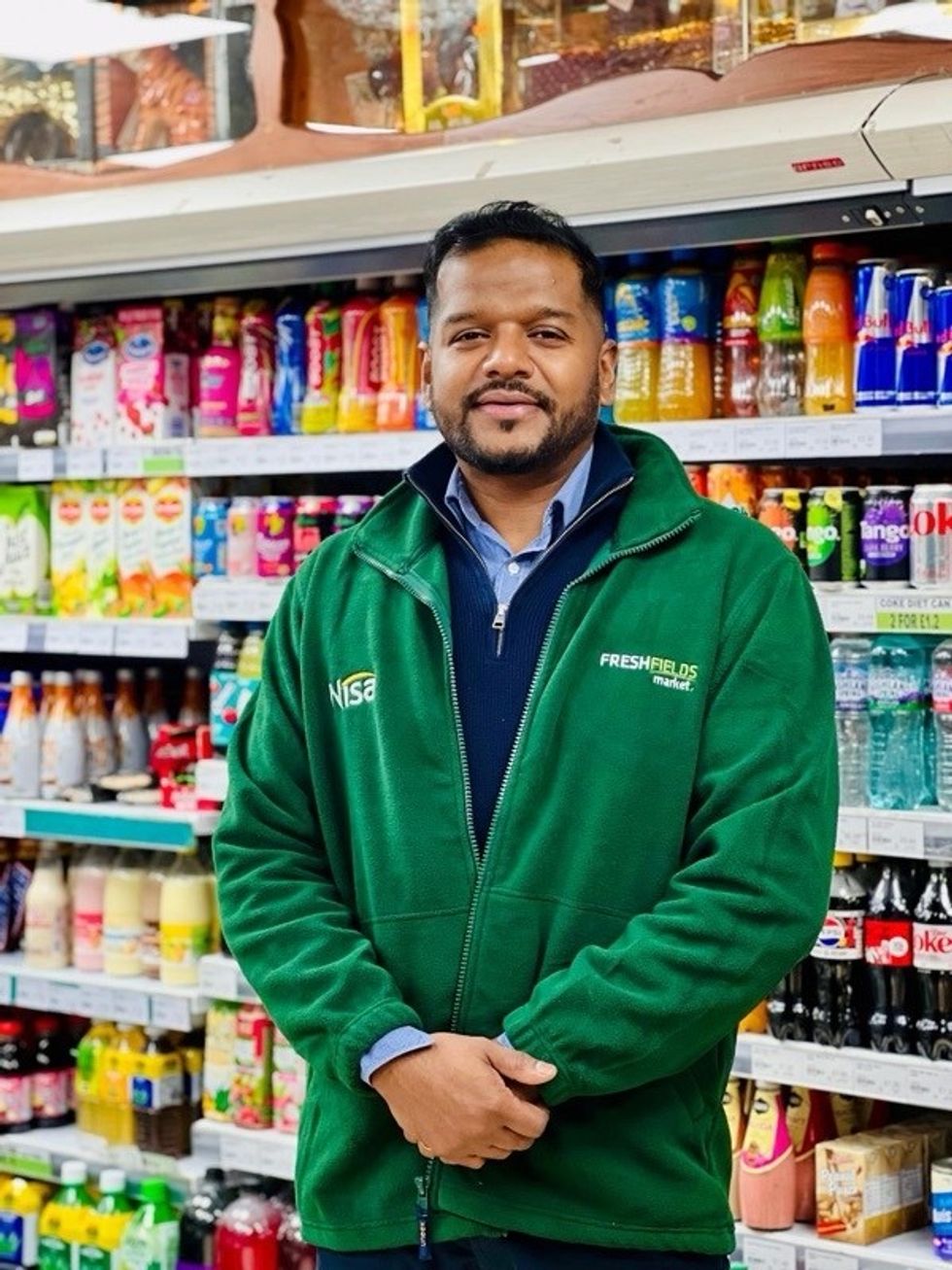 Retailer Benedict Selvaratnam Retailer Benedict Selvaratnam
"Because it is built within their AI analytics system, the platform also interprets the data. It spots trends, highlights patterns, and turns complex numbers into simple, useful insights. It also looks ahead, the system can forecast monthly sales, predict buying behaviour, and flag risks or growth opportunities."
This is precisely the kind of intelligence that supermarkets have wielded over independents for decades.
K-Card takes a different approach. Rather than requiring retailers to run a points scheme themselves, it allows shoppers to photograph their itemised receipt from any participating independent convenience store or newsagent and receive cashback, transferred directly to their bank account.
The retailer's only outlay is a minimum only per cent discount on purchases by K-Card users
Ameen told Asian Trader, “The ability to show a fizzy drinks offer only to someone who actually buys fizzy drinks, or reach a lapsed customer who has not visited in a fortnight, is something no independent retailer has been able to do before. That is the edge the big supermarkets have had. K-Card brings it to the high street.
“You can see which individual shoppers have stopped coming in and when they lapsed. Who your top 20 most valuable regulars actually are by spend, not just by face. Whether the person who buys Red Bull every morning has started buying Monster instead.
“Which shoppers only visit on weekdays and never weekends and so much more. Who switched from full-sugar to diet three weeks ago. Who always buys a meal deal at lunch but has never bought from your alcohol range."
Ameen has also launched a separate B2B enterprise offer, Corner Collective, aimed at symbol groups, forecourt retailers and larger groups looking to build loyalty infrastructure at scale.
Beyond discounts and rewards
Why should loyalty only be about prices?
Here is where the debate becomes more nuanced and where Fender's perspective offers a useful corrective to a conversation that can too easily reduce loyalty to a points-and-rewards mechanism.
"For convenience retailers, loyalty doesn't always have to be around discount schemes," he argued. "The industry data shows most Brits have five or six loyalty schemes, which tells you shoppers are looking for deals and are not attached to a particular supermarket just because they hold a card."
The implication is important. If loyalty card saturation has already produced a generation of promiscuous deal-seekers who carry multiple cards and switch between retailers based on the best offer, then an independent convenience store entering a points-and-discounts race with Tesco is not necessarily fighting on the most favourable ground.
"Convenience stores offer good, fast, friendly service, along with local community engagement, which is also a form of loyalty," Fender said. "Independent retailers should really think about what and how they can upsell or cross-sell and how they can entice or excite customers.
"It could be a special local product for a limited time period, or even hot proprietary food items and food-to-go."
 Tom Fender TWC
The data he cites in support of this direction is striking. "Last year more people snacked in a typical day than they actually ate breakfast, implying that snacking and indulgence is a great window of opportunity for local stores."
The opportunity, he suggests, is not primarily about matching the multiples on price; it is about creating a shopping experience that the multiples structurally cannot replicate.
"Supermarkets can sometimes be a little bit bland to shop in. Convenience retailers should aim to create stores where customers come in for top-ups and essentials but also chat with staff and find products which they weren't expecting.
“Another way independents and symbols can attract footfall is through seasonal events, and it need not always be around price reductions. It should be about creating excitement, upselling and leaving a mark on shoppers' minds so that they keep returning."
The road ahead
Against this backdrop of third-party platform activity, there are indications that symbol groups themselves are beginning to act. Though Booker, Bestway and Parfetts are not in this loyalty game, James Hall is showing early signs of inclination towards bringing a loyalty scheme for its retailers.
Its scheme, SPAR UK Rewards, offers customers buying in participating stores in the North of England a series of discounts, bundles, and exclusive vouchers. The scheme remains in trial phase.
Although there were talks of One Stop shoppers soon having access to Tesco Clubcard benefits under a trial, the One Stop retailers Asian Trader spoke to denied having any knowledge of it.
While symbols and independents continue to contemplate walking down this path, the multiples are bringing their sharpest weapons fast into their convenience sites.
Tesco already offers Clubcard Prices in its Express stores. In November 2024, Sainsbury's introduced Aldi Price matching in its over 1,400 convenience locations, enhancing the competitiveness of smaller
Sainsbury's outlets. Asda has announced plans to match supermarket prices on core lines in its Express stores.
As of summer 2025, Morrisons has expanded its Morrisons More Card loyalty scheme to Morrisons Daily franchise stores, allowing customers to earn points and access exclusive, personalised offers at these convenience locations.
However, bringing such schemes to symbols and independents continues to remain tricky.
As pointed out by Sedani, “Booker is big enough. If they wanted to do it, they could have done it already."
Fender’s view is that building loyalty succeeds through deliberate planning.
"My suggestion for independent retailers is to think on the lines of: what three new things am I adding in the store this year?
“Their aim should be to secure the customer base so they keep coming back, and then get them to buy one more item on every visit,” he said.
The question for the sector, for symbol groups, for wholesalers, and for the thousands of independent retailers who have not yet made the leap, is how much longer they can afford to leave it on the table, or is it worth leaving it altogether?