



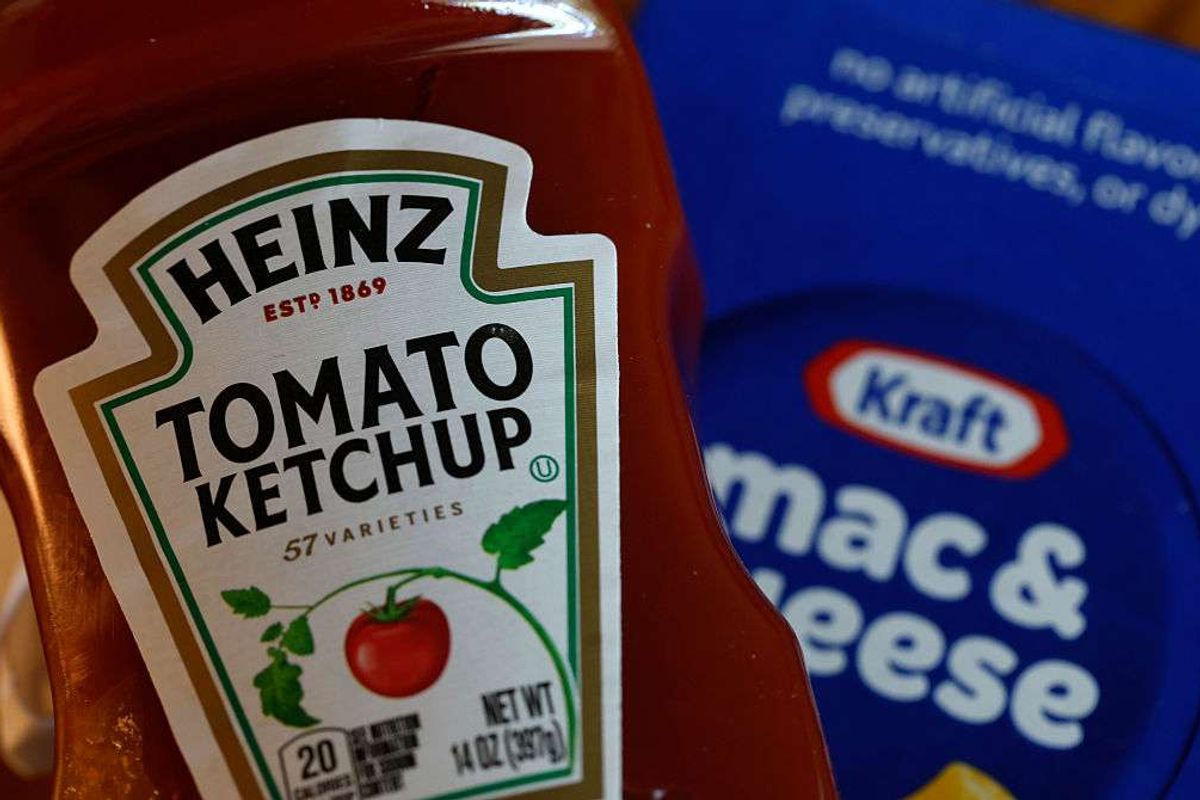

Kraft Heinz Company has paused plans to split the business, as newly installed chief executive Steve Cahillane moves to refocus the global food giant on returning to profitable growth.
The separation, first announced in September, has been put on hold with Cahillane saying the business will “no longer incur related dis-synergies this year” and will instead direct all resources towards executing its 2026 operating plan.
Announcing fourth-quarter and full-year 2025 results, the company also unveiled a $600 million (£440m) investment across marketing, sales and R&D, alongside product superiority initiatives and selective pricing to drive recovery in its US arm and accelerate momentum in its taste elevation portfolio.
Cahillane said his “number one priority is returning the business to profitable growth”, adding that many of the company’s challenges are “fixable and within our control”. Chair John T. Cahill backed the move, stating that pausing the separation will create “a clear glidepath back to profitable growth.”
The announcement, however, surprised many. Industry sources noted the separation had likely already cost a considerable amount of time. Some analysts questioned whether the decision meant that core parts of the business were in worse shape than imagined, and that a spinout would doom its slower-growing businesses to a downward spiral.
"Investors will view this negatively because it indicates that the businesses are not in strong enough condition to operate on a standalone basis, and it is uncertain when they will," said TD Cowen analyst Robert Moskow.
But investors had not responded positively to the original separation plan, which was to divide the company into a North American grocery business and a global taste elevation business. Investors, including Berkshire Hathaway, were not receptive and some were confused by the parameters, such as putting Kraft Mac & Cheese on the taste elevation side with ketchup and mayonnaise.
Last month, a regulatory filing revealed that Berkshire may shed its 27.5 per cent stake in Kraft Heinz and exit a more than decade-old investment that did not work out for Warren Buffett.
"Separations are always best done when the business is healthy, when it's stable, and when it's growing," Cahillane told Reuters.
"It became very compelling that we ought to pause the separation and focus all of our attention, because our attention is finite, focus all of that attention (on) turning the business back to growth."
Full-year sales down 3.5 per cent
For the year to 27 December 2025, net sales fell 3.5 per cent to $24.9 billion, with organic net sales down 3.4 per cent. Price increased 0.7 percentage points, largely driven by higher pricing in categories such as coffee to offset input cost inflation. However, volume/mix declined 4.1 percentage points, reflecting weaker performance in cold cuts, coffee, frozen meals, snacks, condiments and bacon across North America and International Developed Markets. Emerging Markets delivered some volume/mix growth.
Gross profit margin decreased 140 basis points to 33.3 per cent, while adjusted gross profit margin slipped 120 basis points to 33.5 per cent.
Operating income swung to a $4.7bn loss, driven by $9.3bn in non-cash impairment charges. Adjusted operating income fell 11.5 per cent to $4.7bn, impacted by commodity and manufacturing inflation, unfavourable mix, higher advertising and R&D spend, and FX pressures.
Diluted EPS was $(4.93), while adjusted EPS declined 15 per cent to $2.60.
Despite the earnings pressure, net cash from operating activities rose 6.6 per cent to $4.5bn, with free cash flow up 15.9 per cent to $3.7bn, supported by working capital improvements and lower capital expenditure. The company returned $2.3bn to shareholders through dividends and buybacks.
Looking ahead, Kraft Heinz expects organic net sales in 2026 to decline between 1.5 per cent and 3.5 per cent, including an estimated 100 basis point headwind from incremental SNAP impacts. Constant currency adjusted operating income is forecast to fall 14 per cent to 18 per cent, reflecting the planned $600m investment and a 300 basis point headwind from lapping lower variable compensation.
Adjusted EPS is projected in the range of $1.98 to $2.10, with free cash flow conversion of around 100 per cent.
Sales struggles
With great fanfare, Buffett's Berkshire Hathaway and 3G Capital merged the two food companies in 2015. But the architects of the merger slashed costs and marketing to boost margins, thinking shoppers would continue to buy their products anyway. However, starving the food brands of investment and attention backfired.
While EBITDA margins popped to the high-20 per cent area at first, sales started to struggle. An earnings boost from consumers eating at home during the pandemic waned, with net sales falling 3 per cent and 3.5 per cent in 2024 and 2025, respectively. The stock has fallen almost 70 per cent since the merger.
The company was considered slow to grasp the changing tastes of Americans, as younger brands take market share from legacy food conglomerates, accentuating the need for constant reinvestment. The growth in weight-loss drug usage adds to the challenges.
"There was a feeling that there was something called 'forever brands'. Brands were just so strong, they didn't need investment,” said Cahillane, who started the job on January 1. “I've never believed that. Brands in the consumer space need investments, or they will wither."
Cahillane has overseen a food company turnaround before: He led Kellogg from 2017 to 2023, navigating it through its separation into Kellanova and WK Kellogg. He then led Kellanova until its 2025 acquisition by Mars. He said he spotted early opportunities to turn Kraft around, too, with the help of $600 million earmarked for marketing, sales and R&D.
"There are still margin implications," said Charles Rinehart, chief investment officer at Johnson Investment Counsel. "A lower margin base may ultimately be acceptable to investors if it leads to greater confidence in the sustainability of future growth."
The brands that might need the most attention are in the slower-growth U.S. grocery division - including Oscar Mayer, Kraft Singles, Lunchables and Maxwell House. Kraft had unsuccessfully tried to sell off hot dogs and cold cuts business Oscar Mayer and Maxwell, according to sources familiar with the matter. The company did not comment on the divestiture attempts.
“You can expect Heinz, Kraft, Philadelphia (cream cheese), Mac & Cheese, some of our big players, to be beneficiaries. But those who come with the best ideas across our portfolio, they'll be funded,” Cahillane said.
(With input from Reuters)