





On a typical day at Sajeev and Deepa Bada’s Asian & Afro store in Ipswich, the focus is straightforward: fresh produce on display, shelves fully stocked, and customers moving through the aisles with purpose. It is a store built around routine, reliability and range, serving a community that knows exactly what it is looking for.
That clarity has been hard-earned. Over the past decade, Sajeev and Deepa have turned what was once a small start-up into one of the area’s most established world food stores, culminating in Sajeev being named World Food Retailer of the Year at the 2025 Asian Trader Awards. The recognition reflects not just scale, but consistency in delivering what their customers need, day in, day out.
Their journey into retail was not accidental. “We have a business background. So with that, we started this business,” Deepa says. Both originally from Sri Lanka, the couple brought prior experience and an instinct for trade, but the direction they chose was deliberate. Rather than competing in the crowded world of convenience retail, they chose a path that required deeper understanding and closer ties to community.
“General convenience stores are everywhere,” she explains. “But when it comes to specific food, this is something that those from the Asian background need for everyday use.”
That decision carried within it both opportunity and risk. World food retailing is not merely about stocking different products; it demands cultural literacy, agility and a sensitivity to shifting demographics. For Sajeev and Deepa, it also meant drawing on personal experience while adapting to a new environment.
Ipswich, where Sajeev had previously lived, offered familiarity but not certainty. It was not, historically, a major hub of ethnic diversity. Yet, as Deepa notes, the town had quietly transformed. “We have a variety of Indians, Bangladesh, Sri Lankan, Pakistanis here, quite a lot,” she says.
That shift is borne out in the data. Census figures show Ipswich becoming steadily more diverse over the past decade, with the proportion of residents identifying as “Asian, Asian British or Asian Welsh” rising from 4.3 per cent in 2011 to 5.5 per cent in 2021, while those in “Mixed or Multiple” ethnic groups increased from 3.6 per cent to 4.6 per cent. The fastest growth came from people identifying within “Other” ethnic groups, which more than doubled from 0.9 per cent to 2.1 per cent over the same period.
Over time, those communities would grow, bringing with them a steady demand for authentic ingredients and flavours.
 Asian & Afro store in IpswichPhoto: Handout
The store they took on in 2015, however, was far from a finished product. “When we bought a business, it was only a startup business,” Deepa recalls. What followed was not a gradual easing into retail but an immersion. “We were there 100 per cent, 24/7, building it up. So, our sacrifice really was a big challenge for us.”
That word, sacrifice, recurs like a refrain throughout their story. It is not used lightly. It encompasses long hours, uncertain returns and the absence of a wider support network. With two young children and family living far away, the couple had little margin for error. “We don’t have any family support around us,” Deepa says plainly.
Yet, within that constraint lay a certain clarity. Every decision mattered. Every customer interaction carried weight. And every product on the shelf had to justify its place.
In those early days, the store was less a finished space than a living experiment. Customers would walk in not just to buy but to ask, suggest and sometimes challenge. That dialogue became one of the business’s defining strengths. “New products usually introduced by the suppliers or the customers itself,” Deepa explains. “They will request. That’s how we develop.”
This responsiveness helped them build a broad and relevant range. Today, the store caters to multiple communities, including African customers as well as South Asian groups, making it difficult to single out one dominant category. “It’s quite difficult to say … we have customers from everywhere,” Deepa says, describing sales as broadly balanced across staples, spices, snacks and fresh produce.
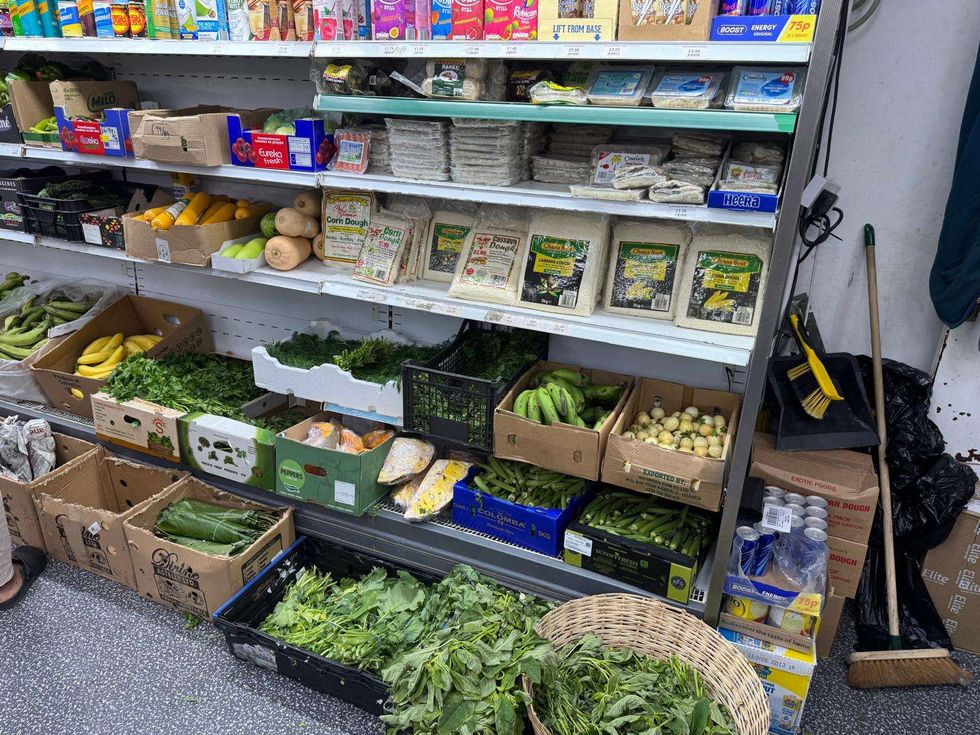 Fresh vegetables remain a standout at the Asian & Afro store in IpswichPhoto: Handout
Fresh vegetables, however, remain a standout. “We always keep vegetables fresh,” she notes, highlighting the importance of quality in driving repeat visits.
It is a simple model, but one that requires attentiveness and humility. Rather than dictating trends, Sajeev and Deepa allowed their customers to shape the range. Over time, this created a feedback loop: the more responsive the store became, the more customers trusted it to meet their needs.
That trust is visible in the way people shop. This is not a place for hurried, single-item purchases. “People come for big shopping,” Deepa says. “They don’t come for one or two items. When they come to our store, they will get everything.”
Achieving that breadth is no small feat. World food retailing often involves complex supply chains, fluctuating costs and the constant challenge of maintaining authenticity. Customers are not merely looking for substitutes; they are searching for the exact brands and flavours they grew up with.
Deepa describes a careful process of selection. “We pick especially top brands for each area,” she says. “If it’s Kerala food, we look which is the most famous brand … we go for the popular varieties first. We only keep what is most popular and what we know will sell.”
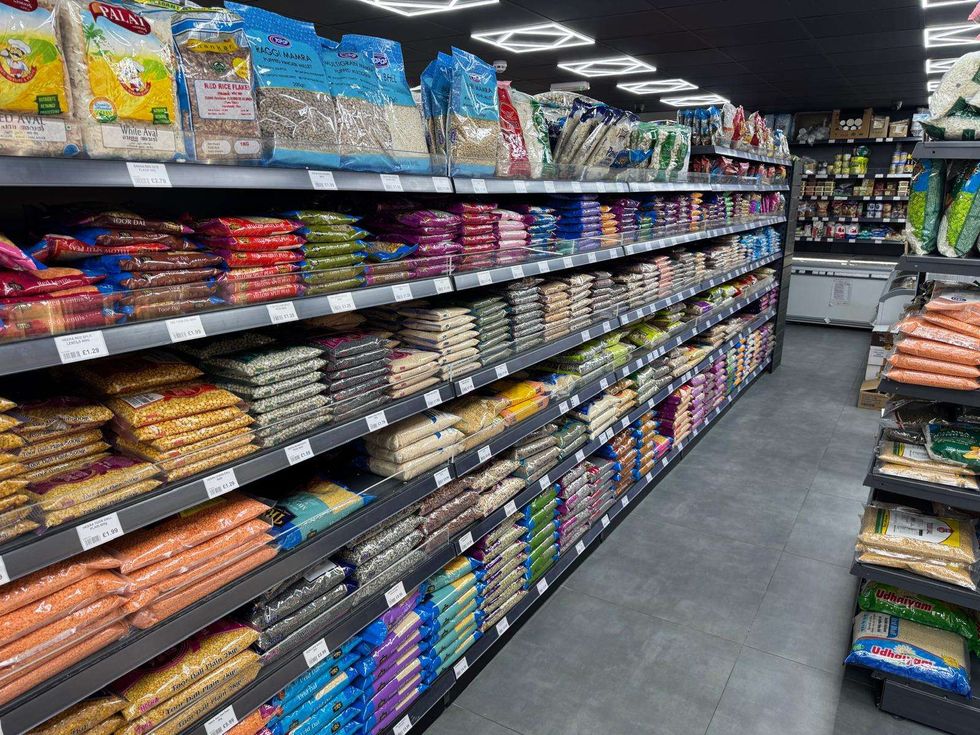 The range at the Asian & Afro store in Ipswich reflects the diversity of the community while remaining commercially viable.Photo: Handout
This approach blends pragmatism with cultural awareness. It is not about stocking everything, but about stocking the right things. The result is a range that feels both comprehensive and curated, reflecting the diversity of the community while remaining commercially viable.
Pricing, meanwhile, presents its own set of challenges. In a period marked by rising costs, from energy to wages, maintaining affordability without compromising quality is a delicate balancing act. Yet it is here that the Badas’s philosophy becomes most apparent.
“We generally keep a fixed margin. We don’t increase our margin,” Deepa explains. Instead, the business relies on volume. “We mainly focus on the volume, so we give a reasonable price and customers do a big shop.”
By keeping prices competitive, the store encourages larger baskets and, crucially, loyalty. And that loyalty extends beyond pricing. Walk through the aisles and what stands out is not just the range but the atmosphere. Staff are attentive, knowledgeable and, above all, approachable. This is no accident.
“We regularly train our staff,” Deepa says. “We pick up scenarios, and then we give examples … what is good, what is right, how they should behave.”
Training, in this context, is not a one-off exercise but an ongoing process. It reflects an understanding that customer service, particularly in a specialist store, is as important as the products themselves. Many shoppers may be unfamiliar with certain ingredients or cuisines, and the ability of staff to guide them can make the difference between a one-time visit and a regular habit.
Behind the scenes, the division of labour between Sajeev and Deepa is both clear and collaborative. Sajeev, Deepa notes, “mainly runs the whole business,” while she supports him with the administrative side and morning operations. Together, they oversee a team of around 20 staff, a scale that reflects how far the business has grown from its modest beginnings.
Growth, indeed, has been steady and deliberate. The business has expanded in scale, most notably through a significant enlargement of the Ipswich store itself, allowing for a broader range and improved in-store experience. Alongside this, the couple operates an additional site in Colchester, extending their reach while maintaining a close focus on local demand. “We are continuing to expand,” Deepa says, though always with an eye on finding “the right place, the right time.”
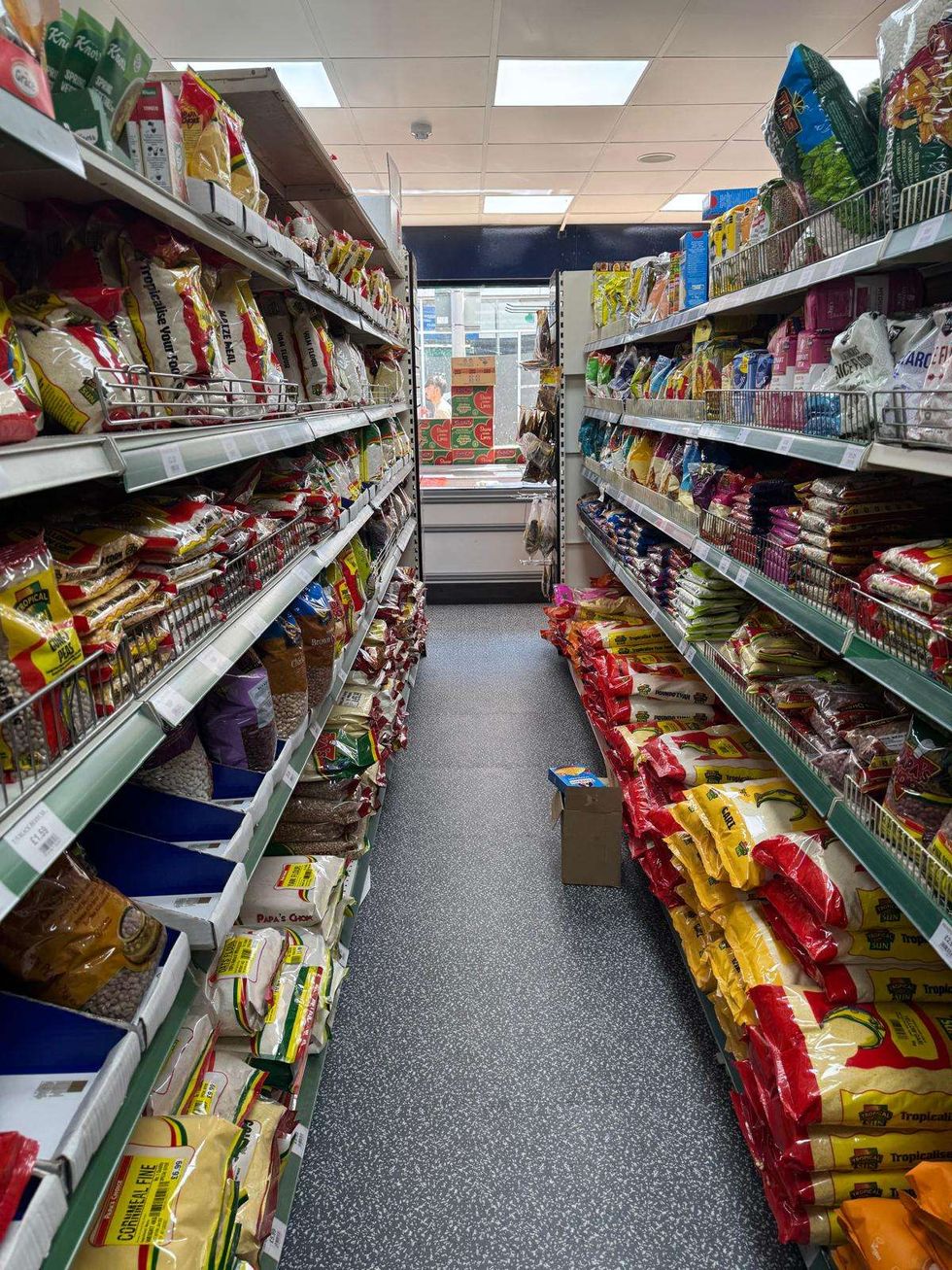 Sajeev and Deepa expanded the business in scale, most notably through a significant enlargement of the Ipswich storePhoto: Handout
That caution is telling. Deepa emphasises the importance of location and customer base for anyone entering the sector. “They need to find the right place, the right time, and they need to understand the customers around that area,” she advises. Without those elements, she adds, “you won’t be able to do this business.”
Yet, even as the business grows, certain boundaries remain. The rise of online delivery, for instance, has transformed many areas of retail, but it has not been a priority here. “We have tried that, but it didn’t work well for us,” Deepa says. “We are more than happy when the customers come in store rather than deliveries.”
There is a quiet conviction in that choice. The store is not just a point of transaction; it is a place of interaction. Customers come not only to buy but to browse, ask questions and connect. In that sense, the physical space remains central to the business’s identity.
That identity extends beyond commerce into community. The store supports local festivals and celebrations, engaging with the diverse groups it serves. These gestures, while modest, reinforce a sense of belonging. They signal that the business is not merely located in the community but is part of it.
For all its successes, however, retail remains, in Deepa’s words, “a very, very stressful business.” The unpredictability of each day, the constant pressures of cost and competition, and the sheer intensity of the work can take their toll. “You never know what will happen the next minute,” she says.
Balancing that stress with family life is an ongoing challenge. With both Sajeev and Deepa deeply involved in the business, the boundaries between work and home can blur. Yet, if there is a unifying thread that sustains them, it is the relationship with their customers.
“Happy customers … they are the motivation,” Deepa says. “They are keeping us happy. So, we are keeping them happy. It's like a give and take.”
It is a simple statement, but one that captures the essence of their approach. The business is not driven by abstract metrics or distant targets, but by the immediate, tangible feedback of the people it serves.
In many ways, this is what makes the story of Sajeev and Deepa resonate. It is not a tale of rapid scaling or disruptive innovation, but of steady, grounded progress. The award they received in 2025 is, therefore, less a surprise than a confirmation. It acknowledges not just what they have achieved, but how they have achieved it: through sacrifice, attentiveness and a deep respect for their customers.
In a sector often defined by margins and metrics, Sajeev and Deepa have created a space defined by people. And in doing so, they have shown that success in world food retailing is not just about what you sell, but about how you listen, adapt and belong.