





“Spirits is doing several things at once, so be wary of anyone who tells you the category is simply up or simply down.”
The warning comes from Nick Gillett, managing director of Mangrove Global, and the data backs him up. Across Europe’s six biggest grocery markets – the UK, France, Germany, Italy, Spain and the Netherlands – spirits sales fell 2.2 per cent in 2025, part of a 0.8 per cent drop in spending on alcohol overall [Circana]. Yet inside the same dataset, volumes of ready-to-drink spirits climbed 12.9 per cent and sales of low- and no-alcohol alternatives grew 7.3 per cent. Shoppers are not abandoning drinks. They are spending on them differently.
For independents heading into the busiest weeks of the drinks calendar, that split matters more than any headline figure. The fixture is now a set of smaller markets – formats, serves, flavours and occasions – each with its own winners and losers.
“The cost of living has forced shoppers into conscious decisions about what goes in the basket, so you’ve seen trading down between brands and a fall away at the most expensive end, with some of that money going to other parts of the shop,” says Gillett. Health is part of the picture too. “Add an ongoing health focus, the GLP-1 drugs everybody is talking about and the supply chain disruption of the past few years and you get a softening of demand that no single cause explains on its own.”
Circana’s analysts see the same shift from the consumer side. Speaking at the Beverage Forum, Ananda Roy, senior vice president of strategic growth insights at Circana, said: “Alcohol has been declining in popularity in the five or six years since the pandemic, and this has now led to a wider range of alternatives and healthier products, which gives us much more choice about what we drink at home and when we socialise.”
Roy’s view of younger drinkers is stark. “Younger people in particular are drinking much less alcohol, and there is no evidence this will change as they get older,” he said. Circana found that 43 per cent of shoppers, and half of 25- to 39-year-olds, were cutting back on alcohol by buying less, postponing purchases or giving up altogether. Just 15 per cent said they were buying more alcoholic drinks.
Gillett, however, rejects the idea that young adults have simply walked away. “It has suited a lot of companies to talk about Gen Z not drinking and it isn’t true,” he says. “I’m pleased to see that myth being debunked, because I never subscribed to it. They’re drinking, on different occasions and in different ways.” Either way, the shopper is more deliberate about when, what and how much to buy.
The moderation paradox
The UK picture is just as mixed. The Drinkaware Monitor 2026 found a record 91 per cent of drinkers – around 42 million people – now use at least one technique to moderate their alcohol consumption, up from 87 per cent in 2025. Nearly half (48 per cent) consume no- and low-alcohol products as a way of moderating, up from 44 per cent.
At the same time, 13 per cent of all drinkers, an estimated 6.3m people, reported binge drinking at least weekly in the past 12 months, up from 11 per cent in 2025. The charity found that 56 per cent drink more on an evening or night out with friends – an occasion the Christmas party season brings round often.
For a convenience retailer, the lesson is that moderation and celebration are not opposites: the customer who is dry on Tuesday may still be buying for a party on Friday.
Small is the new big
If one change is reshaping the fixture, it is size. Gillett is careful not to oversell it as invention. “I’m not sure brands are innovating in small formats so much as going back to something that got phased out,” he says. “Small formats in whisky were far more common than they are now and they disappeared because of production costs and short runs.”
What has brought them back is price. “Duty, VAT and margin compression have made the big bottle expensive to display at a price anyone wants to pay, so you either play with duty or you play with the size of the bottle,” Gillett explains. “Plenty of retailers have trialled smaller formats and done well out of them, because the shopper seems to care more about the price of the unit in front of them than the price per millilitre.”
The numbers support him. Nielsen data cited by Suntory Global Spirits shows that fractionals (20cl to 50cl) are growing while traditional full-sized spirits are in decline, with convenience performing particularly strongly. In whisky, 53 per cent of fractional sales take place in convenience.
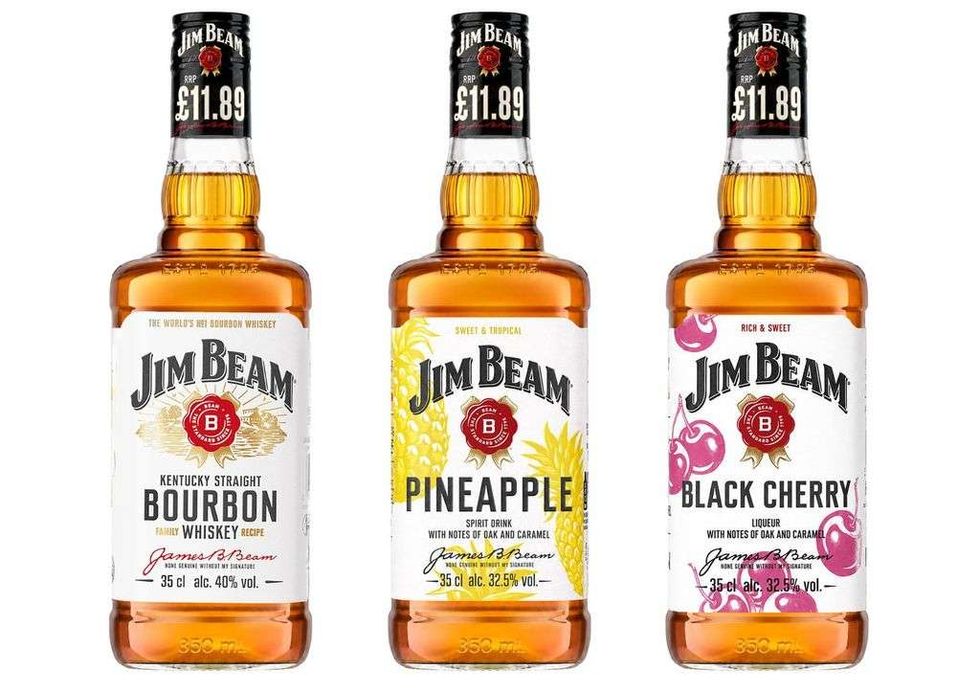 The new Jim Beam 35cl format is available in both standard and PMP versions for the retail market. Photo: Handout
Suntory Global Spirits has moved accordingly. From 28 September, Jim Beam White, Jim Beam Pineapple and Jim Beam Black Cherry became available in 35cl, in standard and price-marked packs, with price-marked packs listed at £11.89 in Booker, Bestway, Parfetts, United Wholesale and Coop. Laphroaig 10-Year-Old is already available in 35cl, further fractional launches are planned for the rest of 2026, and Jim Beam White and Jim Beam Pineapple are due in 5cl in Q1 2027.
Nick Temperley, managing director UK & Ireland at Suntory Global Spirits, said: “We're seeing a real shift in how shoppers are buying spirits, and fractional formats are right at the heart of it. For convenience and wholesale, where choice, price point and smart use of shelf space all matter, that shift is a big opportunity for us.”
Suntory Global Spirits points to an average UK basket of £22.20 as a reason a lower ticket price matters.
Format as a price point
Mangrove is seeing the same pattern in its own range. “We’re seeing real success in 5cl and 20cl in grocery and wholesale, so we know it’s happening,” says Gillett. The Indian single malt Indri Trini has gone into 157 Tesco stores and online in a 50cl bottle at £34 – “a premium whisky at a high strength with exactly the same liquid in it as the 70cl”, as Gillett puts it. Le Philtre, the French organic vodka Mangrove has just taken on, is available in 70cl at £39 RRP and in a 35cl for a different shopper.
Courvoisier, which describes itself as the No.1 Cognac brand in Great Britain [NIQ], sells alongside its core 70cl bottle in 20cl, 35cl and 1L formats, which the brand says lets retailers cater for “a variety of shopper missions, budgets and occasions”.
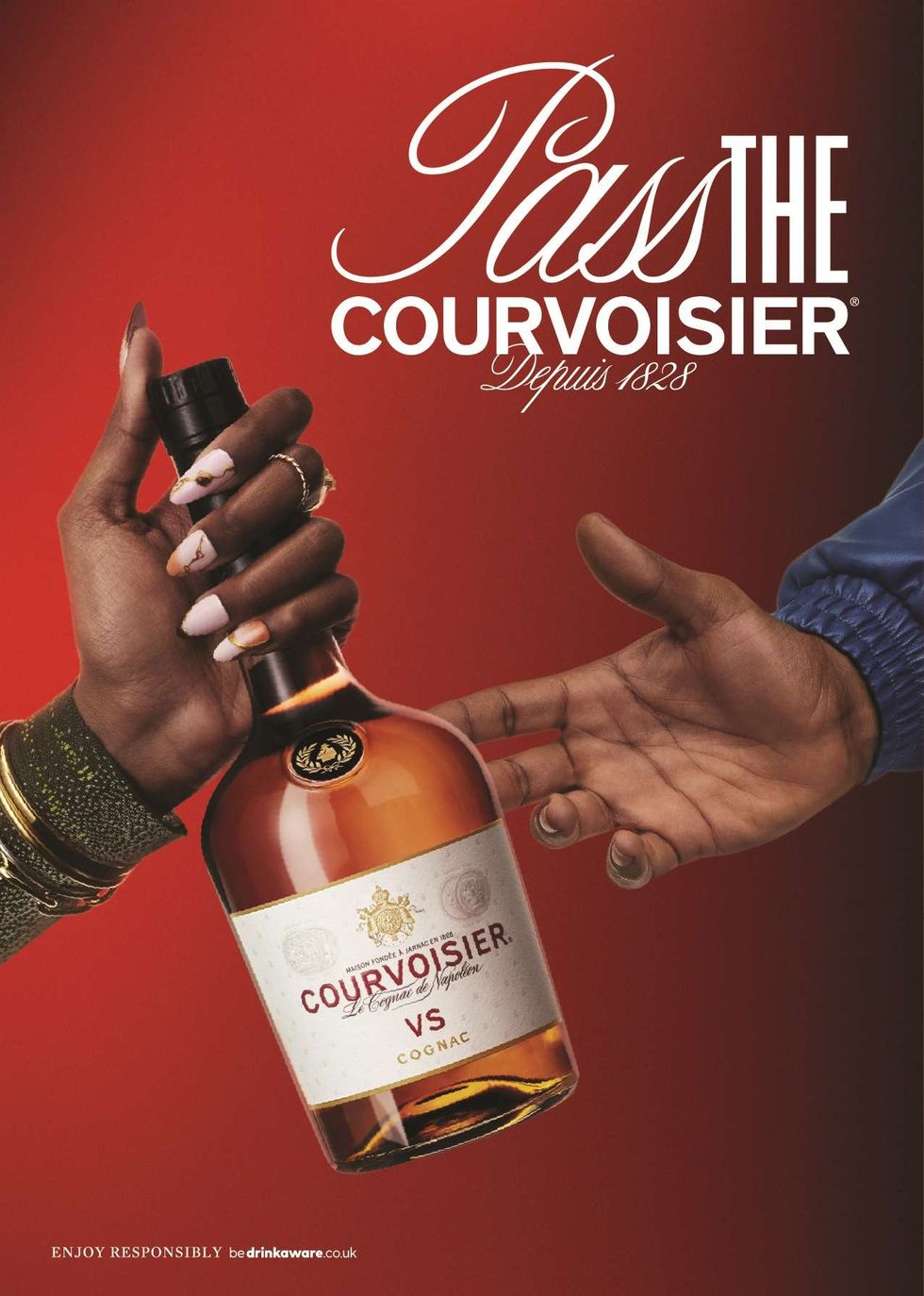 Courvoisier VS Cognac Photo: Handout
Gillett is clear that this is not just about a lower ticket. “It isn’t only about a £10 ticket though. The job is hitting price points all the way through your range and keeping the overall basket affordable. Spirits lend themselves to that because nobody’s drinking a bottle a day, so the purchase gets stretched out and stays manageable at the till.”
He adds one caveat that applies directly to independents. “Brands can’t do this on their own. It works where the retailer gives the format proper space in the range.”
Party season in a pouch
If fractionals are the quiet story of the fixture, ready-to-drink is the loud one. Pernod Ricard says UK RTDs grew 28 per cent in value year on year, with higher-ABV SKUs driving the acceleration. Christmas brings the occasions these products are built for: pre-drinks, parties, gigs and a night in town.
David Relph, commercial manager at Vogo, says the festive season can deliver serious profit boosts for convenience retailers. “Stores can turn high spirits into punchy profits with the right selection of drinks, especially new, eye-catching formats,” he says. “RTDs and shot style drinks for quick consumption are key for these moments so retailers should review and refresh their ranges now in time for the lucrative party season.”
Vogo is a premixed vodka shot in a pocket-sized pouch, launched over the summer, in four flavours – Strawberry Splash, Tropical Deluxe, Raspberry Blast and Citrus Zing – at 15 per cent ABV per 35ml serving and an RRP of £1.85 a pouch. It is aimed at the 20 to 35 age group, and designed for a “rip and sip” moment: tear open, take a few sips, then recycle.
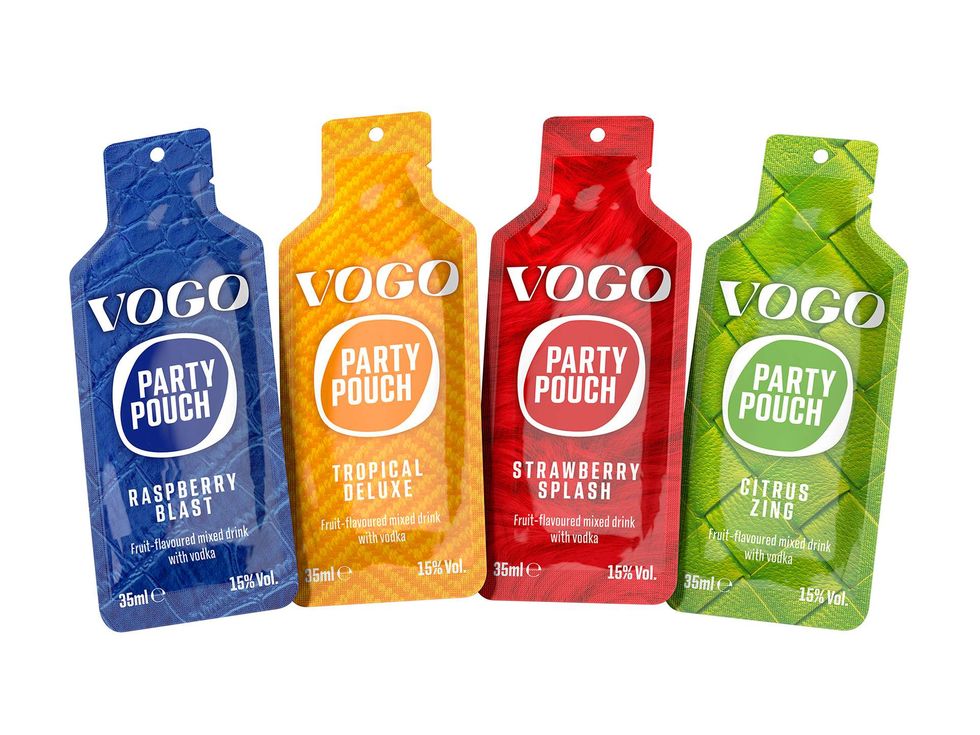 VOGO premixed vodka shots Photo: Handout
Relph says the format suits younger shoppers’ habits. “Portability is key for the on-the-go drinking moment, especially for younger consumers who are tuned in to informal drinking,” he says.
He is equally direct about where it should sit. “Vogo provides the perfect impulse purchase – ready to be consumed straight away, a good size and great value (RRP £1.85 per pouch). Display them prominently to boost impulse sales.” The pouches can go on the shelf or in the chiller, and Relph suggests dual siting by the till.
Retailers get a starter pack of 40 pouches, ten of each flavour, with fridge stickers and clip strips. All four SKUs are listed with Filshill Wholesale and rolling out to national wholesalers, while independents can order directly from Young Spirits.
Relph is confident about the market behind the product. “The UK shot and RTD markets are buoyant, with higher abv products showing the strongest growth, so there are clear opportunities here,” he says. “Products that feel like a treat, a novelty, or something special are set to win here and RTD drinks play their role in bringing the fun factor.”
Bigger brands, higher strengths
The pattern Relph describes is visible in the larger launches. Malibu has introduced Malibu Punch, a 10 per cent ABV canned cocktail range in Watermelon Punch, Peach Tea Punch and Piña Colada Punch, in a 237ml can at an RRP of £3.50 across grocery, convenience and wholesale.
Liam Murphy, marketing director at Pernod Ricard UK, said: “Malibu Punch is a bold 10 per cent ABV proposition created specifically for pre-drinks, parties and spontaneous get-togethers.” The launch is supported by the “Do Whatever Tastes Good” platform and a party-crashing stunt with influencers Georgia Wood and Maddie Grace Jepson.
SERVED, which says it is the fastest-growing independent RTD brand in convenience with more than 35,000 distribution points, has launched Vodka+, a lightly sparkling 330ml can at 6 per cent ABV and an RRP of £3.30, made with vodka, coconut water and Himalayan pink salt.
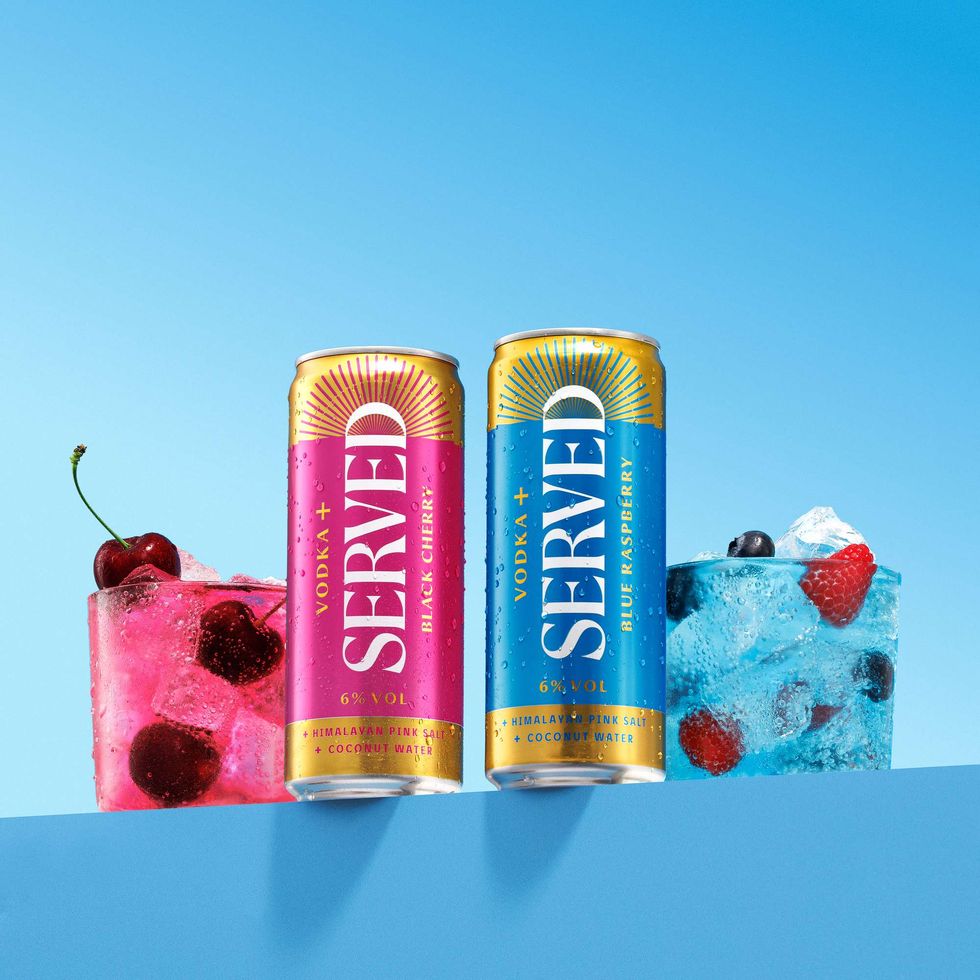 SERVED has launched Vodka+ through Booker, extending the product's reach into the wholesale channel and targeting retailers across the UK. Photo: Handout
Booker leads the convenience roll-out, with Blue Raspberry and Black Cherry core-listed across 102 depots, and the range is also heading to Premier, Londis, Budgens and Family Shopper, with a wider roll-out from January 2027. A campaign across SERVED’s and co-founder Ellie Goulding’s social channels is expected to deliver more than 30 million reach and 150 million impressions.
Co-founder Dean Ginsberg said the proposition is built on a gap in the market. “Refreshment is the number one purchase driver in RTDs, yet most innovation continues to focus on flavour.”
At the lower-strength end, Captain Morgan x Pepsi MAX Cherry is a five per cent ABV can in 330ml and 250ml. Diageo says cherry is now the fastest-growing flavour in RTDs. “The momentum behind Captain Morgan x Pepsi MAX has been brilliant to see, with the partnership already making a real impact in the cola ready-to-drink segment,” said Cristhel Molina, head of rums at Diageo.
Whitebox Cocktails offers a full-strength answer. From 2 November it added a Manhattan (£5.50, 26.5 per cent ABV), the UK’s first canned White Russian (£5.50, 20 per cent ABV) and a Whiskey Sour (£5.00, 22 per cent ABV) to a range that includes the Pocket Negroni, Freezer Martini and Spicy Marg. Co-founder Ben Iravani said the company is deliberate about what it adds. “The Manhattan alone has taken four years to bring to market because we wanted to source a whiskey that did the drink justice.”
Don’t assume cans lead to bottles
Gillett divides RTDs into two groups. “RTD brands fall into two groups, the spirit mixes at around 5 per cent and the ones above 10 per cent,” he says. “I don’t accept that it’s a diverging market. People are offering different options to suit different occasions.”
What the category does for a brand, he says, is practical: “What RTDs do for you is brand recognition, line extension and a base for something else.”
He warns retailers against assuming that a can will lead to a bottle. “The person buying a can wants one drink tonight, so don’t expect the can to work as a route into the bottles on your shelf.” And he urges caution on range. “The quality range in RTDs is enormous, so taste before you commit shelf space. If a customer has a bad can, they bought it from you.”
Cocktails, spritzes, rise of the serve
A second trend runs through the new products: shoppers increasingly meet a serve before they meet the bottle.
“Spritzes have owned this year, the Hugo in particular, which has pulled the whole elderflower liqueur category up with it,” says Gillett. “Agave is the other one, so margaritas, palomas, mezcal and anything with a bit of spice are all pulling their weight.”
Asked where the growth in liqueurs is, he answers: “Flavour by flavour, which is why the headline number for the category tells you nothing about your own shelf.”
His own range illustrates the point. Giffard’s wild elderflower, its Piment d’Espelette and a Limoncello di Capri cover the Hugo Spritz, the spicy Margarita and the Limoncello Spritz, the three drinks he names as leading the year. “Those are drinks your customers meet when they’re out before they ever buy the bottle to make one at home.”
The Espresso Martini keeps shaking
Coffee is another serve with momentum. Tia Maria, which describes itself as the UK’s number one coffee liqueur in the off-trade, is returning with Sophie Ellis-Bextor for a Shake Up The Taste campaign running until January, with paid media expected to deliver more than 113 million impressions.
The campaign puts the Espresso Martini, which the brand says consistently ranks among the UK’s top five bestselling cocktails, at the centre of its festive activity.
The brand says it is outperforming its category: year-to-date off-trade volumes are up 3.2 per cent, against 2.8 per cent for non-cream liqueurs, and on-trade value is up 8.3 per cent over the latest 12 weeks, compared with 3.8 per cent for the category. “Christmas is a key period for Tia Maria and the Espresso Martini remains a major recruitment opportunity for the brand,” said marketing director Peter Dries.
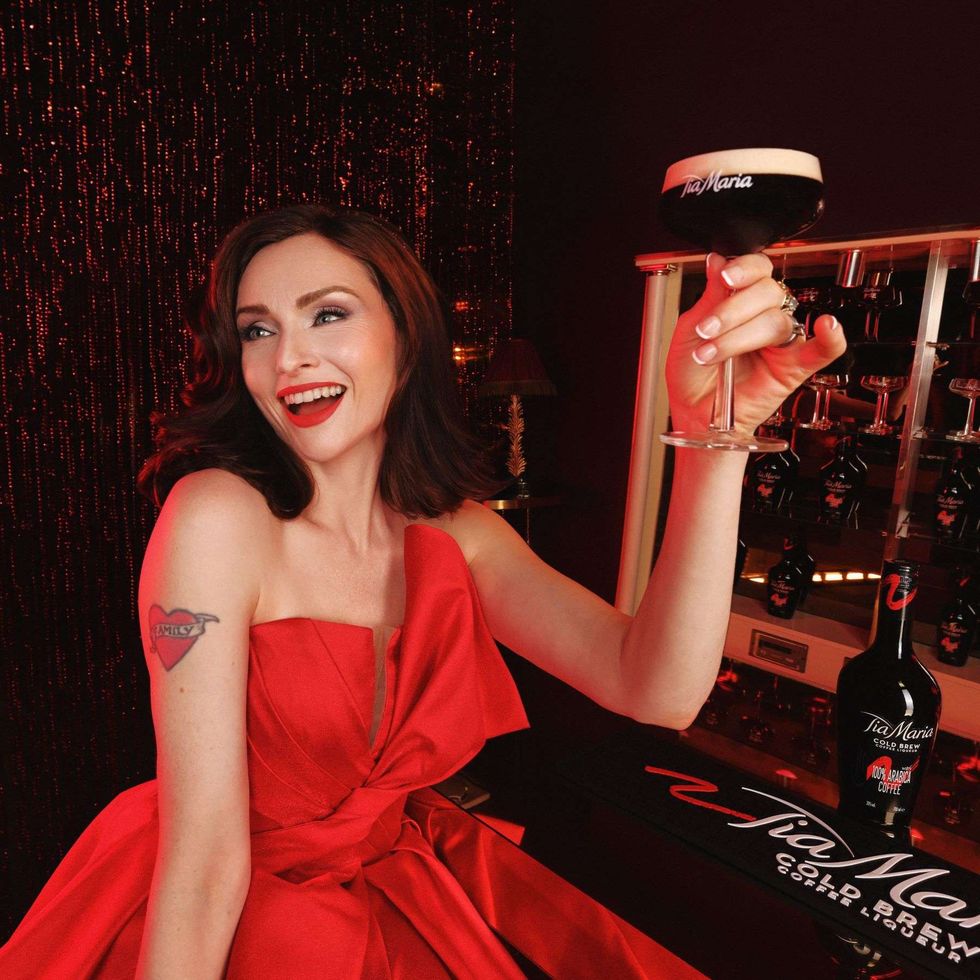 Tia Maria and Sophie Ellis-Bextor join forces again for a festive campaign centred on the Espresso Martini, combining seasonal promotion with cocktail culture. Photo: Handout
Kahlúa is also pushing to take coffee beyond the nightcap with Kahlúa Coffee Cream, which combines its rum and coffee liqueur with real dairy cream and 100 per cent Arabica coffee beans. “That’s why we’re excited to introduce this flavour extension that brings together the rich coffee and rum flavours people already know and love from Kahlúa with real dairy cream,” said Ian Peart, commercial director at Pernod Ricard UK.
The launch comes amid what Kahlúa describes as a shift towards earlier, more relaxed drinking occasions. Research commissioned by the brand found that 71 per cent of UK adults are excited about classic spirits being reinvented, while 85 per cent are open to nights out spanning generations.
The launch is backed by a “Not A Nightcap” campaign featuring viral British Insta star Grimegran (AKA Margie) and grandson Beau the Beard, as well as Irish TikTok creator Grandad Frank.
Limited editions and novelty
Baileys x Terry’s Chocolate Orange returns for a second festive season, in a 50cl bottle at 17 per cent ABV and an RRP of £16.50, available from Booker, Bestway, AF Blakemore, CJ Lang and other wholesalers while stocks last.
Baileys says it was the No.1 innovation in GB spirits over Christmas 2025, and that three in four shoppers would buy it again. “The performance of Baileys x Terry's Chocolate Orange last year showed there is strong demand for limited-edition festive flavours that offer shoppers something new while building on brands they already know and love,” said Zoe Hetherington, senior brand manager at Baileys.
At the quirkier end, Global Brands has launched Pickly Pete’s Pickle Liquor, a 15 per cent ABV pickle-flavoured liquor in a 70cl bottle, with tongue-in-cheek lines including “Relish Every Shot” and “Kind of A Big Dill”. The company says UK pickled products are worth £686m, projected to reach £1.5 billion in 2034.
“Pickle as a flavour has become a cultural phenomenon and we're seeing that momentum continue to build across food, drink and on social media,” said senior brand manager Thomas Fox-Owens.
Shanky’s Whip, the 33 per cent ABV Irish whiskey liqueur, is entering a new phase in the UK. From November, Paragon Brands takes full UK distribution across retail, wholesale, cash and carry, convenience and e-commerce, taking over from Global Brands.
Co-founder Elwyn Gladstone said: “Shanky's Whip was launched in 2021 and has reached around 130,000 nine litre cases per year in that short time.”
Chris Jones, managing director at Paragon Brands, said: “We've had our eye on Shanky's Whip for a while and watched it land successfully in the UK – our task is to take the brand to the next level via our strong distribution network and support it as it scales up, ensuring it thrives in all markets.”
Brand marketing is also being turned up. Absolut has announced a two-year partnership with Charli xcx, with limited-edition drops, custom glassware and fan events. “Charli doesn't just have fans, she's created a whole world around her, and that's what we want to embrace,” said Craig Van Niekerk, Absolut’s VP of global marketing.
The alcohol-free opportunity
No- and low-alcohol is where moderation shows up in sales. Tesco reported in October that sales of alcohol-free spirits rose 17 per cent year on year, and volumes of no- and low-alcohol beer and cider rose 12.5 per cent. Its Christmas Report 2026 found that 27 per cent of the nation are choosing not to drink alcohol this Christmas. The retailer says shoppers are seeking premium products that deliver on flavour and quality.
Gillett has a clear view of what separates the good from the rest. “I absolutely believe in the future of non-alcoholic drinks and I’m fussy about which ones,” he says. “Alcohol-free versions of gin and vodka are difficult, because to cover every eventuality at home or behind a bar you need a shelf full of bottles. The reason we took on Almave and Botivo is that they’re great drinks first, which happen to have no alcohol, so you can build with them.” Put Giffard Triple Sec Alcohol Free alongside Almave Blanco, he suggests, and “you have an alcohol-free Margarita worth putting a shelf card on”.
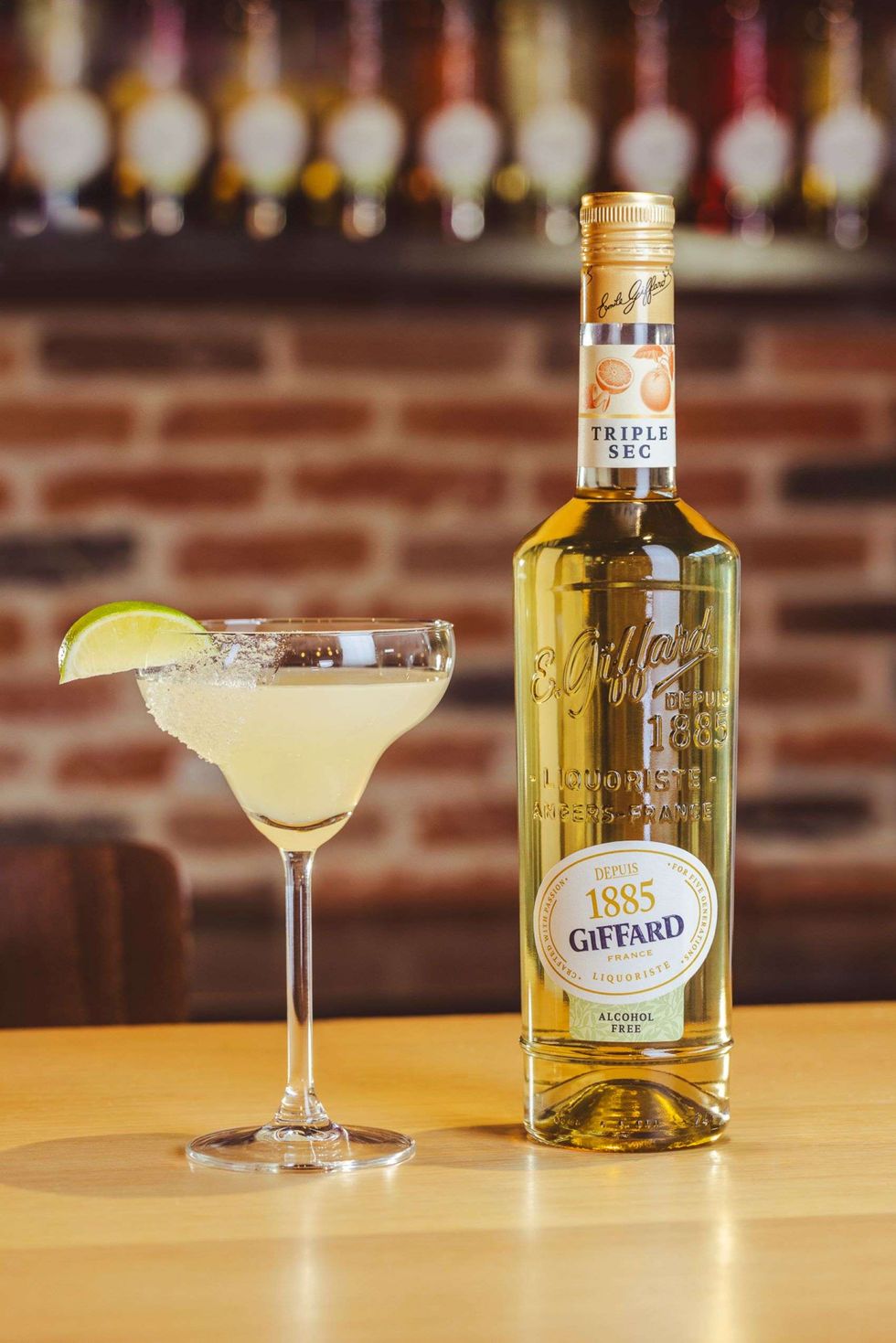 Mangrove brings Giffard Triple Sec Alcohol-Free to UK Photo: Handout
On growth, he says: “Alcohol-free is growing faster than mid-strength at the moment, mostly because there are only a couple of mid-strength products out there.” He is more doubtful about low-strength mixed spirit drinks. “On the low strength mixed spirit drinks that have just arrived, I’m not convinced it’s what the consumer wants, because you take a spirit and mix it anyway, which drops the strength.”
Looking ahead, Gillett says: “I’d expect a shaking out of the poor quality drinks in non-alc, which will do the category a favour and make your buying decisions easier.”
Premiumisation: discovery, not nudging
Premium spirits are not disappearing, but the route to them is changing. Gillett expects premiumisation to continue, and says it will arrive by a different path. “I think premiumisation carries on too and it won’t come from nudging people up a price ladder. It comes from education and discovery.” He adds: “Somebody who finds a flavour they love will happily decide another five pounds buys a better quality of ingredient.”
He also warns: “Price is a sign of quality. It isn’t a guarantee of it, so look in the bottle and understand the process and don’t be blinded by the marketing.”
Brands are building trade-up routes into their ranges. Courvoisier, recognised as the world’s most awarded Cognac house, promotes a VS and Lemonade serve as a simple entry point and positions VSOP and XO for shoppers looking to trade up for gifting and special occasions.
Hetherington says the return of Baileys x Terry’s Chocolate Orange can “encourage shoppers to trade up during the key Christmas period”.
Le Philtre’s bottle is made from recycled waste glass in green or blue, depending on the glass reclaimed, so no two are quite the same.
What independents should do
Gillett’s advice for retailers starts with space. “Space is the thing you can’t buy more of, so stock smart and review the range more often than feels necessary. The winners move around inside these categories faster than they used to.”
On the shelf itself, he says signage does the selling. “Signage does the selling when you aren’t standing there. A shelf card naming the drink does more work than one naming the ingredient, so write the serve down. Put something unfamiliar next to the names people know, because this is a discovery category and your customer needs permission to try it.”
Cross-merchandising follows. “Most liqueurs end up in a cocktail, so somebody buying elderflower is making a Hugo and will want prosecco, soda and mint as well. Get those within reach of each other and you’ll find one purchase turns into four.”
Relph’s advice is to act early. “Smaller format stores and independents can be quick off the mark to stock new products and can replenish stocks depending on shopper preferences,” he says. “Talk to customers to glean important feedback on new products and find out their favourites – that way stores can become the go-to destination for customer favourites.”
He adds: “Retailers who embrace the festive season with bright displays, new products, and well-stocked shelves and chillers, will make a memorable mark on the shopper, and will certainly see a spike in sales”.
Advantage supermarkets cannot copy
“What can you do that a supermarket can’t? Recommend. A member of staff who can say why a bottle is worth trying offers something no head office range review will ever replicate. It’s the single biggest advantage you hold,” Gillet notes.
It is also the most practical. A shopper standing in front of a pouch, a 35cl bottle or an unfamiliar liqueur needs someone to say why it is worth trying, and that conversation is what an independent can offer at the counter.
The festive fixture of 2026 will reward flexible retailers: smaller bottles at sharper price points, a few portable party formats near the till, a liqueur tied to a serve and an alcohol-free option that is genuinely good.
“Be bold with a flavour or two this winter,” says Gillett. “You’d be surprised what your customers will try.”