





For generations of independent retailers, the family shop has been much more than a place of work. It has been where children grew up, where parents built a future and where the next generation quietly learned the business without realising it.
As today's young retailers take forward businesses their grandparents started from scratch, the meaning of family retail is changing.
There is a particular kind of childhood that comes from growing up in a convenience store.
The grandparents are behind the counter. The parents are somewhere between the stockroom and the till. You know which sweets you are allowed to take, which customers will stop for a chat and when it is time for the cash-and-carry trip.
For generations of retailers, work and family life have occupied the same space. Children have grown up around the counter, learnt the routines of the shop and watched their parents and grandparents deal with customers, suppliers and the pressures of running a business.
Some eventually take over. Some are drawn back after working elsewhere. Others decide that their future lies outside retail.
But even when they leave, the shop remains part of their story.
For Leamington Spa-based retailer Sunder Sandher, joining the family business was not a career decision he had carefully planned. It came as a responsibility.
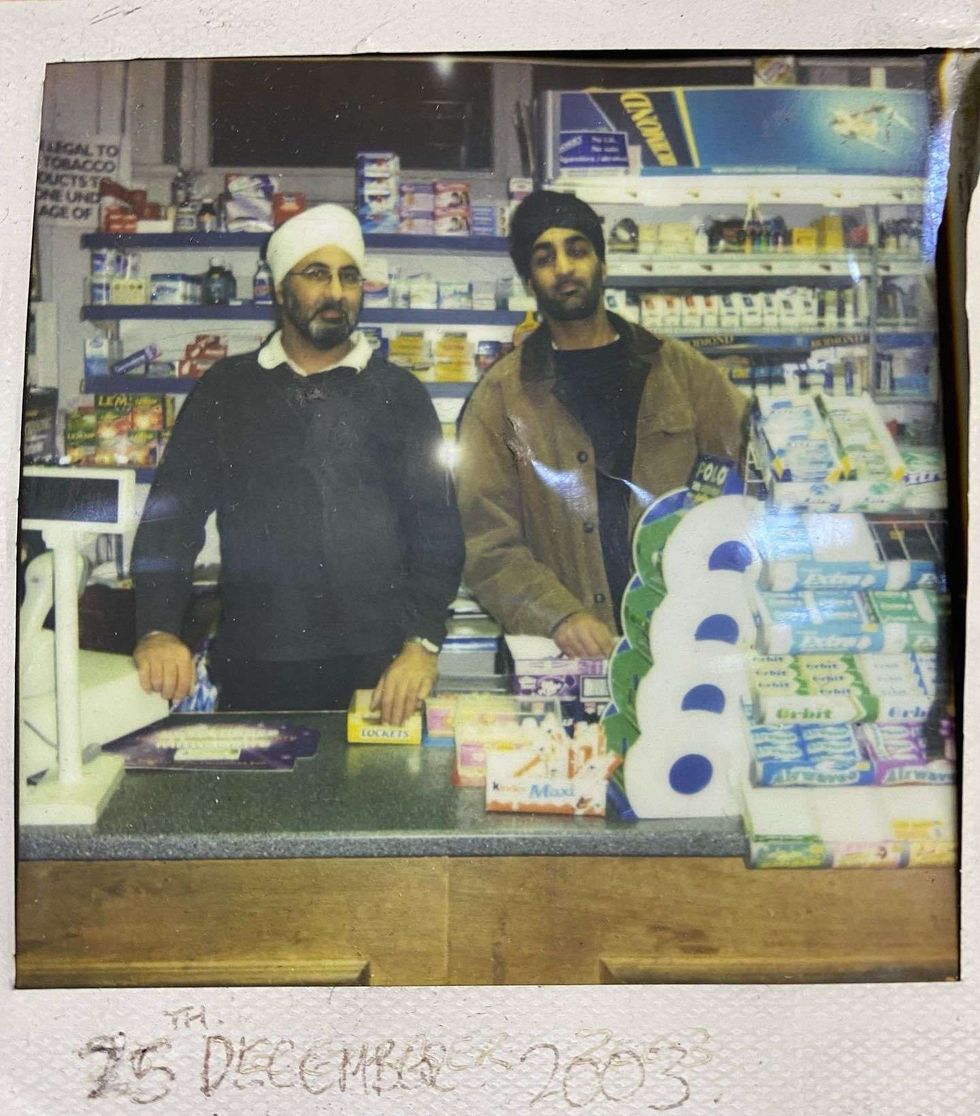
Sunder's father, Kundan Singh, arrived in Britain from Punjab in 1955. After working in farming and then in a plastic factory, he eventually bought a dilapidated former hairdresser's shop and, in 1983, turned it into a grocery store.
Like many family-run shops of that generation, it became a family affair, with Kundan, his wife Surjit Kaur and their five children working in the business.
Speaking to Asian Trader, Sunder recalled, “I was ready to go to university when my father had to be admitted in hospital for a long time. Being the eldest son, I took it as my duty to support five siblings living at home.
“I had to work seven days a week solid to show my parents my will to support the family. It was tough however that phase made me a tougher person in life.”
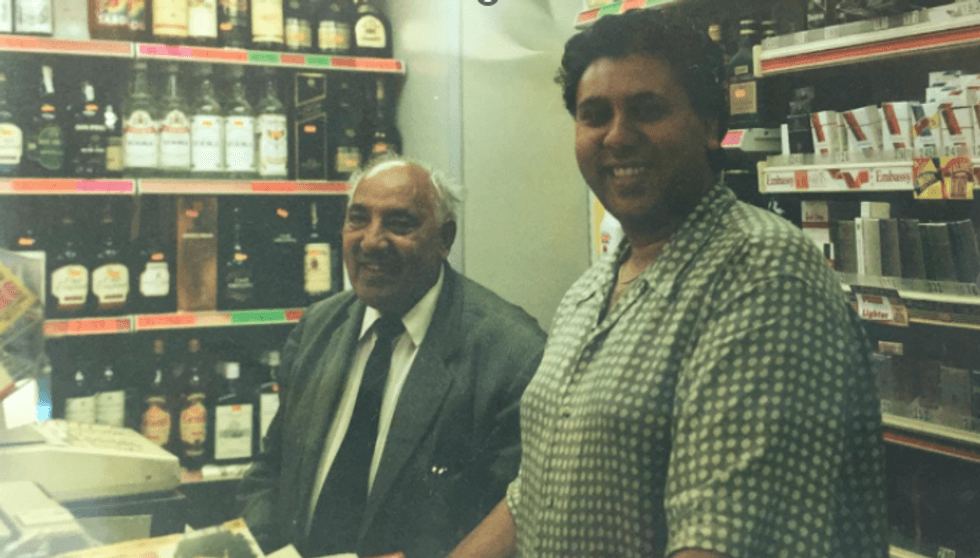 Sunder Sandher
There was no succession plan. His family needed him, and he stepped in.
Under Sunder, the family store not only survived but thrived, increasing several times in size. It grew well beyond its original grocery offer, developing food-to-go, bakery and hot food while retaining its role at the heart of the local community.
For Sunder, however, the most important inheritance from his father was not a particular trading skill but a way of treating people.
Sunder said, “The biggest value I learnt from my father is to keep smiling, be kind and help others if they are in need. Never forget your roots. My father was my mentor.”
That philosophy has stayed visible in the way Sunder runs the business, where serving the community as well as the wider convenience sector has long been treated as part of the job rather than an add-on.
Different generation, different tools
A generation later, the experience looks rather different.
In Batley, Notay's Convenience Store is celebrating its 50th anniversary year, marking five decades of Notay family's resilience and perseverance.
The store was first opened by current owner Surjeet Notay’s grandparents Santokh Singh and Gian Kaur Notay in 1976.
Their journey was also marred by racial attacks faced by many pioneering Asian retailers back then.
Over the years, the store served generations of customers, supported countless local causes, eventually emerging as a pillar of support for the local community.
For the third-generation owner Surjeet Notay, the store is an integral part of this almost every childhood memory.
Sharing some of those memories with Asian Trader, Surjeet said, “I was literally born into shop life. Through the 1980s and into the mid-1990s, it was my grandparents running the store.
“They had bought what was basically an empty shell, a former Co-op, with no real retail experience. They did it out of necessity, to earn a living and provide for their children.
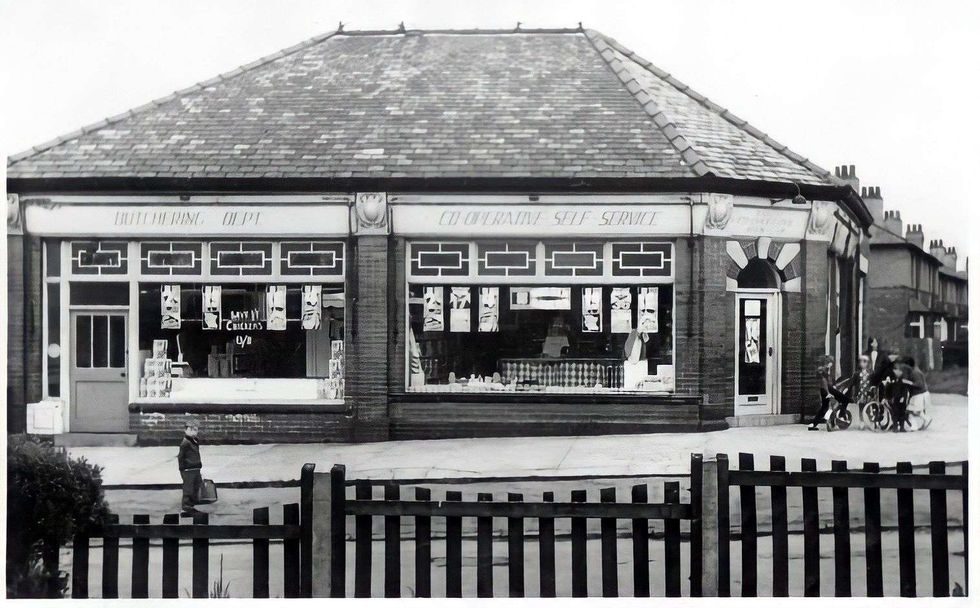 Surjeet Notay
“Some of my favourite memories are actually the simplest ones. I remember my grandad teaching me how to use the old tills, long before the technology we take for granted today, and my grandma teaching me how to write the cash and carry lists.
“As a child, I didn’t realise I was learning retail. I was just spending time with my grandparents. Looking back now, those little lessons behind the counter were probably the beginning of everything that came afterwards,” he said.
Over the past five decades, the business has witnessed sweeping changes in consumer shopping habits, technology and regulation while maintaining the personal relationships that define independent retailing.
Surjeet is taking forward his grandparents’ and parents’ spirit in his own ways.
“Grandad taught me the practical side of the shop. Grandma taught me things like preparing the cash and carry lists. But without ever sitting me down and saying it, they both taught me resilience.
“But the biggest value passed on to me was you don’t need to know everything before you start.”
Like, in 2023, Notay's Convenience Store launched rapid delivery through Snappy Shoppers, a move that led to £2,000 weekly sales within the first few months.
 Surjeet Notay
“To me, that’s the same entrepreneurial spirit my grandparents had, just applied to a completely different generation of retail,” he said.
“My grandparents had no experience when they took on that empty former Co-op. They had a family to provide for, so they learned, adapted and worked incredibly hard.
“That’s probably why I’ve never been frightened of trying something different in retail. Whether it’s a new product, social media, delivery or a completely new way of marketing the shop, I’ll give it a go and learn from what happens.”
Same roots, different routes
The idea of a family business being passed from one generation to the next does not always mean following the same path.
For brothers Amit and Priyesh Vekaria, growing up around their family's convenience store gave them a shared childhood and a common grounding in retail.
“My favourite childhood memory of growing up in the family shop was being able to serve at the counter. At such a young age I automatically thought I was grown up being able to serve customers,” Amit told Asian Trader.
Priyesh added, “My brother, sister and I spent countless hours there with our parents. As soon as we were tall enough to see over the counter, we were helping in some way, whether that was filling shelves, serving customers or simply tagging along on trips to the cash and carry.
“Looking back now, those are some of my fondest memories because we were together. We were also unknowingly learning about hard work, people, responsibility and community long before we understood any of those things in a business sense.
“The shop wasn't just where my parents earned a living. In many ways, it was an extension of our home."
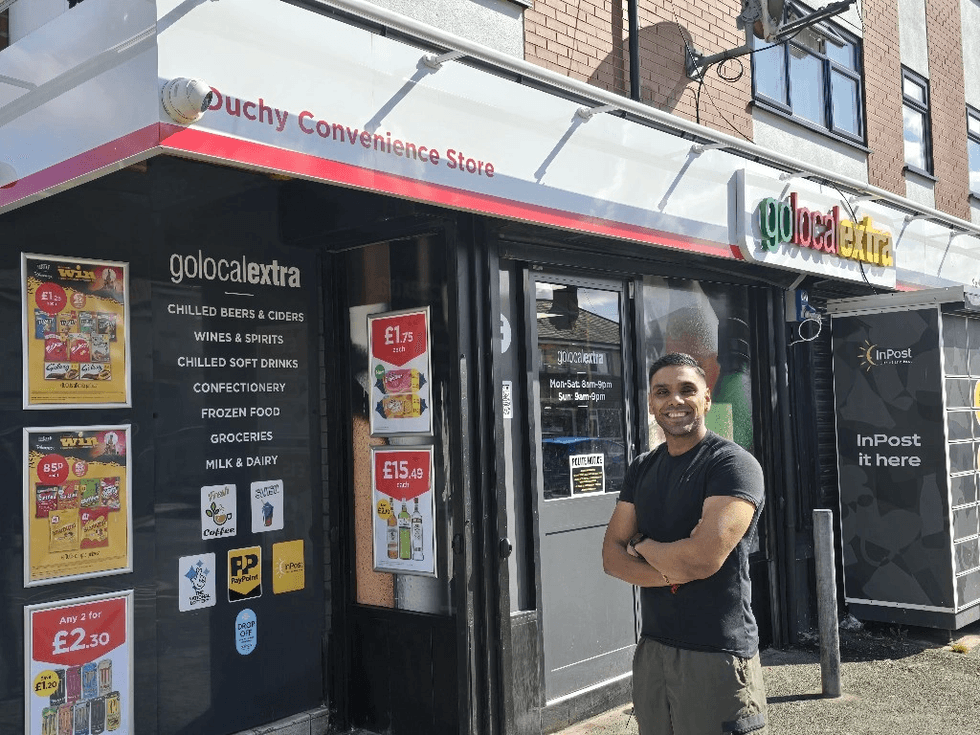 Amit Patel
While they shared the same childhood, the brothers took different routes to convenience retail.
For Amit, the family-run store in Salford was his safety pad when college did not work out as planned.
“I never had my heart set on a career path. I used to flicker between ideas but never landed on anything concrete.
“The family business wasn't the plan either but after not doing so well at college and not being able to give my parents the guarantee to pursue anything in education, the business became my lifeline,” he said.
Unlike Amit, Priyesh did not move directly into the convenience sector. He qualified in Law and Criminal Justice, worked in aviation security and policing, became a Special Sergeant, moved into project management and later property development.
Eventually, he returned to the trade he had grown up around but on his own terms.
Priyesh acquired an old public house and redeveloped the site into four townhouses, two flats and a purpose-built convenience store which is now One Stop Carlton in Manchester.
“I returned to a trade that ran through my family's history, but the business my wife Sapna and I built was ours from its inception,” he said.
“Law taught me to question, analyse and understand detail. Policing taught me about people, communication, risk and making decisions under pressure. Project management taught me process and delivery. Property development taught me commerciality, persistence and calculated risk.
“I brought all of that back into retail.”
The brothers' stories show how much room there is within a family business for individuality. One found his way into the family shop because it was there when he needed it. The other stepped away, gathered experience elsewhere and returned to build something of his own.
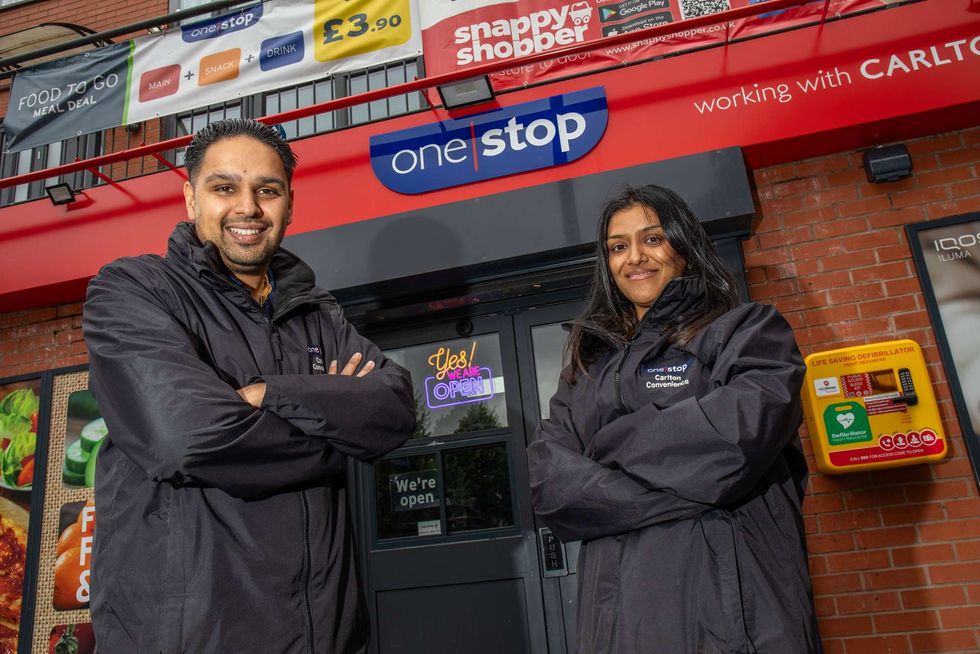 Priyesh Vekaria
“My parents and grandparents came from a generation where hard work wasn't something you talked about. You simply got on with it. There was no job beneath you, your word mattered and customers were treated with respect.
“That philosophy shapes how we operate today. We want our store to be more than somewhere people transact. We want it to be part of the fabric of the community around us, somewhere people feel welcome, supported and valued,” Priyesh said.
Taking the business forward
Those values remain constant, but the pressures facing today's retailers are very different from those their parents and grandparents faced.
For Surjeet, the biggest challenge is keeping pace with a retail market that is changing faster than ever, while absorbing the rising costs and pressures that come with running an independent store.
“The biggest challenge is probably keeping up with how quickly retail is changing while costs and pressures on independents continue to increase,” he said.
Independent retailers are competing with supermarkets, discounters and increasingly sophisticated online businesses, while customers themselves have become accustomed to greater choice and convenience.
But Surjeet believes the very nature of independent retail can also be its biggest strength.
“I also think independents sometimes underestimate their biggest advantage: we can move quickly. If something starts trending today, an independent retailer can potentially have it in the shop tomorrow and be promoting it on social media that evening,” he said.
“We can talk directly to customers, experiment and create excitement in ways that are much harder for a huge organisation to do.”
 Surjeet Notay
For Amit, however, one of the most immediate pressures is crime.
“There was a time when you could confront a thief or ask teenagers to move on from the front of the store due to them being anti-social,” he said.
“There could be a bit of heated confrontation, but it was very quickly dealt with. Now we don't know if it's safe to approach them how we used to because we're not sure if they're carrying weapons.”
He says even routine age-verification conversations can sometimes become confrontational, adding to the uncertainty retailers and their staff face on the shop floor.
For Priyesh, the answer to a changing retail environment is not to retreat from change but to become better at responding to it.
“We're embracing technology, rapid delivery, better data, stronger supplier relationships and new ways of creating theatre and experiences within our stores.
“We can often test an idea one week, learn from it and change direction the next. That agility is one of our greatest strengths,” he said.
That adaptability, he believes, will matter more than size.
“The future won't necessarily belong to the biggest shop. It will belong to the retailer who understands their customer, adapts quickly, builds meaningful relationships and remains genuinely relevant to the community they serve.”
Real legacy
For all the differences between their stories, there is a common thread. The family shop has given each generation more than a business to run. It has given them a way of thinking about work, people and responsibility.
But what each generation chooses to do with that inheritance is where the stories begin to diverge. That perhaps captures the changing nature of family-run convenience retail better than any succession plan could.
Sunder was drawn into the family business when his family needed him. Surjeet grew up in the shop and later found his own way of modernising it. Amit found his direction in the family business when he was unsure what came next. Priyesh stepped away, built experience elsewhere and returned to create something of his own.
The next generation is now beginning to shape those family stories in its own way. For Sunder, there is already a clear succession plan.
 Sunder Sandher
Sunder informed, “My son Josh will take over the family business. He already has a restaurant and at the present moment, he is in the process of acquiring three more stores.
“Josh has the skills to train staff for four months so the business will run on its own. The future is looking bright.”
As a third-generation retailer with young daughters of his own, Surjeet is looking at the next generation from a very different position.
“I’d like to pass on the opportunity, but never the obligation,” he said.
“My grandparents bought an empty shop because they needed to provide for their family. Their grandchildren were then fortunate enough to grow up inside the business they created. That journey means something to me.
“I want my daughters to know where that opportunity came from and understand the work that went into creating it.
“Growing up around a shop teaches you confidence, communication, responsibility, resilience, and how to deal with people from every possible background.”
For brothers Amit and Priyesh, too, the question is less about handing over a shop and more about what should travel with the family into the next generation.
Amit said, “The family shop taught us responsibility, value of hard work, and that what we've built today can have an impact long after we're gone.”
“As a father and business owner, I'd like to pass on those same values to the next generation not just the shop itself, but the work ethic, relationships, reputation and satisfaction that come with it.
“Success isn’t just about what you make. It’s what you build and who you help along the way, and leave something the next generation can be proud to carry forward.”
For Priyesh, who has a five-year-old daughter and an 18-month-old son, the question of what his children inherit is equally important.
 Priyesh Vekaria
“I don't necessarily want to pass on a shop. I want to pass on what the shop represents which is work ethic, resilience, confidence and courage to carve out your own path,” he said.
“My own journey taught me that. I grew up around retail, went off into law, policing, project management and property development, and ultimately found my way back.
“What we did inherit were the values, work ethic and understanding of community retail passed down through generations of our family. We took those foundations and built something of our own.
“If there is a legacy we leave behind, I hope it isn't measured purely by the value of the business or the name above the door.”
For Priyesh, the greatest legacy isn't simply handing your children the keys to a shop but it is “giving them the values, opportunities, and confidence to decide for themselves which doors they want to open”.
That idea, that the greatest inheritance may be the freedom to choose what comes next, brings the four stories together.
As summed up by Surjeet, “I don’t need my children to become retailers for my family legacy to continue.
“If they take the work ethic of their great-grandparents, the confidence to learn something they don’t know, and the courage to create opportunities for themselves, then something that started with my grandparents taking a chance on an empty Co-op all those years ago will have passed through another generation.
“For me, that’s what legacy really means.”