




A jump in household energy bills pushed British inflation to a four-month high in July, matching forecasts, and it looks set to rise further as the war in Iran grinds on with no end in sight.
Annual consumer price inflation rose to 2.9 per cent in July from a 15-month low of 2.6 per cent in June, the Office for National Statistics said on Wednesday, reflecting a 13 per cent rise last month in the maximum tariff British regulators allow energy firms to charge households.
Economists polled by Reuters had widely expected to see a rise in inflation to 2.9 per cent, although the Bank of England predicted a smaller rise to 2.8 per cent in forecasts published at the end of last month and sees inflation peaking at 3.2 per cent later this year.
The data help explain new prime minister Andy Burnham's continuation of his predecessor's focus on reducing cost-of-living pressures on British households, although stretched public finances before the government's annual budget in October offer little room for broad assistance.
The Bank of England is likely to be reassured by the absence of nasty surprises in Wednesday's data, and figures a day earlier showed a slightly cooler labour market, which may limit the lasting impact of inflation caused by the Iran war.
The central bank was burnt by the scale of price rises in 2022 after Russia's full-scale invasion of Ukraine, which, combined with a tight post-COVID job market, drove British inflation above 11 per cent.
“July marks the start of a gradual rise in inflation but is unlikely to spur the Bank of England into action,” said Yael Selfin, chief economist at KPMG, who expects inflation to reach 3.5 per cent.
“Unlike in 2022, when higher energy prices fed into wider cost increases across the economy, softer labour market conditions are helping to limit the scale of a similar pass-through this time around.”
A survey published earlier on Wednesday by human resources data company Brightmine showed the median pay increase awarded by British employers was the smallest since September at 3.2 per cent.
Core inflation, which excludes the impact of energy and food prices, came in a little higher than expected at 2.6 per cent, unchanged from June, rather than the 2.5 per cent median Reuters poll prediction.
Services inflation, closely watched by the BoE as a gauge of domestically-generated price pressures, eased as the central bank and economists had expected, to 3.4 per cent in July from 3.6 per cent.
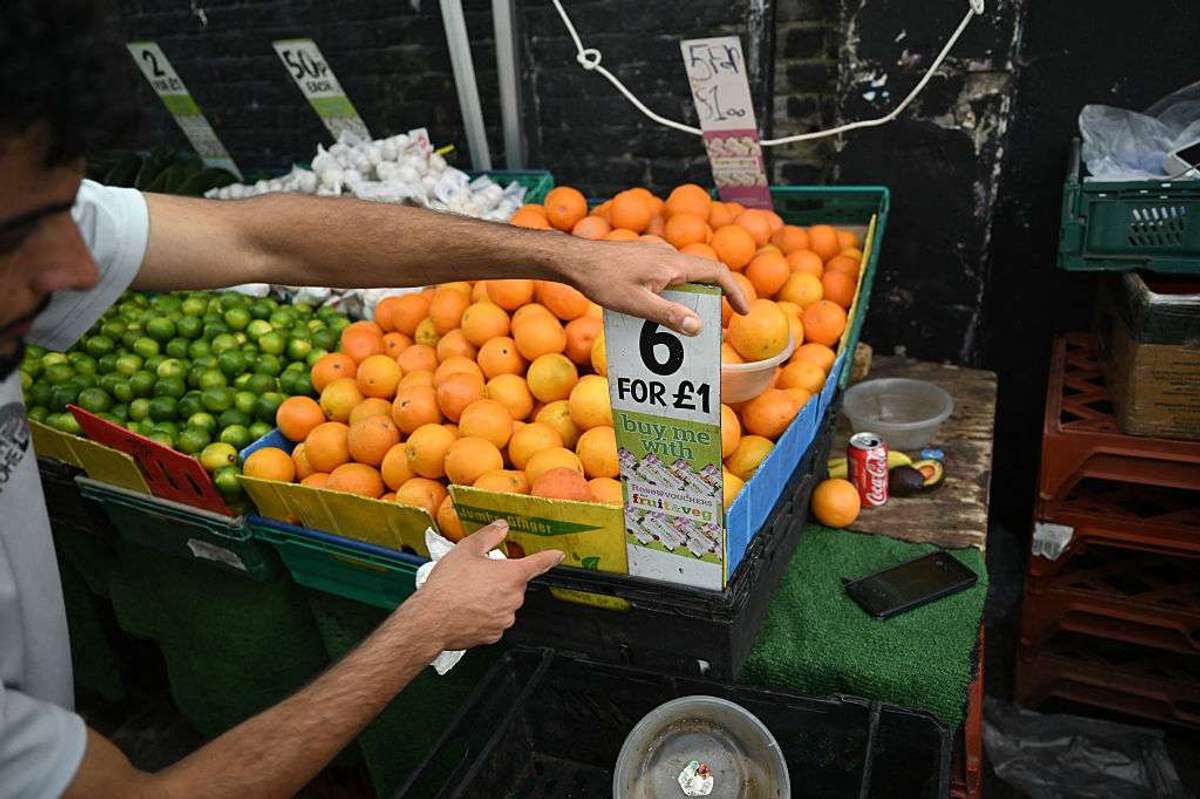
Food and non-alcoholic drink price inflation, which economists had expected to surge after the start of the Iran war, cooled to 1.3 per cent — an almost two-year low and adding to signs that fierce supermarket competition has helped to absorb the shock.
“Iran war inflation continues to impact prices here at home, but Britain's economy is resilient,” chancellor John Healey said after the data.
James Walton, chief economist at IGD, said the drop in food inflation is “welcome news” for shoppers and reflects a “combination of retailers absorbing costs and plentiful food supply at the start of the year”.
“However, the wider industry backdrop remains challenging, with energy markets disrupted by the Middle East conflict, rising regulatory costs, extreme weather affecting food production and higher farm input costs which have not yet fully fed through the supply chain,” he warned.
“These pressures suggest food inflation will rise in the coming months as their impact filters through and businesses should continue to monitor this closely,” he added.
(With Reuters Inputs)