




As the UK's Deposit Return Scheme (DRS) looms large, set to launch nationwide in October 2027, mandating take-back for plastic bottles and aluminium cans in return for a deposit, independent convenience stores face a make-or-break moment.
Under DRS, consumers will pay a deposit (a premium on the price) when purchasing drinks in single-use containers, such as plastic bottles or cans. It is refunded when the empty container is returned to a shop or a reverse vending machine, creating a closed-loop recycling system designed to reduce litter and increase recycling rates.
The scheme will be delivered by UK Deposit Management Organisation (UK DMO), the not-for-profit, business-led body appointed by the government to build the infrastructure and manage the system efficiently.
Crucially for convenience retailers, the UK, Northern Irish and Scottish governments have confirmed that stores in urban areas with a retail space of less than 100 square metres will be able to apply for an exemption from hosting a return point.
Retailers may also seek exemption where another return point is located nearby, or where physical constraints such as layout, size or store design make installation impractical.
While major grocery chains have been preparing large automated systems, most independent retailers with smaller convenience stores are hesitant and unsure.
The latest industry survey, that was conducted in December last year, revealed that more than half of 1100 independent and symbol group retailers surveyed were not aware of DRS at all. Just over one in four (27 per cent) was aware of the scheme but currently had no plan for what to do next.
Exemptions may tempt some smaller-format store owners, but south London convenience retailer Kaual Patel feels otherwise. In his Nisa Local Torridon store in Hither Green, Patel has already introduced a compact recycling machine for collecting bottles and cans.
Speaking to Asian Trader, Patel gave the reason behind his move.
“Many retailers feel that it is good that they can seek exemption from hosting a DRS machine but I think otherwise.
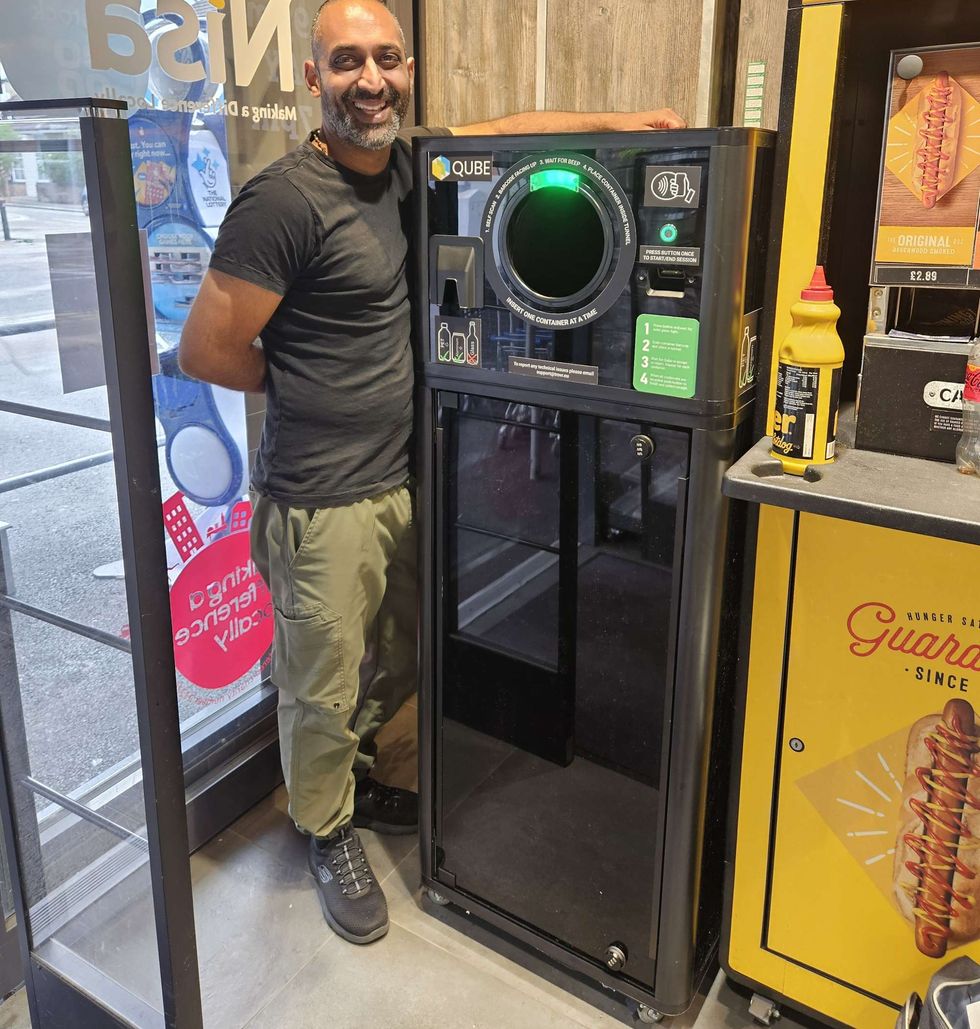 Image from Trovr
“I feel that once the scheme comes into play, stores which don’t have the reverse vending machines will lose footfall as consumers will prefer the stores where they can return the bottles and cans.
“And this won’t be a minor loss. A customer will prefer to do the rest of his shopping at the store where he is able to return the bottles and cans easily and get his deposit back,” he said.
A trial designed for convenience
The machine Patel is trialing is the TrovrQUBE, a compact bottle-and-can return solution designed specifically for space-constrained convenience stores. Developed by Trovr, the unit is roughly the size of an ATM and can be positioned near an entrance or in an underused corner of the shop, making it far easier to integrate into a typical convenience store layout.
Speaking with Asian Trader, Nick Yeatman, CEO of Trovr, explained in detail.
“The TrovrQUBE is 0.45m² and weighs just 17kg, designed specifically for space-constrained retail environments.
“For independent retailers, this is a game-changer, as the unit can be installed quickly and easily without structural changes to stores that are already tight for space,” he said.
In use, shoppers scan and deposit their DRS bottles or cans into the machine. Each container is verified against the national DRS database, the barcode is scanned, and the item is weighed to ensure it is empty.
Once approved, the customer receives a paper or digital ticket via the Trovr app, which is scanned at the till and the 20p deposit is credited instantly.
The process is quick, taking only seconds, and the TrovrQUBE can process more than 20 containers per minute for plastic bottles and aluminium cans, said Yeatman.
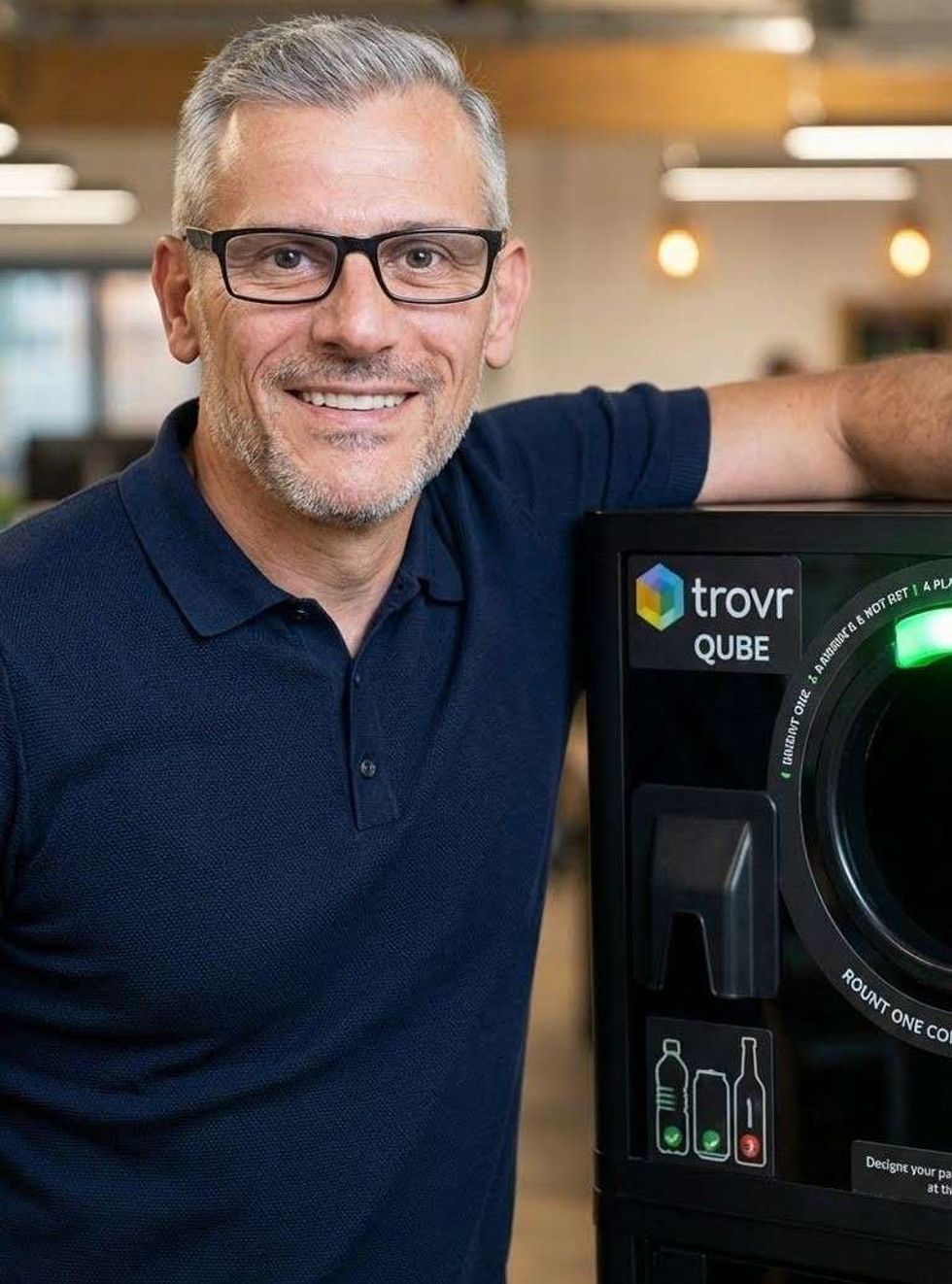 Image from Trovr
Cost remains one of the biggest barriers for independents preparing for DRS. Traditional reverse vending machines can exceed £10,000, before installation and servicing costs are considered.
In contrast, a TrovrQUBE single unit can be purchased for less than £5,000, significantly reducing the upfront investment.
Staffing concerns are also central to the DRS debate. Handling returned containers raises questions around hygiene, workload and time pressure at the till.
Trovr’s system has been designed to minimise staff involvement. Store teams do not manually handle returned bottles or cans. Their role is limited to swapping full collection bags when required and scanning tickets at the counter.
Noteworthy here is under DRS, retailers will be compensated through a “handling payment” that will be paid per item to cover the various costs retailers will incur.
The DMO is currently gathering information and will be consulting with business in the new year to help ensure this is as fair as possible.
Footfall, not just compliance
Yeatman agrees with Patel when it comes to the relevance of having a bottle collection set-up in the store in the coming year.
“DRS is a new way to drive new customers in-store and increase revenues. Mandatory legislation for retailers is always a bitter pill to swallow; however, those retailers who embrace DRS will see a significant long term commercial upside.
“Data from other existing DRS countries has shown a negative financial effect for retailers who avoid taking part in DRS recycling whereas on the flipside, data documents a strong uplift in customers footfall and revenue for those retailers who implement DRS as a new business opportunity, by creating a community recycling destination supporting their existing regulars and driving in new customers,” Yeatman pointed out.
As October 2027 approaches, convenience retailers face a clear strategic choice. DRS can be treated as an obligation to manage or as a reason for customers to keep choosing local stores over larger destinations.
For Patel, the answer is already clear.
“This is going to change how people shop,” he said. “Retailers who ignore that are going to feel it.”