



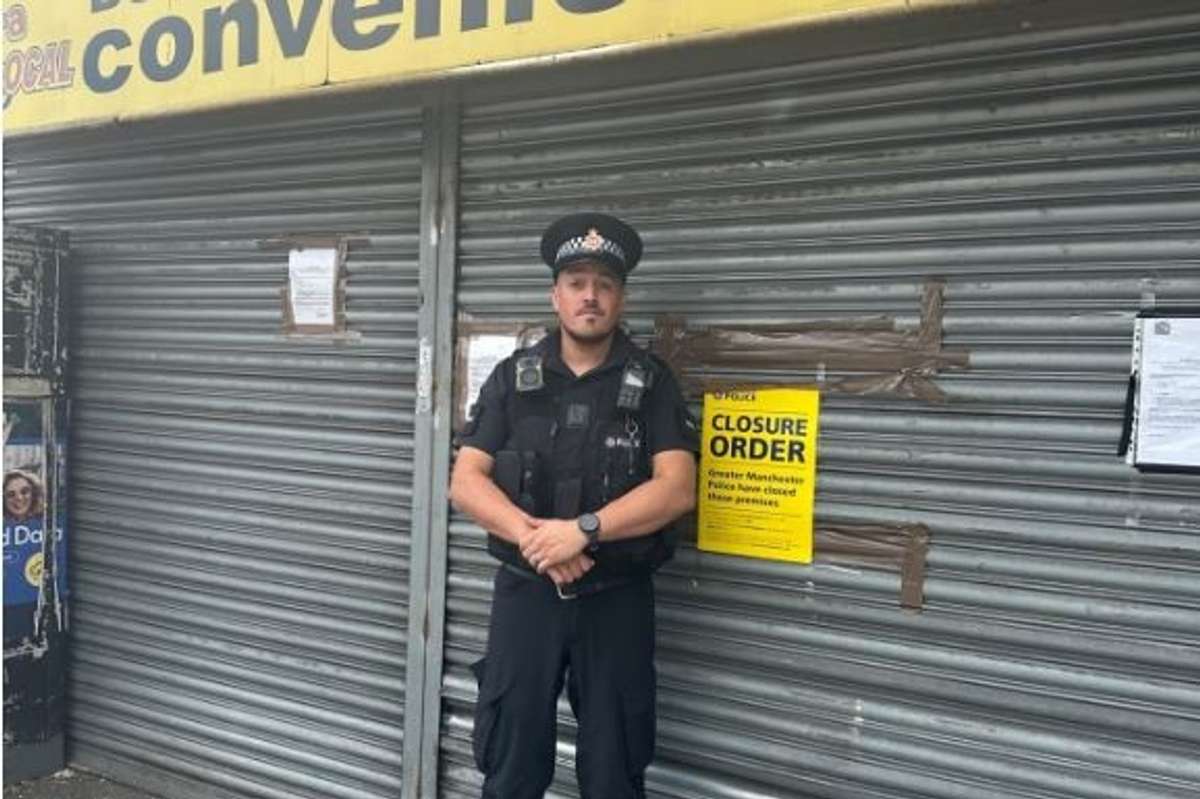

More than nine in 10 “dodgy shops” targeted over illegal tobacco or vapes remain open after enforcement action, reveals a major inquiry into Britain’s high streets on Tuesday (Sept 1), calling on the government to establish a “British FBI” as the country's high streets are becoming “consequence-free zones”, where organised crime, shoplifting and anti-social behaviour are allowed to fester side by side.
According to recently published "Hijacked High Streets" report by Centre for Social Justice (CSJ), more than 4,000 shops had illicit tobacco, cigarettes or vapes seized last year – almost 1,000 more than in 2024 – but just eight per cent were temporarily closed. The think tank warns that relying on seizures without shutting down repeat offenders is allowing criminal businesses to simply restock and reopen.
As many as half of mini-marts and vape shops are suspected of links to organised crime, according to the Chartered Trading Standards Institute (CTSI).
Yet councils continue to rely overwhelmingly on product seizures, despite evidence that removing illegal stock alone does little to dismantle the criminal business model, states CSJ.
In Newham, for example, the think tank found that the council reported seizures of illicit products from 94 shops in 2025 but not a single closure.
On raids across the country, CSJ researchers saw shops simply restocking illicit goods, while suspects evaded further legal action through ghost directors and routine “phoenixing”.
More than two in five Britons – 41 per cent – said they had personally witnessed or experienced anti-social behaviour in 2025-26, up from 36 per cent the previous year. Shoplifting hit a record high last year.
Polling of Trading Standards officers last year found that 97 per cent were aware of suspected organised crime groups operating from retail premises on their local high streets.
One Trading Standards officer told the inquiry: "Recent intelligence includes a shop reportedly taking photos of children in the shop with vapes for social media, a city centre shop allegedly ‘grooming’ young children who are buying vapes from the shop and a shop selling laced vapes to children, possibly with spice which led to two children being hospitalised."
The CSJ’s inquiry identifies four key drivers behind the growth of criminal high street businesses:
● Growing demand for illicit tobacco, cigarettes and vaping products.
● Mass immigration and the exploitation of illegal working by OCGs.
● Long-term economic decline leaving high streets hollowed out.
● A lack of resources and powers for enforcement agencies.
The CTSI reports that between 2014 and 2024, Trading Standards services were cut by more than 50 per cent, with staffing levels falling by between 30 and 50 per cent.
Yet the CSJ says the consequences of stronger enforcement can be dramatic.
Operation Vulcan in Greater Manchester, a major partnership between police, Trading Standards and other enforcement agencies, closed 206 criminal establishments from 2022 to 2024.
The area then saw a 45 per cent decline in public order offences, and significant falls in local vehicle crime (69 per cent), violent crime (62 per cent), and burglary (58 per cent).
The think tank is calling for the Government to establish a “British FBI”, bringing together powers currently fragmented across more than 100 departments and agencies to achieve equivalent results at a national level.
Under the proposals, plans for a new National Police Service would be accompanied by the restructuring of Trading Standards into a national enforcement agency with stronger statutory powers. The report calls for on-the-spot closure orders for up to 12 months with simpler evidence thresholds for both temporary and permanent closures.
The report is backed by Melanie Onn MP, Labour MP for Great Grimsby and Cleethorpes, who has led a parliamentary campaign against criminal high street businesses.
Writing in the report’s foreword, she said: "There is no route to high street renewal without restoring security to our communities. Over the last year, I have spearheaded a parliamentary campaign to shut down these criminal enterprises and revitalise Britain’s high streets.
"This campaign has gained the backing of over 70 MPs. This government is determined to bring back hope to our communities. This report provides a path forward. Now is the time to act."
In a foreword to the report, Thinus Keeve, Retail Director at Marks & Spencer, said, "Every morning I wake up to an email outlining the incidents that have happened in M&S stores the day before. I read about colleagues being bitten and punched, threatened with bottles or knives, and seriously injured while trying to prevent shoplifting. “Crime on our high streets has become a significant challenge for businesses, colleagues and local communities. It affects confidence to invest, the experience of customers and, most importantly, the safety of the people who work there every day.
“Government must crack down on crime and take back our high streets from those shamelessly exploiting them.
Joshua Nicholson, Head of Housing and Communities at the Centre for Social Justice, said: "Seizing illegal cigarettes and vapes while leaving the shop open to trade again the next day is not only futile, it is fuelling a terrifying criminal underworld.
“Hard-working Trading Standards officers are being asked to take on organised crime groups with one hand tied behind their backs. Government needs to back them with the powers they need to get criminal businesses out of our communities.
“The Home Secretary has taken important steps forward but now is the time to take back Britain’s high streets for good."
Hijacked High Streets report also includes the following recommendations:
● The Home Office should review the use of anti-social behaviour powers and strengthen the consequences for prolific offenders. Proposals include terminating social housing tenancies where persistent anti-social behaviour is committed by members of a household, including children, and deducting unpaid anti-social behaviour fines from benefits.
● The Home Office and Ministry of Justice (MoJ) should launch a nationwide crackdown on shoplifting by mandating GPS tagging, curfews, and location restrictions for repeat offenders or those linked to organised crime.
● HM Treasury should introduce a permanently lower rate of VAT for the hospitality sector set at 15 per cent, paid for through reforms to welfare and a two per cent tax on online sales.
● The Ministry of Housing, Communities, and Local Government (MHCLG) should roll out the use of design codes to fast-track planning applications.
● MHCLG should use match-funding initiatives to increase the investment in the Community Right to Buy Fund to £500 million.
The report comes as ministers launched a new High Street Organised Crime Unit in May and announced plans in June to extend the maximum duration of closure orders from three months to 12. In August, the PM announced changes to planning law to require every new vape shop to obtain planning permission.