



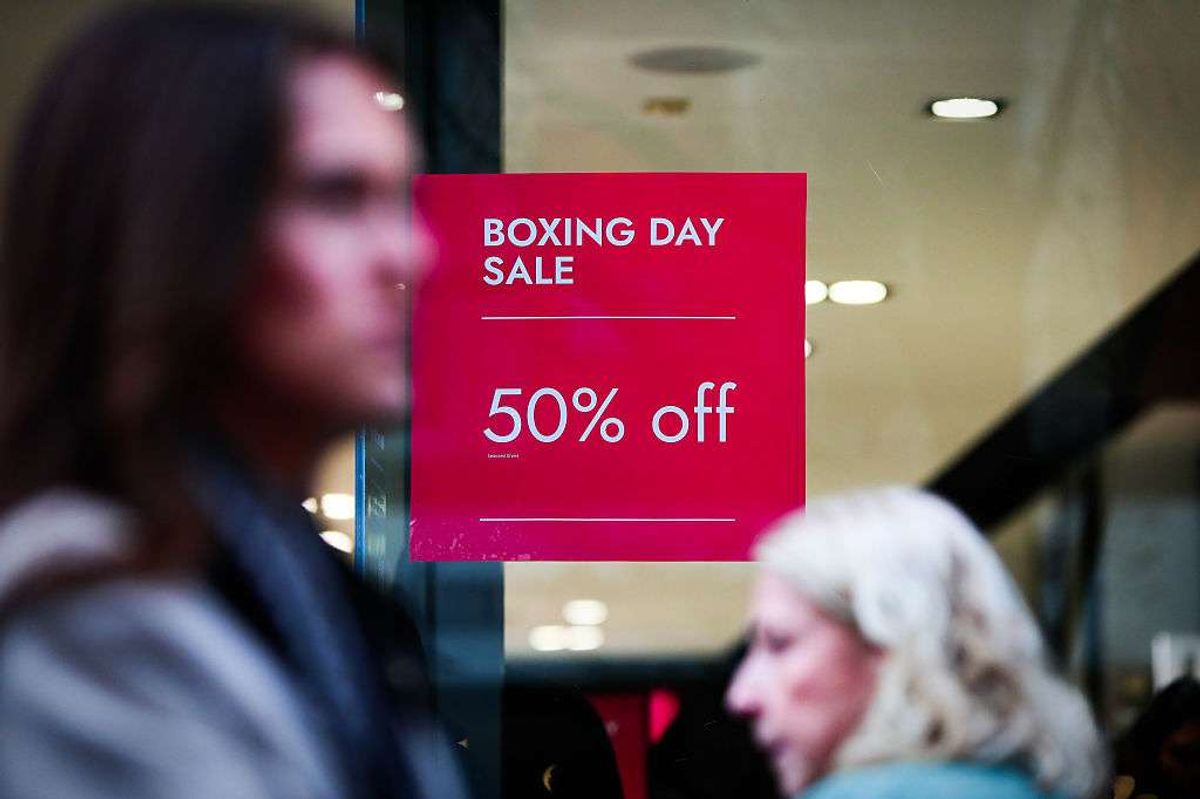

UK retail footfall failed to deliver the traditional post-Christmas lift on Boxing Day, with store visits falling 1.3 per cent year on year on 26 December, according to new data from Sensormatic Solutions.
The figures, from Sensormatic’s ShopperTrak Analytics platform, show that while fewer shoppers visited stores compared with Boxing Day 2024, traffic was still sharply higher than the previous week, up 44.6 per cent week on week, underlining the continued importance of the post-Christmas sales period for physical retail.
Retail Parks performed strongest on a weekly basis, recording a 49.1 per cent uplift week on week, even as overall Boxing Day footfall remained in negative territory compared with last year.
Andy Sumpter, EMEA retail consultant at Sensormatic Solutions, said retailers would have been hoping for more momentum after a challenging festive season. “After what has been an unpredictable festive trading period, defined by shaky consumer confidence and spending hesitancy, retailers would have been counting on a Boxing Day boost to shopper numbers in-store,” he said.
“While Boxing Day remains an important trading period, the shape of the traditional post-Christmas sales period has shifted, with early discounting, online migration and some retailers opting to remain closed on 26 December all contributing towards the changing nature of the event.”
Muted performance in the run-up to Christmas
The softer Boxing Day result followed a subdued run-up to Christmas across several key trading days. Footfall on Tuesday 23 December, the last full shopping day before Christmas, fell sharply at -13.1 per cent year on year, despite a significant 64.8 per cent week-on-week jump as shoppers left purchases to the last minute.
Retail Parks again proved more resilient on 23 December, with a smaller annual decline of –8.6 per cent, while Shopping Centres recorded the strongest weekly recovery, up 74.3 per cent compared with the previous week.
Earlier in the week, Sunday 21 December saw footfall down 7.2 per cent year on year, although traffic edged 9.3 per cent higher week on week. Meanwhile, Super Saturday (20 December) also underperformed expectations, with store visits down 6.9 per cent year on year, despite a modest 1.5 per cent week-on-week increase.
According to Sumpter, consumer caution has continued to distort traditional festive shopping patterns. “Throughout this year’s festive trading season, we’ve seen consumer caution cause spending hesitancy and upend usual demand patterns. Shoppers are taking longer to validate purchases, with many holding out [for deeper discounts],” he said.
Early discounting reshapes peak trading
Sensormatic pointed to the growing impact of early-season discounting and online sales on in-store footfall. With Black Friday accounting for a larger share of discount-led spending, and many retailers launching Boxing Day deals online as early as Christmas Day, the urgency to shop in-store on 26 December has eased.
Some major retailers, including Next, John Lewis and M&S, also opted to keep stores closed on Boxing Day, while others such as Primark and Debenhams launched discounts well ahead of Christmas in an attempt to stimulate demand.
Despite the softer start to post-Christmas trading on the High Street, consumer spending is still expected to be robust. Data from the Barclays Consumer Spending Index suggests shoppers will spend around £3.6 billion during the post-Christmas sales period.
Footfall performance across key festive days:
| Date (2025) | Trading day | Year-on-year change | Week-on-week change |
| 20 Dec | Super Saturday | –6.9 per cent | +1.5 per cent |
| 21 Dec | Sunday | –7.2 per cent | +9.3 per cent |
| 23 Dec | Last full day before Christmas | –13.1 per cent | +64.8 per cent |
| 26 Dec | Boxing Day | –1.3 per cent | +44.6 per cent |