



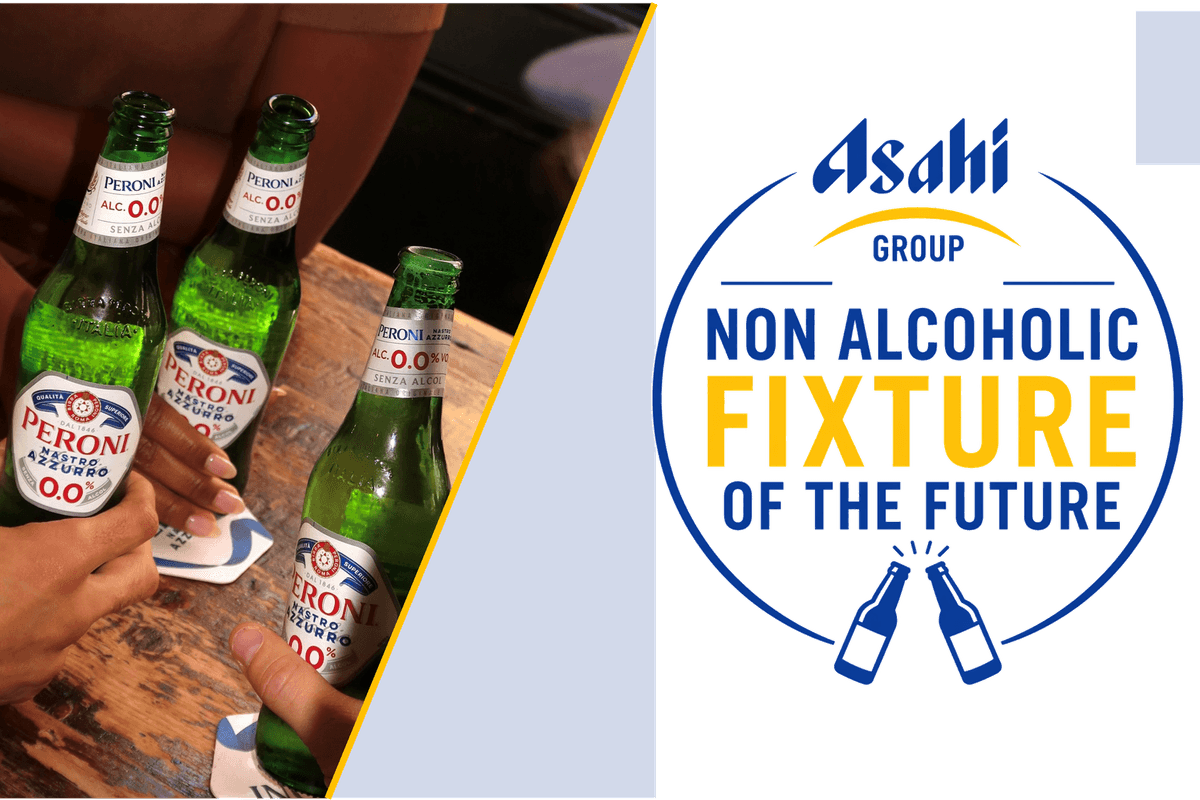

Asahi UK, the brewer behind Peroni Nastro Azzurro 0.0%, the leading alcohol-free lager brand in the off-trade, has unveiled its new Fixture of the Future category vision, calling on retailers to rethink their approach to the alcohol-free fixture.
Data compiled by the brewer shows that while the non-alcoholic beer market continues to expand, with sales forecast to double by 2030 compared to 2025 levels, current ranging and display strategies are limiting growth. More than 200 non-alcoholic beer SKUs currently trade in the UK off-trade, yet just eight of these SKUs account for more than 50 per cent of the category's total value.
With Asahi UK contributing £30m to the alcohol-free beer category over the past year – a 12.5 per cent value share – and its portfolio seeing value growth of +31 per cent, Asahi UK is well-placed to lead the future of alcohol free. The brewer has launched its 'Fixture of the Future' vision – a data-led merchandising blueprint designed to help retailers optimise ranges, unlock immediate growth and understand longer-term opportunities.
Rob Hobart, Marketing Director at Asahi UK, said: “The non-alcoholic category has reached a turning point. Growth has been fuelled by innovation and range expansion, but the biggest opportunity now lies in helping shoppers navigate the category with confidence.
"Retailers can unlock further growth by creating simpler, more intuitive fixtures that prioritise visibility, shopability and the brands that drive category value. Ultimately, success won't come from having more products on shelf, but from making the category easier and more rewarding to shop.”
Asahi UK has combined shopper behavioural insights, sales data and qualitative studies to develop its Fixture of the Future:
- Establish a single destination. Position alcohol-free products clearly within the primary beer, wine and spirits aisle. Research shows 78% of shoppers decide they’re buying alcohol free before they reach the aisle, and 85% believe alcohol-free products should sit within BWS.6
- Dedicate 10-15% of fixture space to alcohol free. Alcohol free represents 6% of total beer value. However, given the growth trajectory of non-alcoholic drinks (+12% growth vs -0.8% decline for total BWS) retailers should give the segment more space than its current size – up to three bays in a 20-bay aisle, ideally located in the centre.
- Use blue. Incorporate blue branding across aisle fins, shelf stripping, and header boards. Research shows 52% of shoppers recognise blue as the key visual cue for alcohol-free products.7
- Allocate space based on share. Beer currently holds a 61% value share of alcohol-free, followed by wine (20%), cider (9%), cocktails (8%), and RTDs (2%). However, beer and RTDs may warrant expanded shelf space due to rapid growth, whereas non-alcoholic wine performance remains slow.8
- Range by strategic brand role. Structure shelves around four distinct brand functions:
- Signpost Brands make up a 59% value share of the category and include industry-leading products like Peroni Nastro Azzurro 0.0%. Retailers should ensure their space is protected.
- Choice Expanders make up a 34% value share, with brands such as Asahi Super Dry 0.0%, and play a key role in driving shopper satisfaction with the range, filling gaps in taste, style and price tiers. Retailers should ensure each product they stock within this segment offers something unique and avoids duplication.
- Purpose-built Brands – names that solely operate in the alcohol-free space. While these have played a role in driving discovery, some can occasionally be limited by challenges over brand trust and credibility.
- Occasion Builders, which is where the recently launched Peroni Nastro Azzurro 0.0% Limone di Sicilia and Arancia Rossa sit. While these are currently only 1% value share, Asahi UK sees them as offering a new future growth avenue for the category.
- Mirror Parent-Brand Formats. Small packs currently make up the bulk of sales (63 per cent share), but mid-packs (25 per cent share) represent the fastest-growing segment. 10 Asahi UK’s approach is for alcohol-free brands to match the format of the best-selling alcoholic parent-brand SKU, enabling shoppers to replicate the experience they have with the parent brand as closely as possible.
- Offer secondary space all year round. Secondary feature and display space should be maintained across peak trading windows such as summer and Christmas, rather than restricted solely to 'Dry January'.
Moving towards ‘Balanced Choices’
For retailers looking to future-proof their fixtures, Asahi UK advocates bringing functional and adult soft drinks alongside non-alcoholic beer, wine, and spirits under a unified 'Balanced Choices' banner.
“The future opportunity is in creating a clear ‘moderation’ destination for shoppers by grouping categories together by shopper need rather than product type,” added Hobart.
“This moves our recommendations beyond just looking at how retailers should be merchandising non-alcoholic drinks to the broader question of how retailers should be looking at space and flow across the total drinks landscape, as lines continue to blur between drinks categories.”