



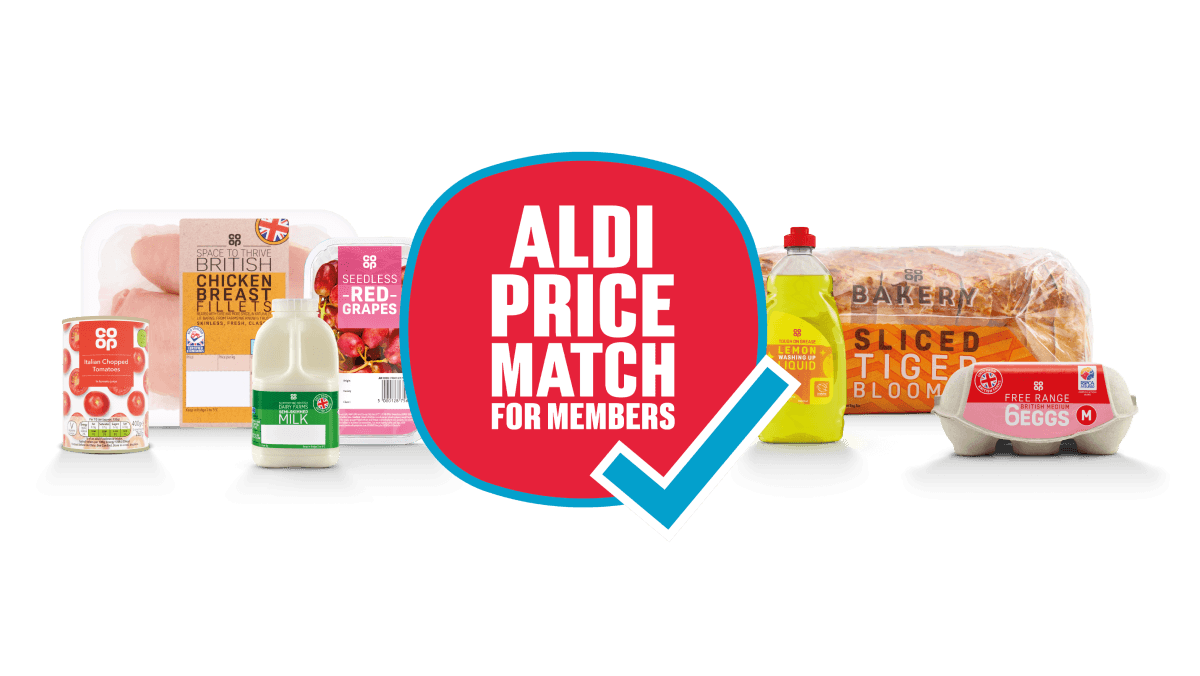

The Advertising Standards Authority (ASA) has on Wednesday partially upheld a complaint against Co-operative Group over claims made on its website promoting its Aldi Price Match scheme, ruling that the retailer failed to make the basis of its price comparisons sufficiently clear to consumers.
The ruling followed a challenge from Aldi over Co-op’s “Everyday Essentials, Price Matched to Aldi” webpage, which showcased selected grocery categories and products alongside member and non-member prices.
Investigating three issues, the ASA rejected two: it agreed that the term “everyday essentials” would be understood by shoppers to refer to selected staple items rather than Co-op’s entire range, and found that the products shown in the banner – including chopped tomatoes, washing-up liquid and carrots – had in fact been included in the price match during the period assessed.
However, the regulator upheld Aldi’s complaint that the basis of comparison was misleading.
While Co-op stated in small print that it matched prices against “comparable products” where identical items were not sold by Aldi, the ASA said this qualification was not sufficiently prominent and was likely to be overlooked. It also found that the term “comparable product” was ambiguous and not adequately explained, leaving consumers unclear about how Aldi items were selected for comparison.
The watchdog highlighted several examples where Co-op matched products to alternatives that it did not consider the nearest equivalent – including pairing wholemeal farmhouse bread with a white farmhouse loaf, and matching fusilli pasta with penne despite Aldi selling fusilli in a larger pack size. In soft drinks, it also raised concerns about Co-op mixers such as ginger ale and bitter lemon being compared with tonic water, despite differences in flavour and intended use.
In its assessment, the ASA said shoppers would reasonably expect prices to be matched against identical products, or – where those were unavailable – the closest possible equivalent. Because this was not always the case, and because Co-op did not clearly explain its methodology, the regulator concluded that the promotion breached multiple sections of the CAP Code relating to misleading advertising and comparisons with identifiable competitors.
As a result, the ASA ordered that the ad must not appear again in its current form. It told Co-op to ensure that, where identical products are unavailable, any comparable selections do not mislead, and that future price-match promotions clearly and prominently explain the basis of comparison, with accessible information to help consumers verify claims.