



Publishers are being urged to prioritise direct audience relationships, trusted editorial brands and operational agility as artificial intelligence reshapes how content is discovered and consumed, according to a new report launched at the 2026 PPA Festival in London.
The report, "Humans and Machines: The Everywhere Equation", published by the Professional Publishers Association (PPA) and Enders Analysis, argues that publishers are “well placed to succeed in an AI world” if they focus on community, distinctive voices and human creativity.
Among the report’s key findings are that trusted outlets are becoming more important in “a world of infinite content”, search is “no longer a reliable growth engine”, and events, memberships and apps are growing in strategic importance. The report also says publishers do not need to be “everywhere” to succeed but instead should focus on where they can create the strongest audience connections.
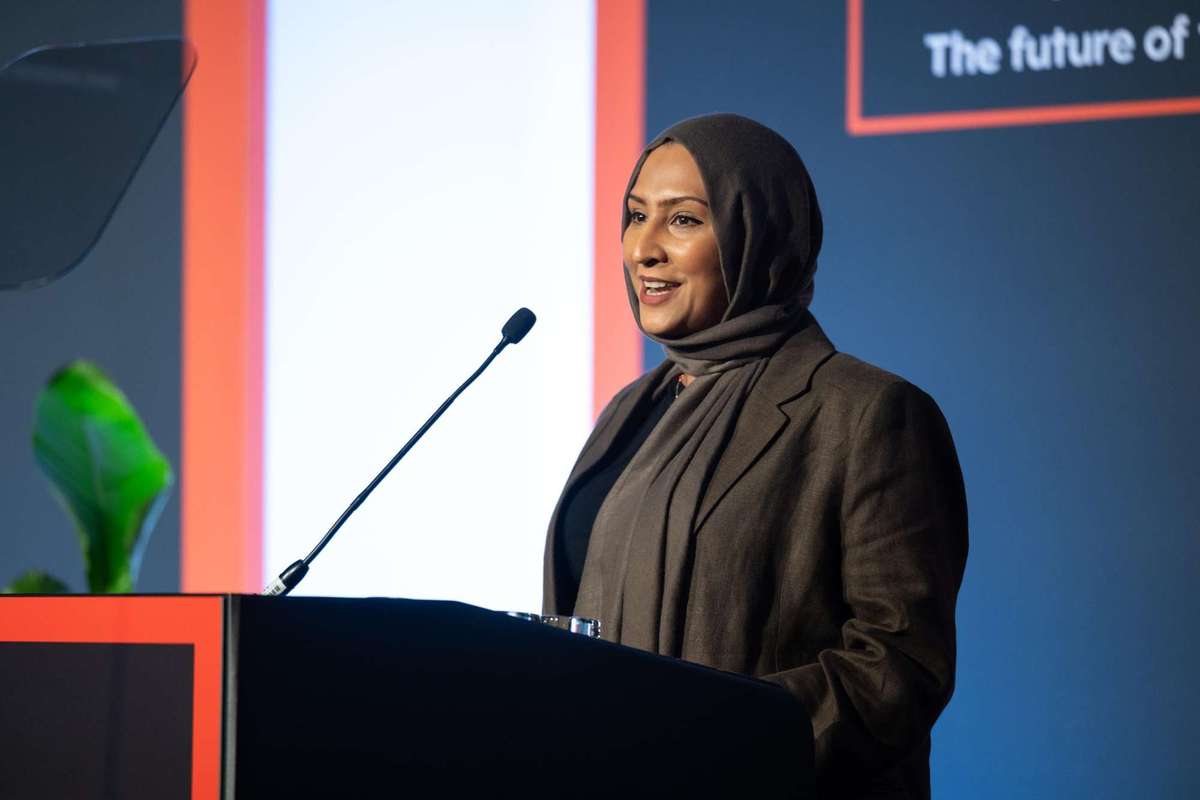
Launching the report during the opening session of the PPA Festival at The Brewery, Chiswell St, London, Sajeeda Merali, PPA chief executive, said trusted brands are becoming increasingly valuable amid misinformation and changing consumer habits.
“In a world flooded with misinformation and at a time where most people can say and claim almost anything they want without evidence or grounded in fact, there has never been a greater need to trust our sources,” she told delegates.
Merali said the organisations best positioned for success would be those “investing in human creativity, seeking to protect their valuable IP and serving clearly defined communities with depth and authority”.
The report found that 78 per cent of UK adults prefer human-driven online content and news, reinforcing the importance of editorial trust and personality-led brands.
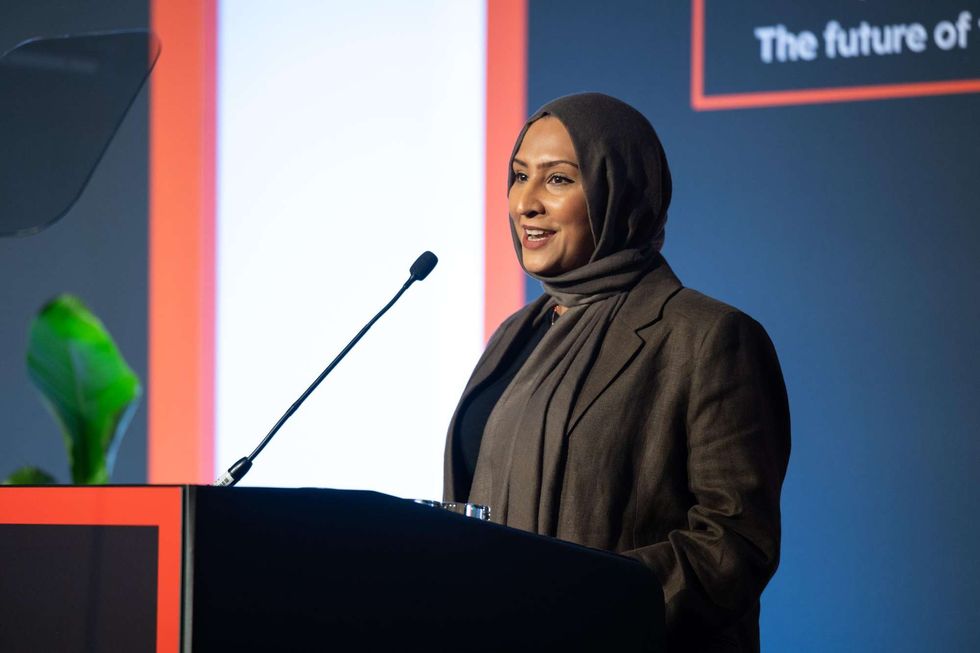 Sajeeda Merali, PPA chief executive Photo: iStock
Speaking at a panel discussion that examined the report’s insights, Abi Watson, head of publishing at Enders Analysis, said publishers are operating in a rapidly changing discovery environment in which referral traffic had become increasingly unreliable.
“AI is influencing as much as impacting what a media product is, the interface, the format, the personalisation, orchestration and the architecture,” she said. “Machines don’t watch great programmes or read great articles, but their algorithms surface, package and distribute them.”
She argued that publishers should focus on direct audience relationships through newsletters, events and communities rather than relying heavily on external platforms.
“The future belongs to publishers who are unmistakably somewhere, whose voice and craft are so distinctive that the community seeks them out,” Watson said.
The report also highlighted what it described as “punk experimentation” – rapid, low-cost testing enabled by AI tools – as a way for publishers to innovate more quickly. Australian publisher Man of Many was cited as an example after building its own AI operating system for SEO, metadata and reporting within months.
Ruth Berry, president, global partnerships and Zoo 55 at ITV Studios, described how the production and distribution company had embraced the report’s “punk experimentation” approach by creating a separate “skunk works” operation to test new audience and revenue models around its intellectual property. The company expanded beyond its traditional business-to-business model by building direct-to-consumer operations spanning social channels, FAST (Free Ad-Supported Streaming TV) networks and gaming.
“When we realised this is a meaningful business – the economics were there – we created a business model that was net new revenue across the business,” she said, noting that the company’s social channels had generated around 50 billion views last year.
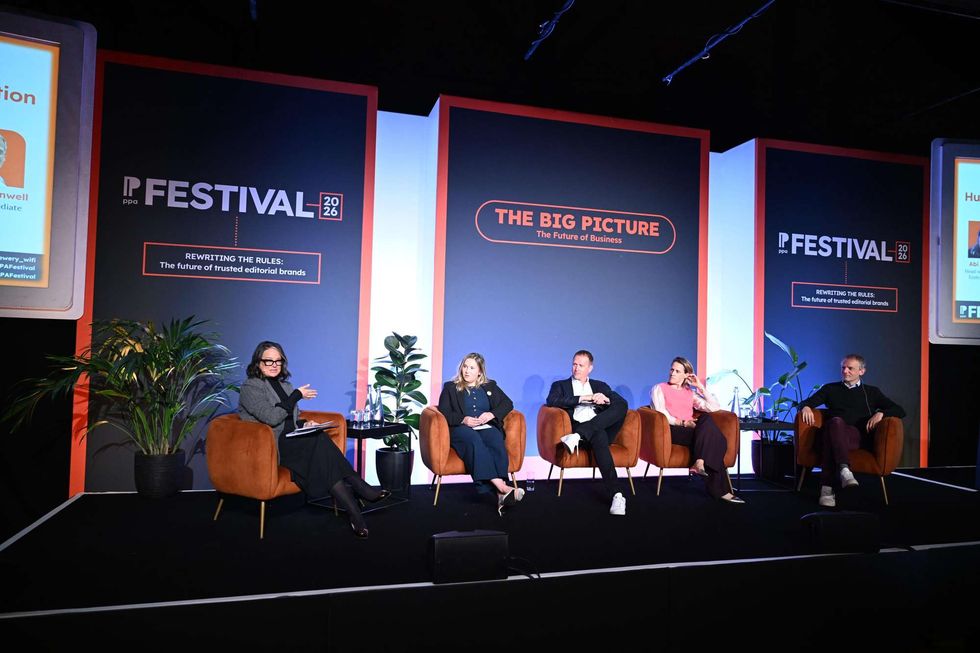 (L-R) Katie Vanneck-Smith, chief executive of Hearst UK; Abi Watson, head of publishing at Enders Analysis; Alan Loader, chief media officer at The Channel Company; and Sean Cornwell, chief executive of Immediate during a panel discussion at the 2026 PPA Festival. Photo: Handout
At the same time, panellists stressed that creativity, convening power and specialist expertise, remained core advantages for publishers.
Alan Loader, chief media officer at The Channel Company, said specialist B2B publishers in particular still held a powerful advantage through access to proprietary information and decision-makers.
“What AI has actually done is a force multiplier,” he said. “You can connect those unstructured datasets that you couldn’t do before.”
Sean Cornwell, chief executive of Immediate, publisher of lifestyle brands including Radio Times and Good Food, said the industry needed to think beyond simple distinctions between human and machine-generated content.
“I think it’s very easy to over-egg the whole ‘it’s all right, we’re humans, we create human content because AI can’t replicate that’,” he said, arguing that publishers instead needed to embed AI into everyday workflows to augment teams and improve productivity.
Describing herself as a “radical optimist” amidst the concerns around platform disruption and AI-driven discovery, Katie Vanneck-Smith, chief executive of Hearst UK, suggested the industry was entering a period where content itself could emerge as a stronger standalone commercial model.
Closing the session, Watson said publishers would need to remain agile as AI platforms and discovery systems continued to evolve but argued that some fundamentals would endure. “There are certain things that remain constant. It’s the power to convene,” she said.
More than 650 delegates attended this year’s PPA Festival, making it the largest edition of the event so far.