



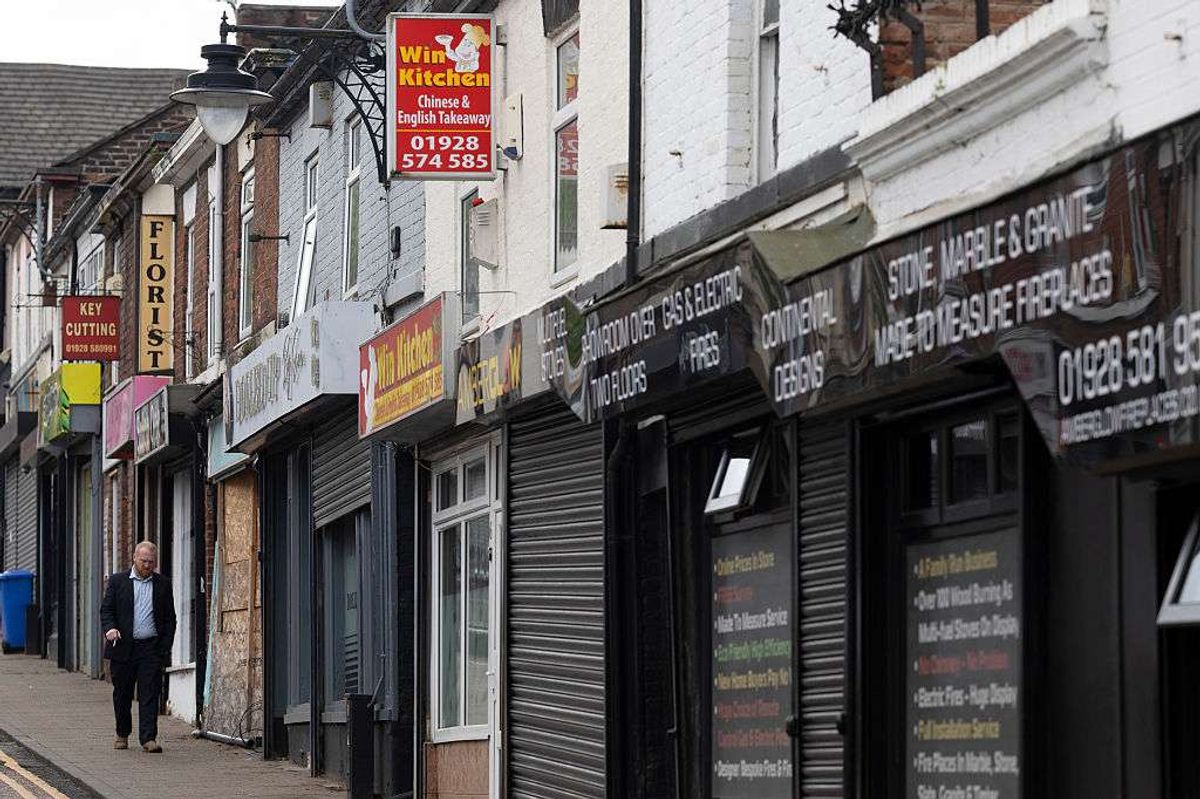

High streets blighted by boarded-up shopfronts and a lack of essential services such as butchers, grocers and bakeries are set to benefit from a £150m government funding package aimed at revitalising town centres and supporting local businesses.
The multi-million-pound investment will be targeted at areas hardest hit by recent decline, with funding designed to help communities bring shoppers back to their local high streets, support independent retailers, improve neglected shopfronts and reopen empty units.
The cash injection forms the first phase of the government’s forthcoming High Streets Strategy, announced earlier last week, with further details on how funding will be allocated expected in the coming months.
Communities secretary Steve Reed said high streets remain “the beating heart of Britain”, stressing that the initiative is intended to give local people greater control over regenerating their town centres.
“Town centres have suffered from high streets falling into decline, and that is why we’re taking action to turn the tide with this crucial investment and more to come,” Reed said. “We’ve listened to what people are telling us and that’s why we’re giving them the power to breathe new life back into our high streets and restore the sense of pride communities feel.”
The announcement signals renewed emphasis on local provision and neighbourhood services, with the government highlighting the importance of everyday essentials and community hubs in rebuilding footfall and social connection.
The British Independent Retailers Association (Bira) said the investment was encouraging and aligned with recent research showing communities want to take pride in their high streets.
“We welcome this £150 million investment in high streets. Recent research from Southampton University fully supports our belief that people want to be proud of their high streets, and we're pleased to see the government listening to communities,” Andrew Goodacre, CEO of Bira, said.
“It's particularly encouraging that spending decisions will be determined by local people, and we hope local businesses will be involved in those decisions. Investment in the public realm, facilities, accessibility and property will all be crucial. We'd also like to see historic independent retail businesses, often operating in historic buildings, receive support to share their stories with the wider community.”
However, Goodacre warned that physical improvements alone would not revive high streets without addressing the tax burden on businesses.
“For this expenditure to deliver lasting change, we need viable businesses on our high streets meeting customer needs. The harsh reality is that this substantial investment could be completely undermined by the burden of ever-increasing business rates forcing high street businesses to close, whilst preferential treatment is given to retail parks and large online giants,” he added.
“Restoring shopfronts and opening empty units is pointless if the tax system continues to penalise the very businesses we're trying to support. We urge the government to ensure its upcoming High Streets Strategy includes fundamental business rates reform to create a level playing field for independent retailers.”
The latest funding builds on existing measures aimed at restoring pride in communities, including giving councils in England greater powers to block new betting shops and vape stores, backing more than 1,000 pubs that provide additional community services, and regenerating over 330 deprived areas through the Pride in Place programme.
Additional steps already underway to support high street regeneration include proposals for a new community right to buy under the English Devolution and Community Empowerment Bill, designed to help residents save valued local assets such as pubs and sports clubs, moves to prevent the loss of the last community facility in an area, and further action to curb the proliferation of betting shops.
More detail on the High Streets Strategy, including timelines and place-by-place allocations, is expected later this year.