




Grocery price inflation held steady at 4.7 per cent over the month to 30 November, while take-home sales have risen below inflation by 3.4 per cent over the four weeks, according to the latest market data from Worldpanel by Numerator.
Sales at symbols and independents declined by 2.4 per cent in the 12 weeks to 30 November, showing improvement from the 3.7 per cent decline in the previous month.
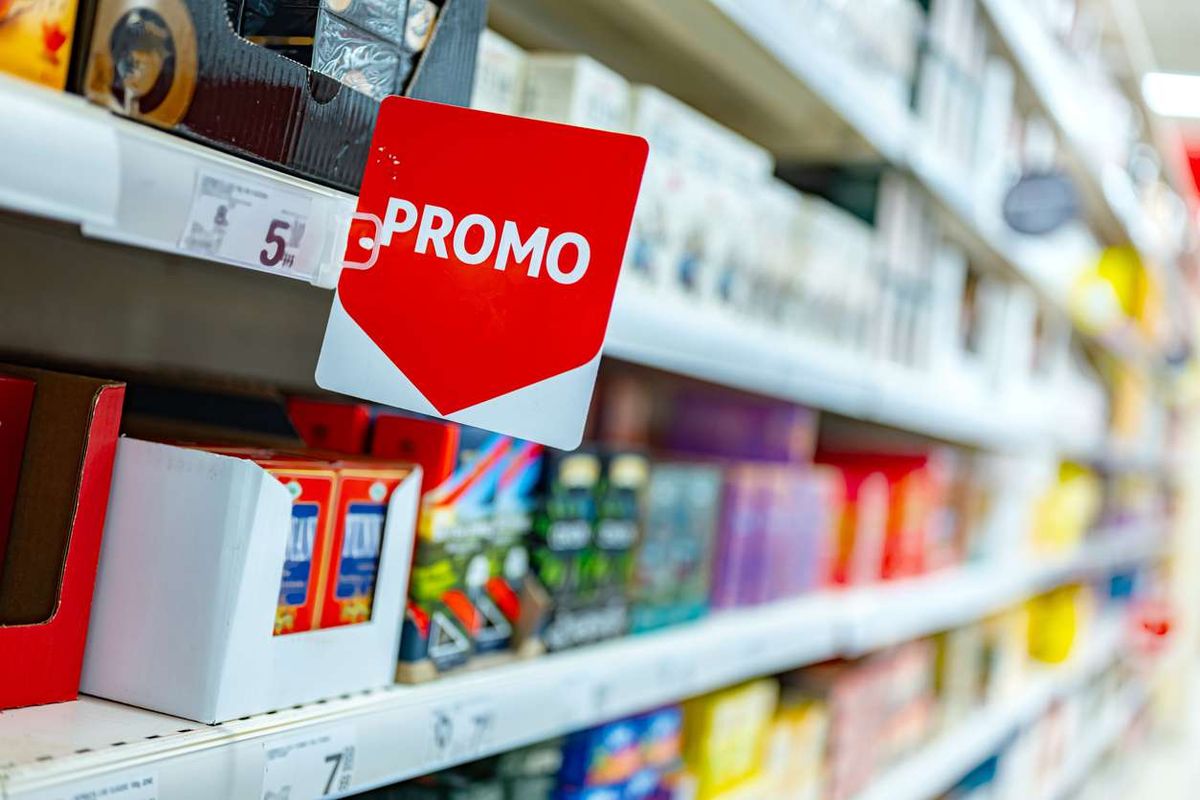
Worldpanel noted that retailers are ramping up investment in promotions. In November, 31.2 per cent of spending was on promoted items, up from 30 per cent this time last year. Sales are expected to exceed £13.6 billion in December.
“Retailers are pulling out all the stops to win shoppers over as they gear up for one of the most important trading periods of the year,” Fraser McKevitt, head of retail and consumer insight at Worldpanel, said.
“One in five households tell us that they’ve been struggling financially and that’s been largely consistent over the past two years. With the cost of living still biting for many this Christmas, just under one third of all spending is on promotion as supermarkets find ways to shield shoppers from the impact of price rises.”
The emphasis on offers and lower pricing means that the cost of a Christmas dinner for four is a few pence cheaper than last year at £32.46. However, McKevitt noted that consumers will also want to indulge during the festive season.
“We’ve seen that right through the cost of living crisis as people have found new, more affordable ways to indulge in what we call the ‘pick-me-up pound’. The rise and rise of premium own label lines bears this out with one in every £20 now spent on these treat-type products,” he said.
While chocolate prices are up 18.4 per cent on this time last year, it hasn’t stopped five million households putting a confectionery advent calendar in their basket in November. Similarly, just over one in ten shoppers fancied a festive tipple and bought a bottle of champagne or sparkling wine over the last month.
Online remains the fastest growing part of the market with sales up by 8 per cent in November to hit the second highest ever sales in a month since the pandemic high of February 2021. Boosted by the online jump, Ocado reached a new record market share of 2.2 per cent with sales increasing by 15.8 per cent over the 12 weeks to 30 November.
However, bricks and mortar still dominates the grocery sector, and with Christmas falling on a Thursday this year, Monday 22nd and Tuesday 23rd are expected to be the busiest shopping days of the year.
Driven by its ninth consecutive month of double-digit sales growth at 10.2 per cent, Lidl made the biggest market share gain, winning an additional 0.5 percentage points compared with last year to reach 8.1 per cent.
Sales at Sainsbury’s rose by 5.1 per cent, bringing the retailer’s market share to 16.0 per cent. Tesco grew sales by 4.7 per cent, as it attracted 321,000 more shoppers over the 12 weeks versus last year. Britain’s largest grocer now holds 28.3 per cent of the market.
Spending through the tills at Aldi increased by 4.1 per cent and its share remains at 10.5 per cent. Waitrose and Iceland both grew ahead of the market at 4.0 per cent, maintaining shares of 4.4 per cent and 2.3 per cent respectively.
Sales at Asda now account for 11.5 per cent of the market, while Morrisons holds 8.3 per cent and Co-op’s share stands at 5.3 per cent.
Both Asda and Co-op saw sales declining by 4.3 per cent and 1.4 per cent respectively.