



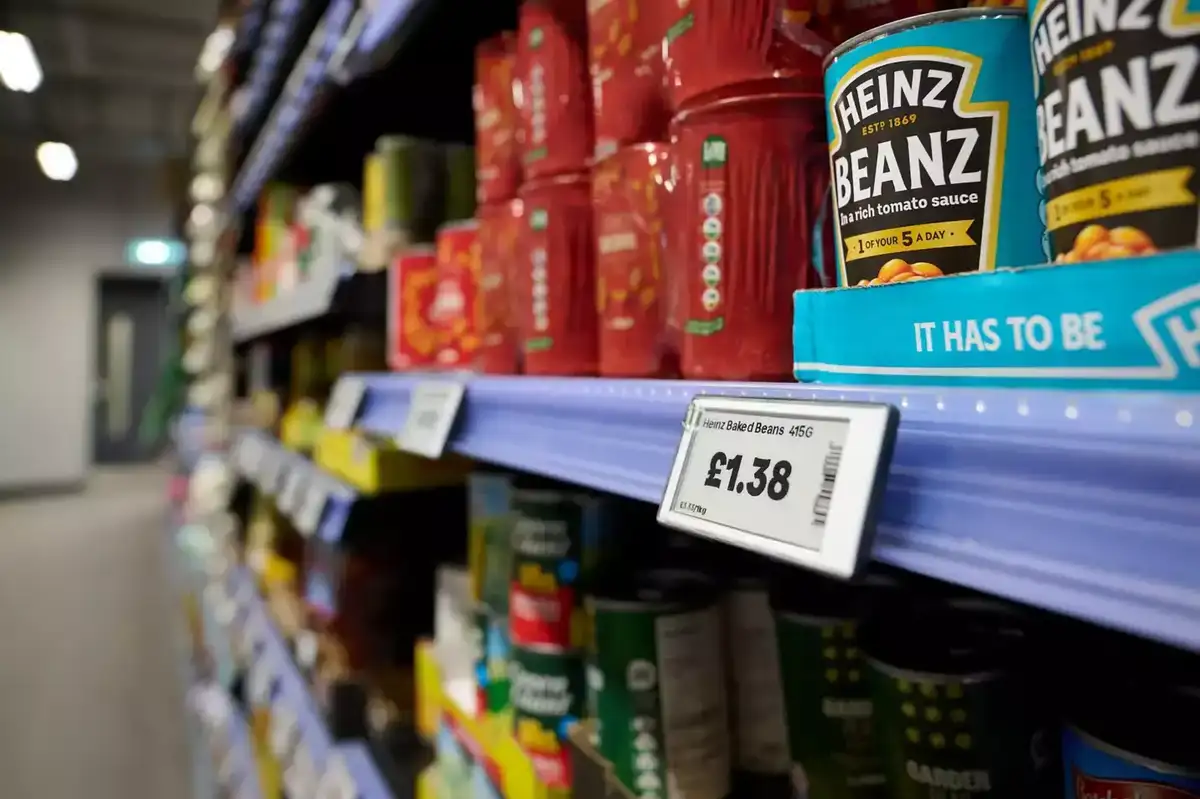

Supermarkets could introduce “dynamic pricing”, allowing them to increase the cost of goods when demand is high, the Bank of England has warned.
The Bank says a third of companies are planning to use “market-responsive pricing tools”, up from one in five at present. This type of pricing uses artificial intelligence (AI) to automatically adjust prices in real time based on the current market conditions.
Clare Lombardelli, the deputy governor for monetary policy at the Bank, said, “The rise of big data, artificial intelligence and digital platforms is leading to pricing that is more dynamic (rapidly changing) and more individual (different prices for different people).
“Both introduce opportunities for efficiency and concerns about fairness.
"Digitalisation has radically reduced what economists call menu costs – the expense of changing listed prices – so-called historically because of the costs associated with having new menus printed with updated prices.
"Digital pricing allows firms to change prices frequently at negligible cost.
“We are seeing some sectors experimenting with technology that could enable dynamic pricing in the future, such as electronic shelf labels in supermarkets, which are already widespread in Europe.
“Households already face different inflation rates because they buy different things, in different ways,” Lombardelli wrote.
“Inflation rates experienced by different income deciles vary because of their different consumption baskets.
“When prices differ for the same thing, inflation becomes even more personalised – and aggregate measures may no longer reflect households’ experience.”
There is no evidence to suggest that UK supermarkets are using this type of dynamic pricing at present, but they are testing digital price displays. Morrisons have rolled out digital labels across all 497 of its supermarkets, while ASDA has equipped roughly 250 of its Express stores with the digital tags.
The Co-op has seen the biggest introduction of digital tags across more than 700 branches, with plans to extend this to more than 2,300 outlets this year.
A move to digital pricing would be hugely controversial and would likely attract strong opposition from MPs, since food is an essential item.
Industry trade body the British Retail Consortium said it has no policy on dynamic pricing yet, but expects the grocers to make their plans clearer very soon.
Dynamic pricing has been used for tickets to the 2026 World Cup, which saw a small number of the cheapest tickets available at £48 and the most expensive, for the final, costing up to £8,197.