



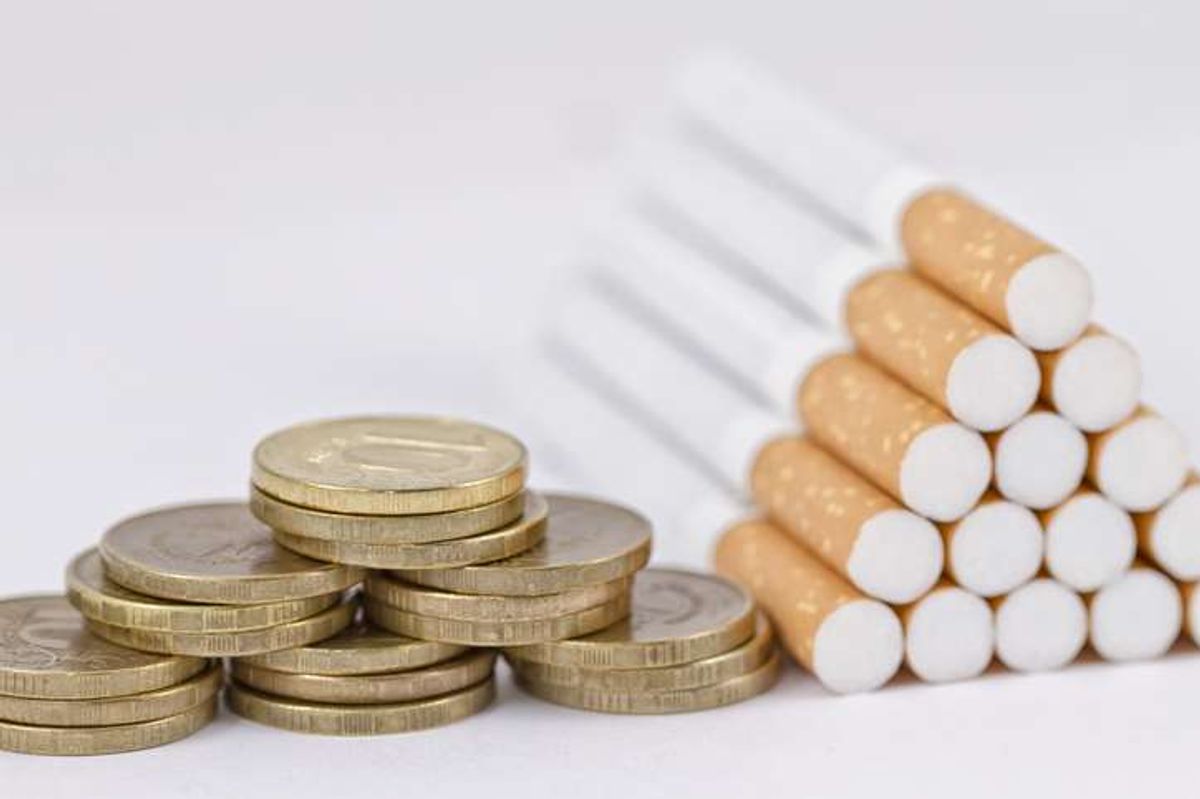

Scottish government is considering to introduce a minimum price for tobacco after a new research by Public Health Scotland (PHS) suggests the measure could help drive down smoking rates, particularly in Scotland’s most deprived areas.
The policy would mirror Scotland’s minimum unit pricing for alcohol, setting a price floor that would make the cheapest packets of cigarettes and rolling tobacco more expensive.
Under the model, the policy would also apply to rolling tobacco, with 0.5g counted as the equivalent of one cigarette.
A 30g pouch would therefore have a minimum price of £36 at 60p per rolling tobacco, or £48 if the higher level of 80p was introduced. A study, commissioned by PHS and conducted by the University of Sheffield, modelled several potential pricing levels.
It found that setting a minimum price of 80p per cigarette would prevent a 20-pack being sold for less than £16, while a 60p minimum would equate to £12 per pack and could result in 16,000 fewer smokers over the next decade.
Researchers estimated that the lower threshold alone could prevent 285 deaths and 1,500 hospital admissions linked to smoking, easing pressure on the NHS.
Public health minister Jenni Minto said the government is analysing the research as part of its Tobacco and Vaping Framework, which aims to make Scotland tobacco-free by 2034.
“We are carefully considering the findings of PHS research into minimum pricing as part of our on-going implementation of the Tobacco and Vaping Framework,” she said.
“Smoking is a huge burden on our NHS and social care services and contributes significantly to health inequalities, which is why our goal is for a tobacco-free Scotland by 2034.”
Minto drew parallels with minimum unit pricing for alcohol, saying independent evaluation had shown it was likely to have saved hundreds of lives and averted hundreds of hospital admissions.
In its latest operating plan, Public Health Scotland listed advocacy for a minimum price for tobacco as a “key activity” and said it would work “at four nations level to advocate for inclusion of a minimum price in government legislation”.
Sheila Duffy, chief executive of ASH Scotland, said the organisation supports the idea and has been urging ministers to act.
“We have been advocating for minimum pricing for tobacco to be considered by government as a potentially strong measure to reduce smoking rates over the next decade, particularly among people living in our poorest communities,” 1919 magazine quoted Duffy as saying.
“By making the cheapest tobacco products less affordable through the introduction of minimum pricing, which rises annually with inflation, the greatest positive public health impact would be expected in our most deprived areas.”
Duffy added that tobacco companies currently offset taxation by inflating prices of premium brands, keeping budget cigarette brands and rolling tobacco products more affordable.
She called for wider reform, including upper price limits and a levy on tobacco industry profits, which she said could reach 50 per cent.
However, the Scottish Conservatives warned that a minimum price for tobacco would be “unlikely to work”, pointing to what they called disappointing outcomes from alcohol pricing.
Health spokesman Dr Sandesh Gulhane MSP said, “The SNP’s botched minimum unit pricing policy has failed to tackle problem drinking – and its proposal to extend this to tobacco pricing is unlikely to work either.
"More needs to be done to encourage Scots to stop smoking - but minimum unit pricing is not the silver bullet. It would just pile more costs onto low-income Scots.
"Instead of these gimmicks, SNP ministers should focus on prevention, especially by educating children about the dangers of smoking before they ever start.”