



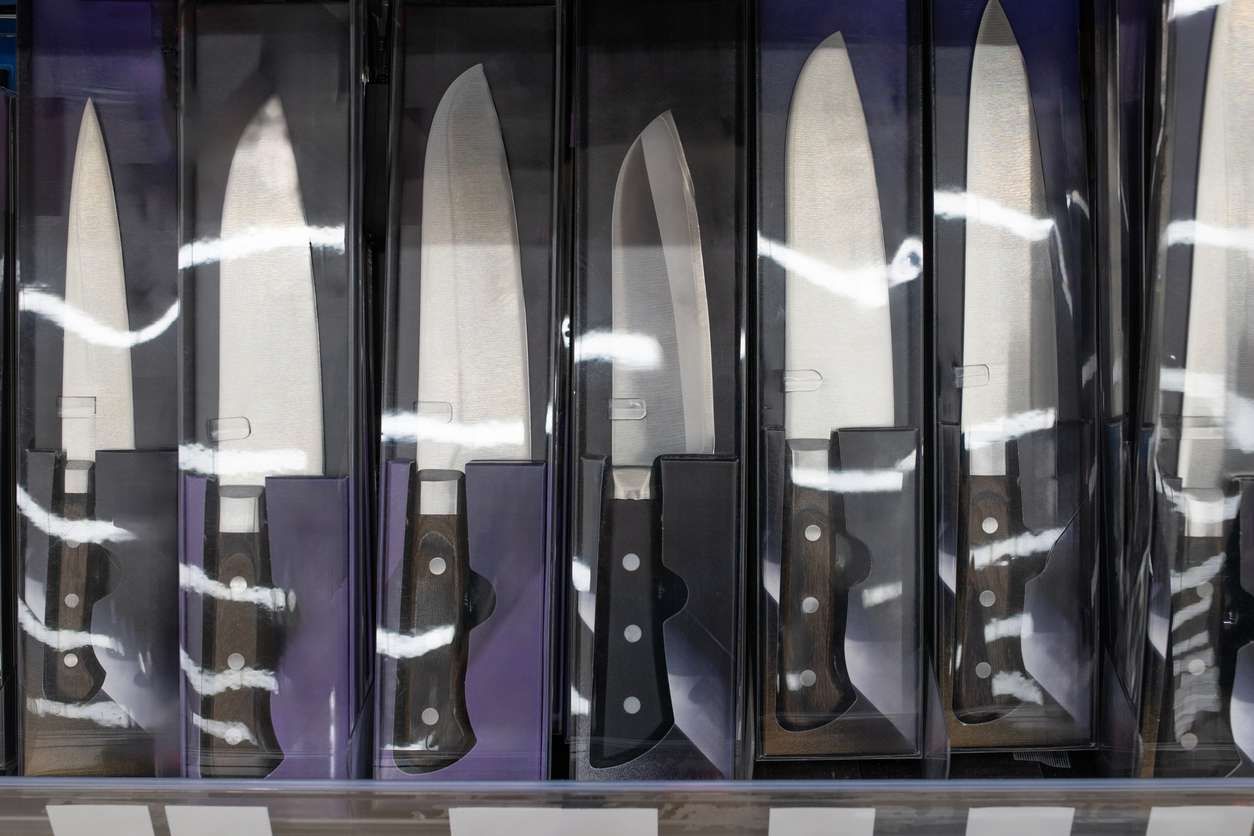

The government has launched a consultation on a new mandatory licensing scheme for knife and bladed item sales.
Under the proposals, businesses and private sellers would need a licence to sell knives, while importers would also be required to hold licences to prevent operators moving sales overseas to evade regulation.
Subject to the consultation outcome, the scheme could include police suitability checks for sellers, mandatory age verification and secure packaging standards.
The Home Office said the measures are designed to close loopholes that allow young people to bypass safeguards, particularly through unregulated online resales and social media “grey markets”, where knives can be bought without checks.
The proposals build on recent legislation to tackle knife crime, including Ronan’s Law, which strengthened rules around online knife sales. The government said enforcement activity, border seizures and a national knife surrender scheme have already taken around 60,000 knives off the streets. It added that knife homicides have fallen by 18 per cent, with overall knife crime down 5 per cent year-on-year and stabbings down 10 per cent.
“Knives destroy lives, families, and communities. That’s why this government is committed to halving knife crime within a decade,” crime and policing minister Sarah Jones said.
“We want to know if licensing measures like those in this consultation could save lives by making knife sales safer and more accountable and stop them falling into the wrong hands.”
The move follows recommendations from the Independent Review of Online Knife Sales, led by National Police Chiefs’ Council (NPCC) knife crime lead Commander Stephen Clayman. He said police test purchasing under Operation Sceptre in November found one in four shops failed a knife sale test, highlighting the need for more consistent standards across both online and high street retail.
“Throughout our end-to-end review of online knife sales, the need for better retailer regulation came up time and time again. Whether online or traditional high street shops, we must do all we can to prevent knives ending up in the hands of children and others who carry through fear or for use with offending,” he said.
“We know that all too often, unscrupulous sellers are using a range of platforms to sell to children and young adults, circumventing traditional retailers and legal safeguards. A mandatory licensing scheme will give us another tool in our fight to stop this, while we continue to work with tech and social media companies to ensure the content is swiftly removed or ideally never uploaded in the first place.”
British Retail Consortium (BRC) stressed the need for a balanced approach.
“Retailers are fully committed to playing their part in ensuring that knives do not fall into the wrong hands, with many signing up to the Home Office voluntary agreement on the sale of knives,” Graham Wynn, assistant director of business and regulation at the BRC, said, adding: “Any licensing scheme should be practical and proportionate so that legitimate sales of items such as cutlery can continue smoothly.”
Knife crime campaigner Pooja Kanda, whose son Ronan was murdered at the age of 16 after attackers bought a ninja sword online, said a licensing system would ensure sellers are “visible, traceable, and accountable on all platforms”.
“I fully support the consultation on a licensing system that I believe would bring proper control over knife sales,” she said.
“A licensing system will add a vital layer of protection and ensure that only responsible, accountable sellers are allowed to trade in these dangerous items. Because in the wrong hands, these weapons destroy families.
“If you want to sell knives, you should be visible, traceable, and accountable on all platforms.”